Lagos Water Supply and Pollution
Find out how the population of Lagos get fresh water and the challenges of water pollution in the city.

Although Lagos is surrounded by water, the most common way to obtain fresh water is from street vendors selling it in containers. Just 10 per cent of Lagos’s population has access to treated piped water. The remaining 90 per cent rely on wells or boreholes to reach underground water supplies, or on street vendors. In 2016, daily demand in the state stood at 724 million gallons while production was 317 million gallons, leaving a gap of 407 million gallons. Water in the lagoon is not suitable for drinking because it is salty and polluted.
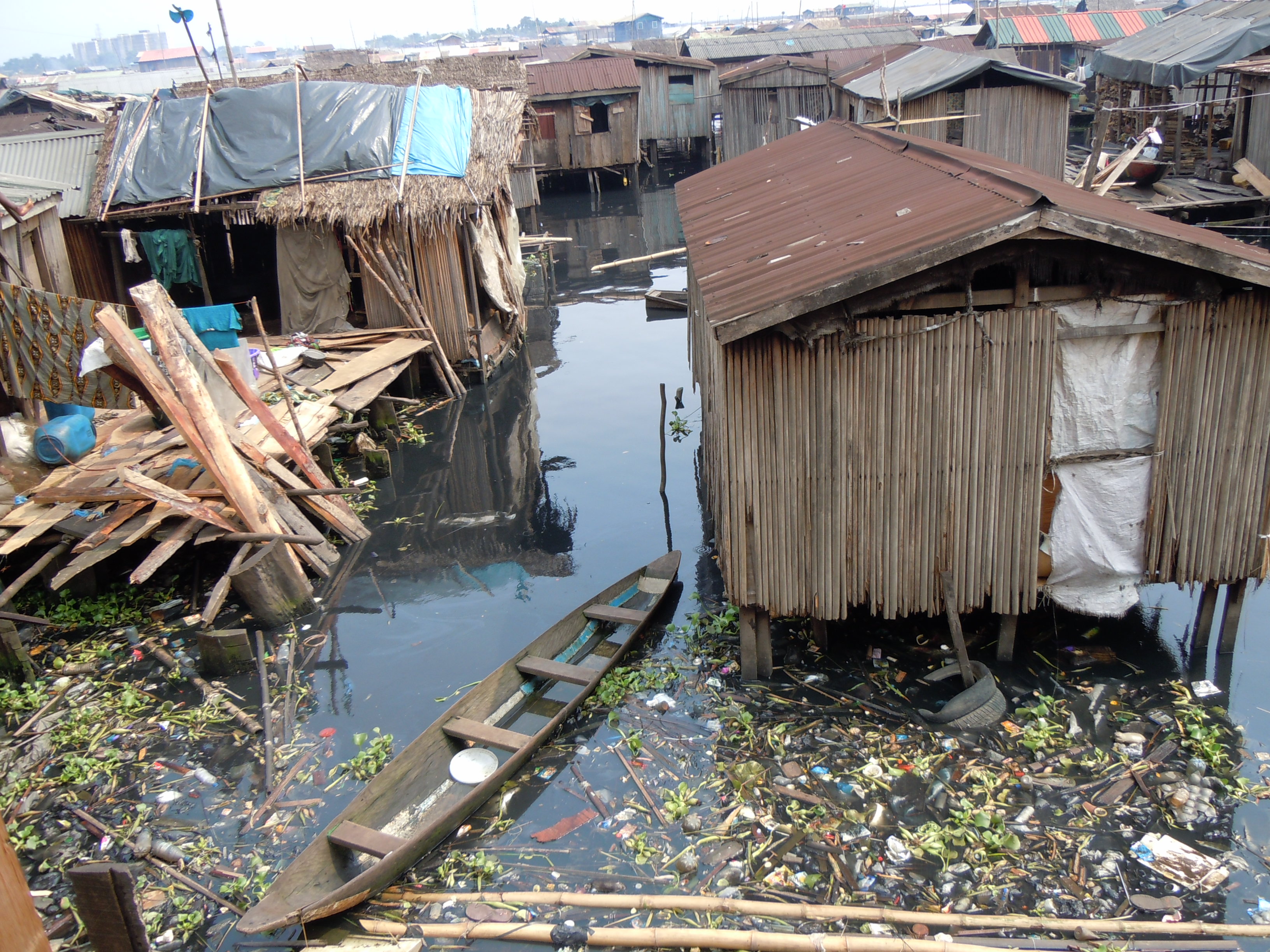
Makoko Squatter Settlement
Water supply began to be regulated in 2012 by the Lagos State Water Regulatory Commission. Their role is to regulate water supply vendors and issue borehole licenses. The greatest challenge for the commission is providing safe drinking water at a reasonable price.
The clean water that is piped to 10% of Lagos’s population originates from water treatment plants that extract river water.
There is a significant risk of extracting contaminated water from wells and boreholes. Groundwater can be polluted by sewage. Also, groundwater can be contaminated by saltwater from the lagoon, making it unsuitable for drinking. This problem will worsen with sea-level rise.
Open drains transport surface run-off into rivers and the lagoon. This surface water is often polluted by sewage.
The number of diagnosed cases of diseases such as dysentery and cholera has increased in Lagos. This is due to drinking water contaminated with chemical and bacterial pollutants. The main cause of pollution is the lack of effective sewerage systems in the city. Sewage is washed away by rainwater into open drains. This water then carries the pollutants to the rivers and the lagoon. Sewage also reaches groundwater sources through leaking septic tanks and pit latrines (pits used to deposit human waste). Pollutants can then contaminate water in wells and boreholes. The water sold by street vendors can also be affected because it comes from the same sources.
If the predicted rate of sea level rise, up to one metre in the twenty-first century, occurs, it will be a significant threat to the city, much of which is less than 2 metres above sea level. Flooding could increase groundwater contamination by salt.
Flooding, caused by intense tropical rainfall, has already seriously affected Lagos. When this happens, drains overflow, flooding homes and streets with raw sewage. Lagos is at risk of flooding because it is located on the coast, the land is low-lying and flat, it receives over 2000 millimetres of rainfall each year, squatter settlements lack proper drainage, and rapid urbanisation has covered the land with buildings and concrete.