
Epping Forest Case Study
AQA GCSE Geography > The Living World > Epping Forest Case Study
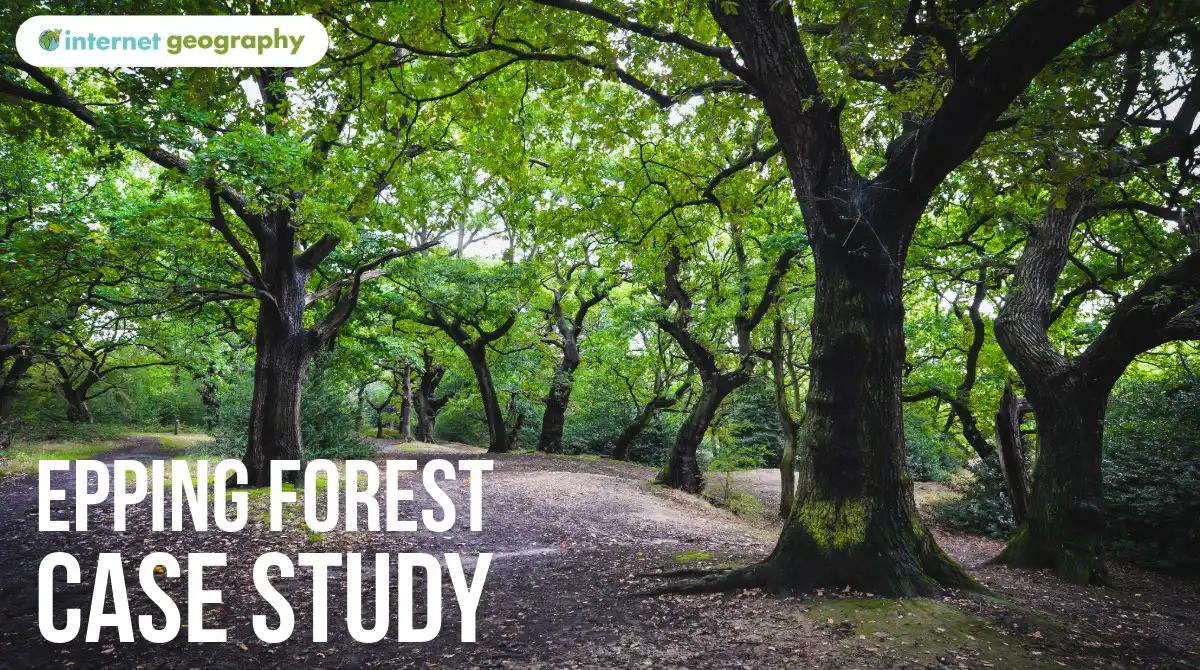
Epping Forest is an ancient, deciduous woodland to the northeast of London. It is all that remains of a more extensive forest that colonised England at the end of the last ice age. The forest is approximately 19 kilometres (12 miles) long from north to south but no more than 4 kilometres (2.5 mi) from east to west at its widest point.
The forest, managed for over 1000 years, has been used for hunting and timber resources. Recreation is the forest’s leading role now.
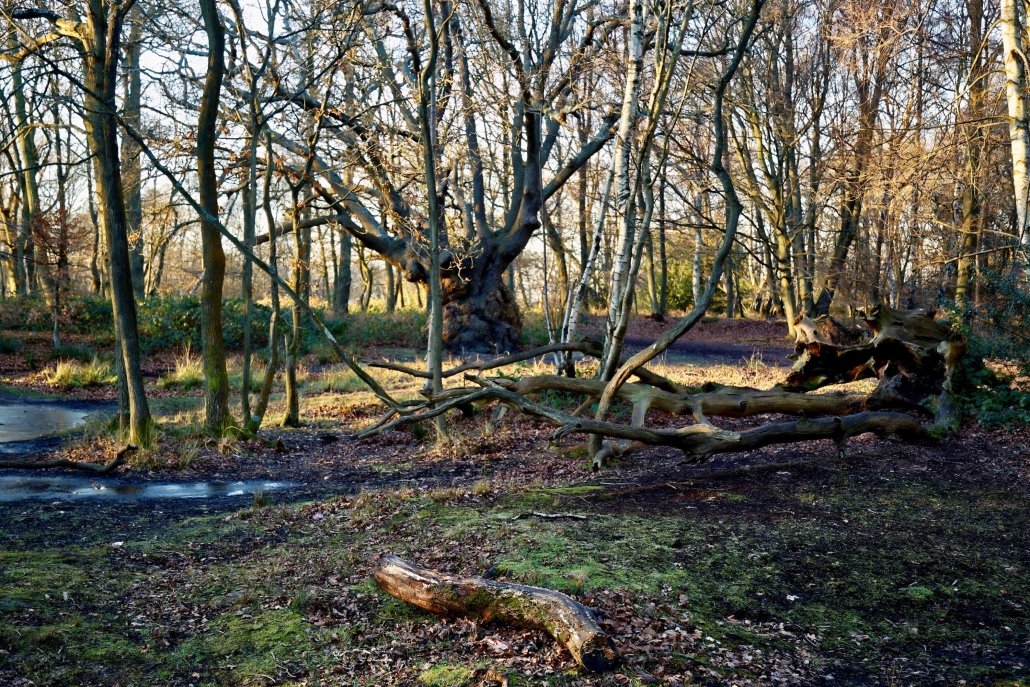
Epping Forest
The forest is designated as a Site of Special Scientific Interest (SSSI), meaning it is a protected environment.
Due to its careful management, Epping Forest has a complex food web composed of thousands of species. The forest has:
- a wide variety of native tree species that include beech, elm, oak and ash;
- a shrub layer consisting of hazel and holly, along with grasses, brambles, fern, bracken and flowering plants;
- 177 species of lichen and moss
- many primary consumers, including insects and small mammals, and deer, along with 38 species of birds
- secondary consumers such as owls, adders and foxes;
- 700 species of fungi, important decomposers, which are common due to a large amount of deadwood;
- over 100 lakes and ponds provide essential habitats for numerous fauna species (animals) and flora (plants).
Epping Forest food web
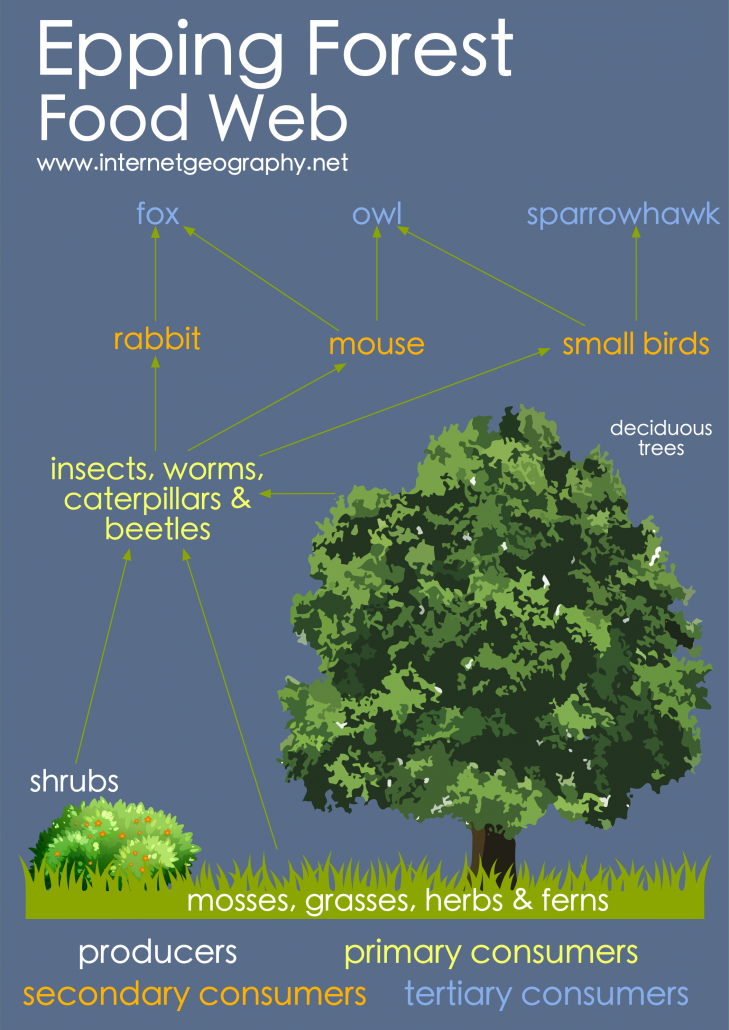
Epping Forest Food Web
How is the Epping Forest ecosystem interdependent?
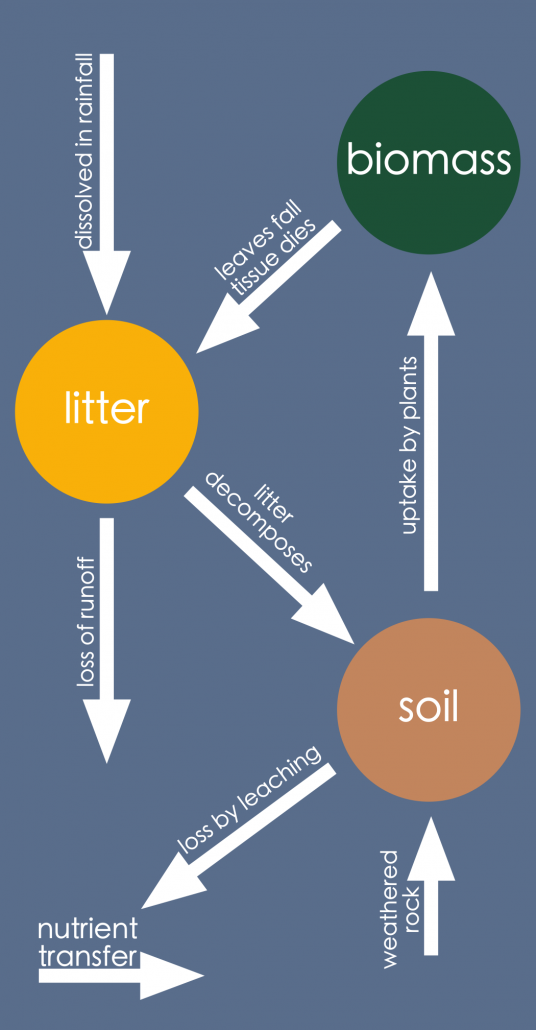
Epping Forest Nutrient Cycle
Sustainable Management of Epping Forest
Recreation is controlled within the forest, including designated car parking areas, a visitor centre, rubbish bins, and leaflets on how to use the forest to protect the environment. Paths for walking and riding are open to public use. There are currently nine Forest Keepers, three Senior Forest Keepers, and one Head Keeper employed to protect the forest environment. These strategies are sustainable because they protect the forest for future generations.
Along roads, vegetation is cut back so that deer are more aware of traffic and the risk of motor vehicle collisions is reduced. Maintaining the foliage protects the native deer population from road traffic accidents. This is a form of sustainable management as it helps protect current and future deer populations.
Cattle have been reintroduced in some areas as grazing supports the growth of some flora.
Epping Forest conservation volunteers undertake tasks every Sunday to support the forest’s biodiversity. Duties include cutting back vegetation, clearing rubbish and scrub, removing silt, and maintaining ponds and bogs.
Ecosystems on a larger, global scale are known as biomes. Find out more here.


