
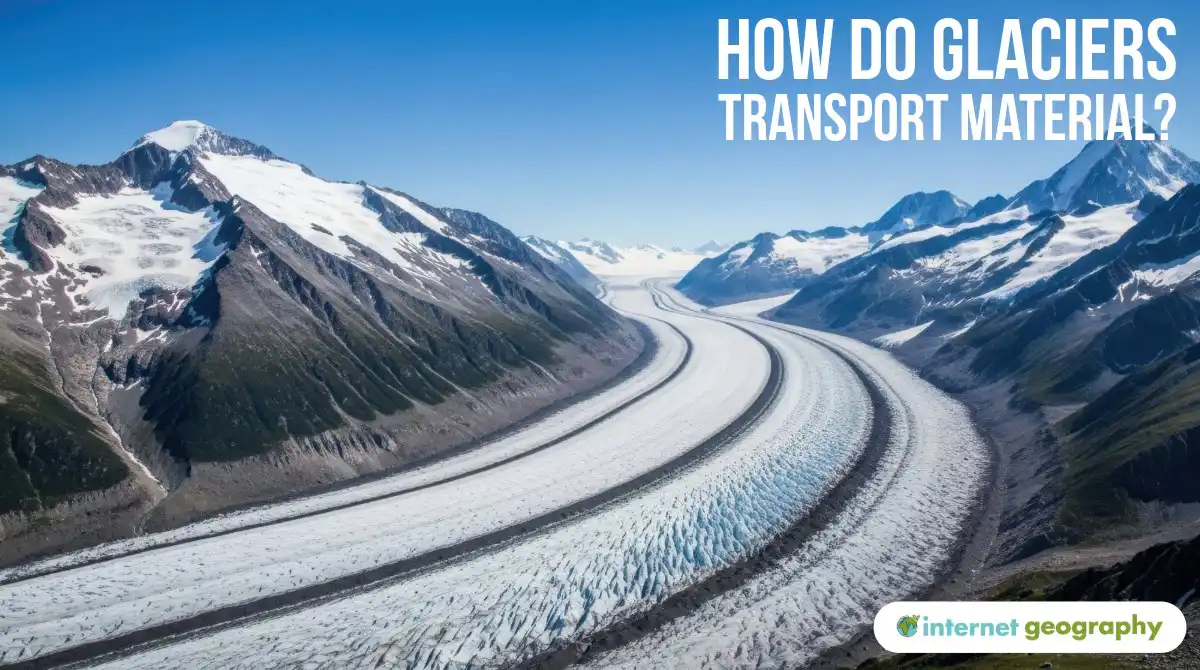
How do glaciers transport material?
As ice flows down from upland to lowland areas, the material is pushed along by the snout (front) of the glacier. The sheer force of the ice pushes soil, rocks and boulders. Also, the material is transported on top of the glacier. Freeze-thaw weathering on the back wall of a corrie or along the sides of the valley above the glacier causes rocks to become detached and fall onto the glacier. Material is also transported within the ice.
Glaciers act like vast conveyor systems, transporting weathered and eroded rocks from high mountain regions to lowland areas. These rocks may travel atop the glacier, embedded within it (hidden beneath subsequent layers of ice and snow), or at the glacier’s base, contributing to the abrasion process. The collective term for these rough, mixed-size rock deposits is “moraine.” As the ice melts, it deposits this sediment, sometimes creating layers several meters thick.
Geologists call the resulting deposit “till” or “boulder clay”, a name that reflects the sediment’s varied particle sizes. The east coast of England features extensive till deposits, which create fertile soil; however, till is structurally weak and prone to erosion, especially in coastal areas where it is exposed.
There are several different types of moraine, as shown in the diagram below.
The image below shows moraine transported on top of the glacier.
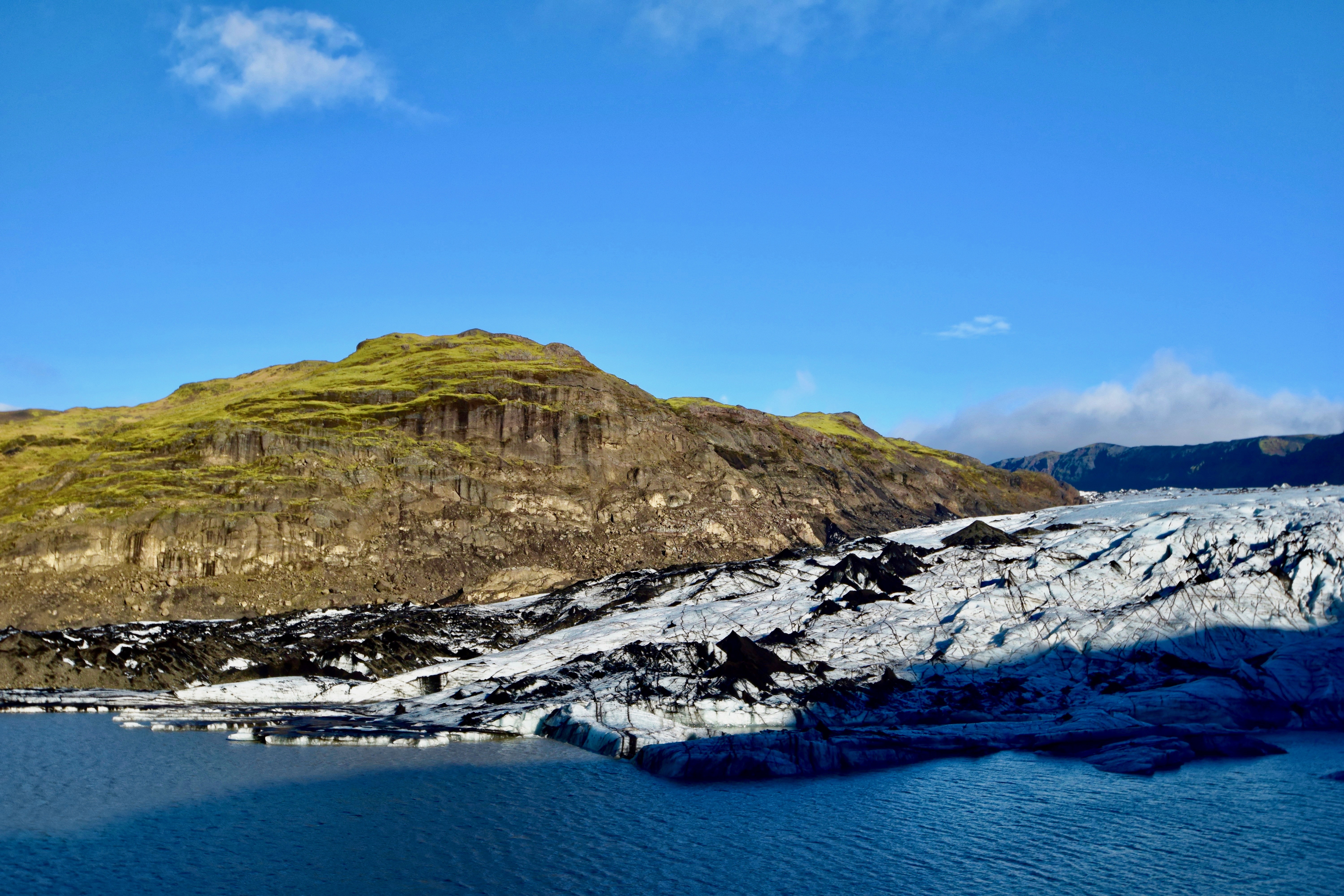
The snout of the Sólheimajökull glacier, Iceland. Notice the moraine on top of the glacier and within the ice.
As ice melts and retreats up the valley, many of these features are eroded and transported by meltwater. This is often deposited on the outwash plain of the glacier. Outwash plains are made up of outwash deposits and are characteristically flat and consist of layers of sand and other fine sediments. The image below shows an outwash plain in Iceland.
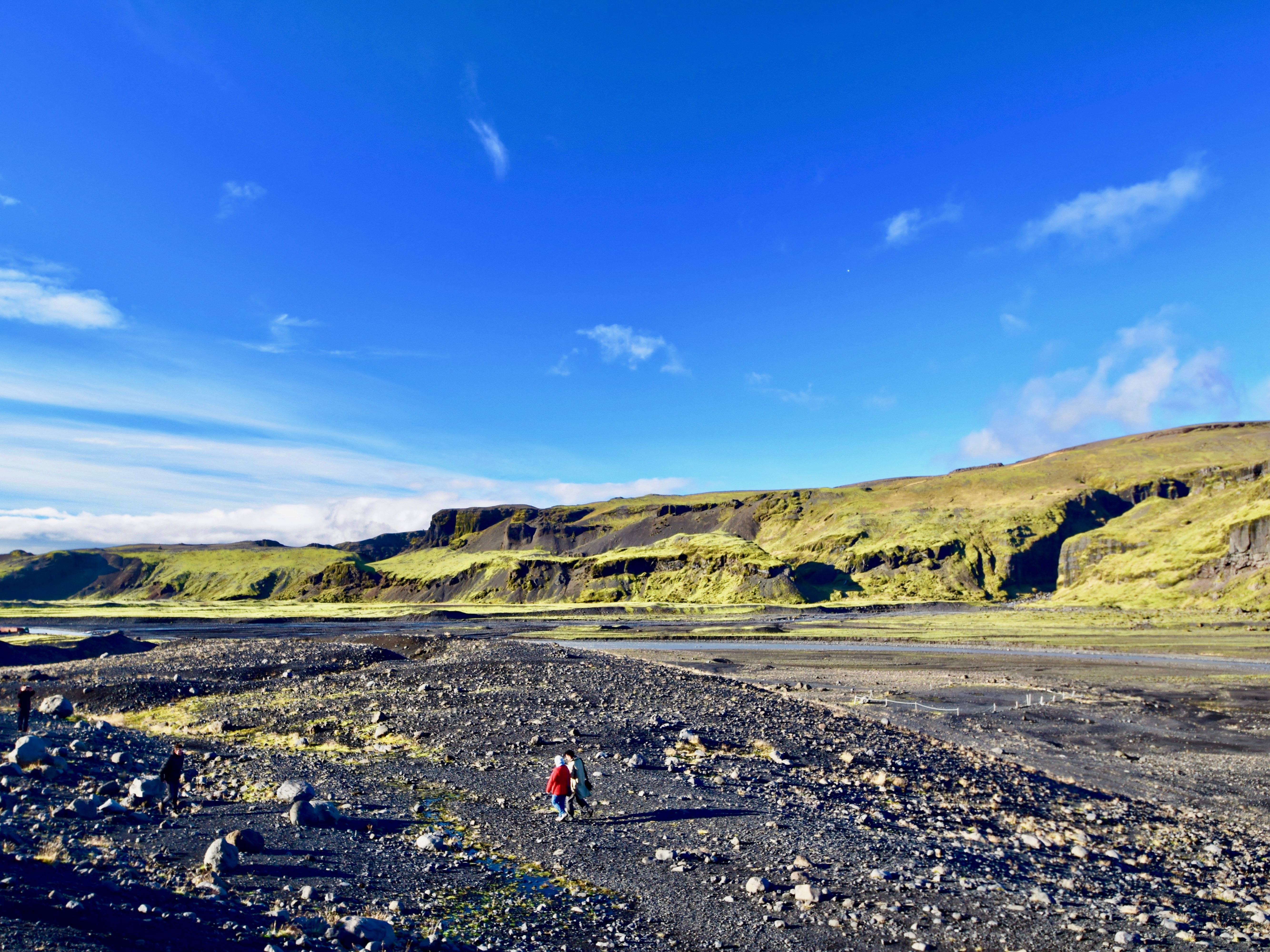
The outwash plain of the Sólheimajökull Glacier.


