How has world population changed?



How has world population changed?

The timeline below shows significant milestones in the growth of the population of the world.

  • 1

    170 000

    The population of the World is estimated to be 170 000 in 1AD.

  • 1 Billion

    World population reaches 1 billion in 1804.

    1804

  • 1927

    2 Billion

    World population reaches 2 billion in 1927.

  • 3 Billion

    World population reaches 3 billion in 1960.

    1960

  • 1974

    4 Billion

    World population reaches 4 billion in 1974.

  • 5 Billion

    World population reaches 5 billion in 1987.

    1987

  • 1999

    6 Billion

    World population reaches 6 billion in 1999.

  • 7 Billion

    World population reaches 7 billion in 2011.

    2011

  • 2018

    7.6 Billion

    World population reaches 7.6 billion in 2018.

Below is another timeline showing the same data. What is obvious from the way data is presented below is the recent rapid increase in population.

Perhaps the best way to view this data is by presenting it as a line graph.
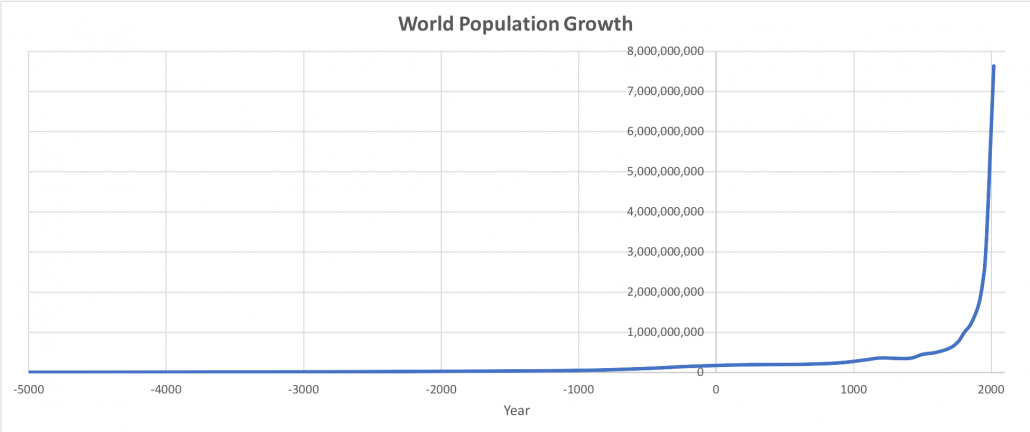
A line graph to show world population growth

A line graph to show world population growth

As you can see from the graph world population growth was slow to 1820 when it reached 1 billion. Between 1820 and 2018 world population growth has been exponential (the increase becomes more and more rapid). In 1999 it reached 6 billion people. Today, the world population is over 7.6 billion people. This rapid growth in population has been called a population explosion.

In summary:

  • Until the 1800s the world’s population grew slowly for thousands of years.
  • In 1804 the world’s population reached one billion.
  • In the early 1970s, the world’s population reached four billion.
  • In 1999, less than 30 years later, the population increased 50% to six billion.
  • The global rate of population growth is now one billion every 12/13 years.

For detailed world population data see Worldometers.



Internet Geography Plus


Related Topics

Use the images below to explore related GeoTopics.

Pin It on Pinterest

Share This