What is chemical and mechanical weathering?
Weathering is the break down of rock in situ (where they are)

Weathering is the breakdown of rock in situ caused by rainwater, extremes of temperature, and biological activity.
Mechanical weathering is the breakup of rock without changing its chemical composition. This means the rock breaks up without changing its chemical makeup. Freeze-thaw weathering is the primary type of mechanical weathering that affects coasts.
Freeze-thaw weathering occurs when rocks are porous (contain holes) or permeable (allow water to pass through). Water enters the rock and freezes. The ice expands by around 9%, putting pressure on the rock until it cracks. Repeated freeze-thaw can cause the rock to break up.
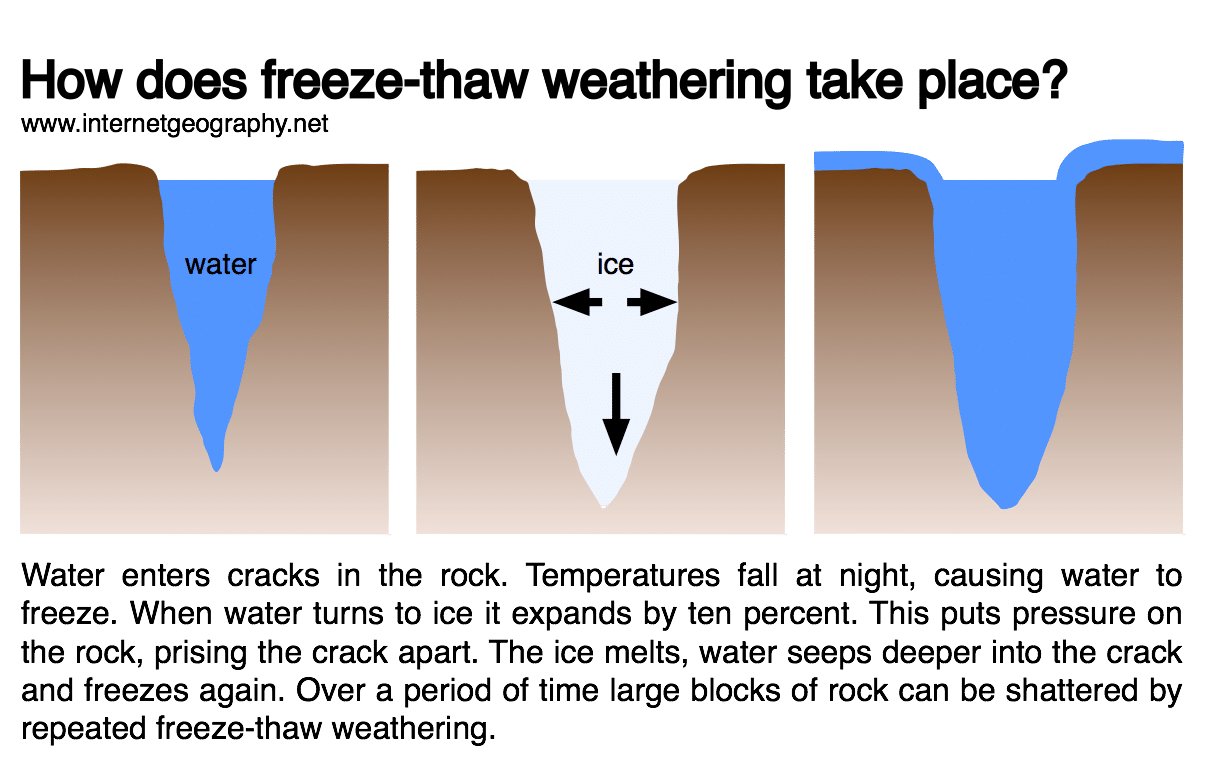
Freeze-thaw weathering
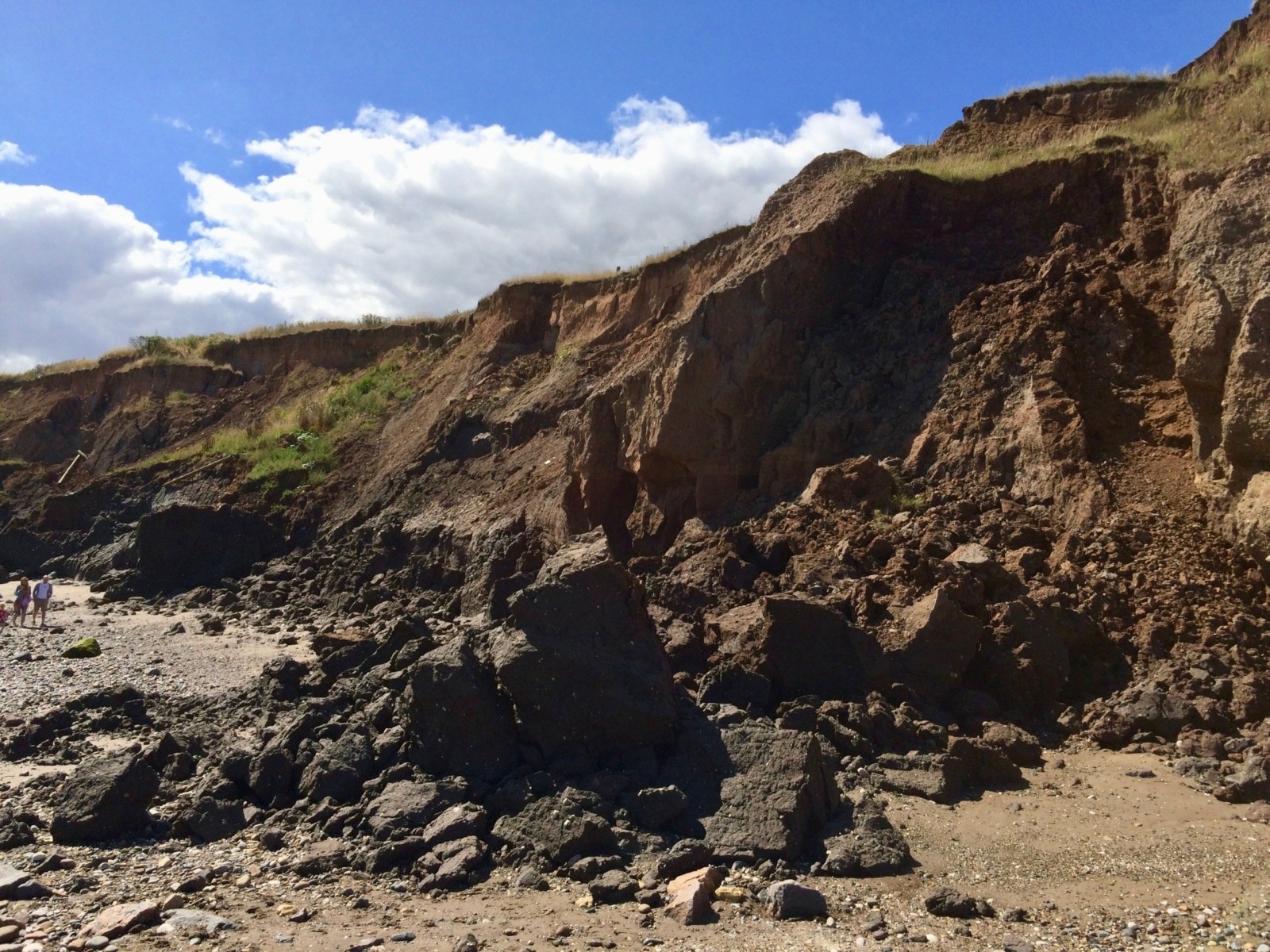
Recently weathered rock can be seen at the foot of chalk and limestone cliffs and is easily identified because it is angular. Over time, it will become smoother, forming peddles and eventually sand.
Biological weathering involves the roots of vegetation, causing the breakup of rocks.
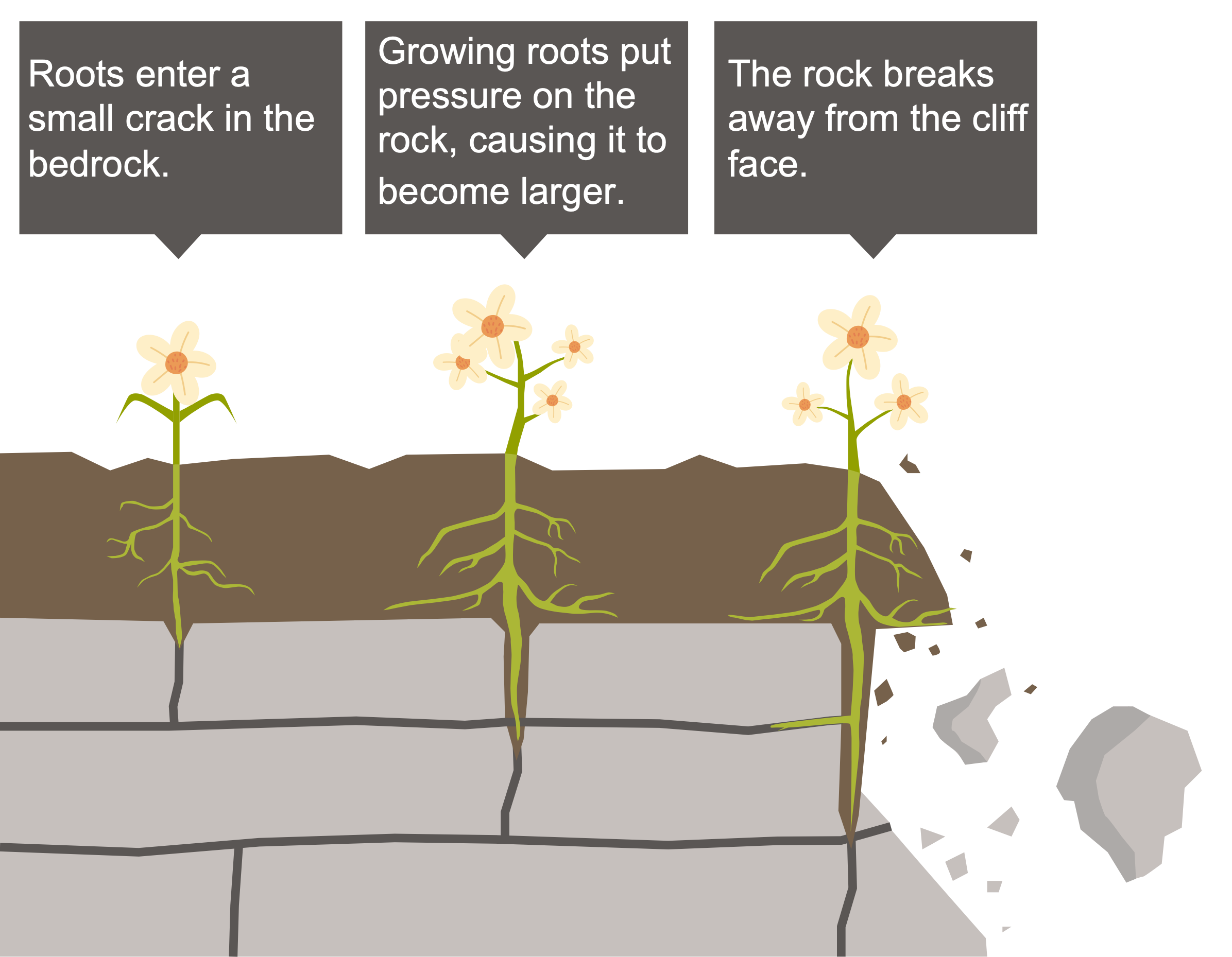
Biological weathering at the coast
Salt weathering is when salt spray from the sea gets into a crack in a rock. Water then evaporates, depositing salt crystals that expand when heated, putting pressure on the surrounding rock and weakening the structure.
The end product can be granules or blocks of rock. Salt crystallisation also forms rock holes called honeycombs or cave-like depressions called tafoni.
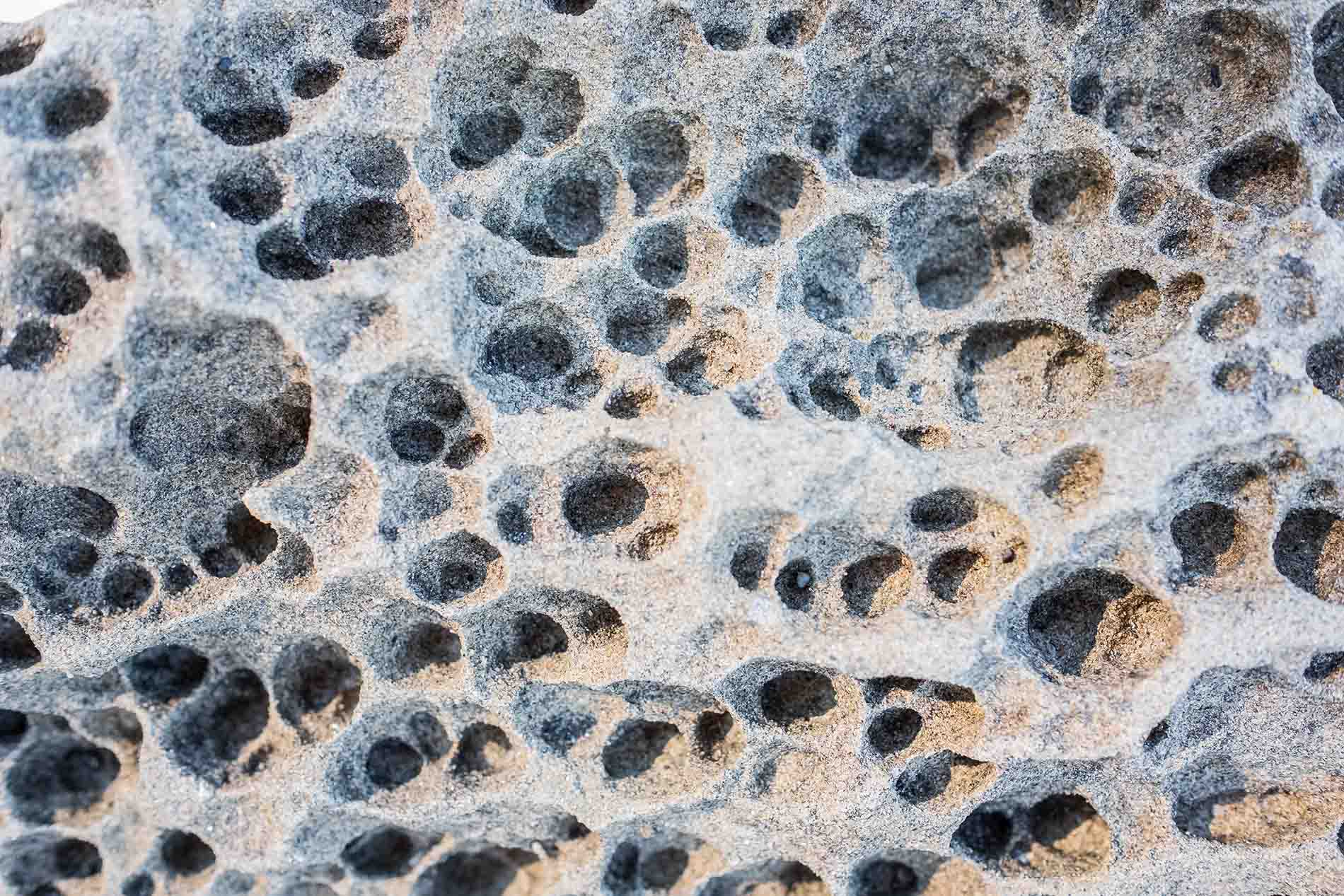
Honeycombing caused by salt weathering
Chemical weathering is the breakdown of rock by changing its chemical composition. When rainwater hits a rock, it decomposes it or eats it away. This is known as carbonation. This occurs when slightly acidic (carbonic) rain or sea water comes into contact with sedimentary rock, such as limestone or chalk, and it causes it to dissolve. A chemical reaction occurs between the acidic water and calcium carbonate, forming calcium bicarbonate. This is soluble and is carried away in solution. Carbonation weathering happens in warm, wet conditions.
Hydrolysis is when acidic rainwater breaks down the rock, causing it to rot.
Oxidation is when rocks are broken down by oxygen and water.
Weathering weakens cliffs, and this then speeds up rates of erosion.





Use the images below to explore related GeoTopics.