Water quality and pollution management in the UK

Water pollution needs to be managed

Water quality and pollution management in the UK

Polluted or low-quality water reduces the amount available for use. This increases pressure on water resources, especially in areas where demand exceeds supply (water deficit).

Although the quality of water in the UK has improved significantly since the late twentieth century, the overall condition of surface water bodies remains poor. In 2009, a higher proportion of surface water bodies were classified as having high or good ecological status under the Water Framework Directive (WFD). This proportion declined during the following decade, and since 2019 has remained at around one third, with little or no overall change up to 2024. As a result, the majority of surface water bodies in the UK continue to be classed as moderate, poor or bad.

Surface water bodies include rivers, lakes, canals, estuaries and coastal waters. Rivers and lakes generally perform worse, while estuaries and coastal waters are more likely to achieve higher ecological status due to greater water movement and dilution of pollutants.
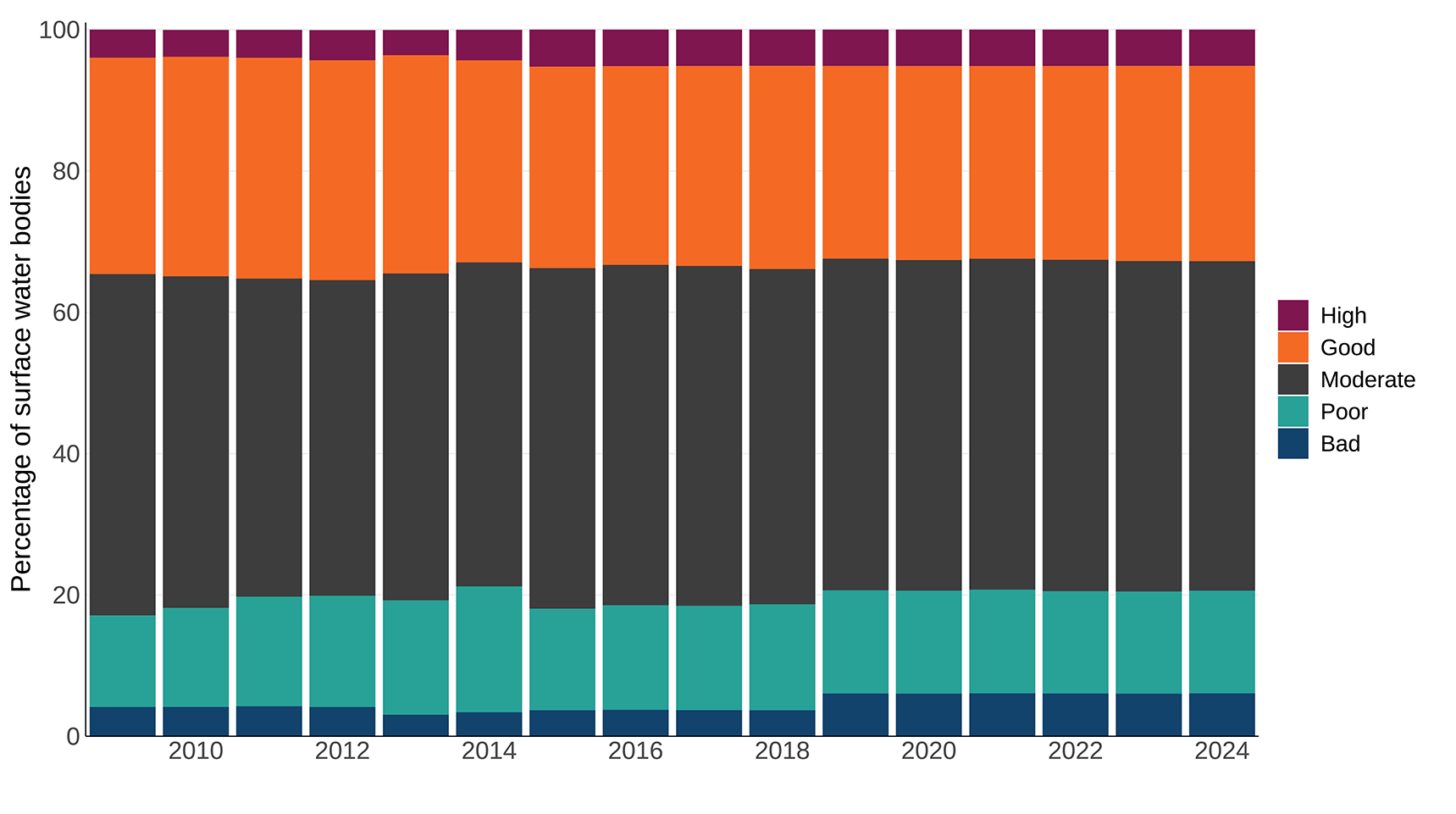
A stacked bar graph showing surface water status in the UK between 2009 and 2024

Status classification of UK surface water bodies under the Water Framework Directive, 2009 to 2024. Source – DEFRA – http://jncc.defra.gov.uk/page-4250

The main reasons for this are:

  • Agricultural pollution occurs when fertilisers containing nitrates and phosphates are washed into rivers and groundwater during rainfall.
  • Urban run-off, where oil, metals and chemicals from roads and vehicles are carried into drains and nearby watercourses.
  • Sewage pollution, including storm overflows that release untreated or partially treated sewage into rivers and coastal waters during periods of heavy rainfall.
  • Industrial pollution, where chemicals and oils enter water systems from factories, either through accidents or poor regulation.
  • Historical pollution, where water flowing through old mine workings and former industrial sites dissolves heavy metals such as lead and cadmium.

Groundwater is an important source of drinking water in the UK. While it is generally less visibly polluted than surface water, many groundwater bodies do not meet ‘good chemical status’ and require treatment, particularly where nitrates from agriculture or pollutants from historic industry are present.

Nearly 50% of the groundwater used for public supply in the UK is affected by pollution. This has led to many sources being closed or having to undergo expensive treatment to make them safe for public consumption.

Effects of Water Pollution in the UK

Water pollution has both environmental and social impacts:

  • Pesticides and toxic chemicals harm aquatic plants and animals.
  • Excess nutrients cause eutrophication, in which algae grow rapidly and deplete oxygen levels, leading to fish deaths.
  • Polluted water can raise water temperatures, which can be fatal to some aquatic species.
  • Pollutants can enter the food chain, contaminating the fish and shellfish humans eat.
  • Drinking water sources may become unsafe or require expensive treatment.
  • Sewage pollution spreads bacteria and pathogens, increasing the risk of disease.
  • Economic activities such as fishing, tourism and water-based recreation may decline where water quality is poor.

Managing Water Quality and Pollution Levels in the UK

A range of strategies are used to manage water quality and reduce pollution:

  • Regulations control the amount and type of fertilisers and pesticides that can be used in agriculture.
  • Improved drainage systems slow the movement of rainwater, allowing pollutants to be filtered or broken down in the soil.
  • UK legislation limits industrial discharges into rivers and groundwater.
  • Public education campaigns encourage correct waste disposal and reduce pollution entering sewer systems.
  • Wastewater treatment plants remove solids, bacteria, and harmful chemicals before water is released back into rivers.
  • Investment in sewer networks aims to reduce leaks, spills and storm overflow discharges.
  • Pollution traps, such as reed beds and wetlands, naturally intercept and filter pollutants.
  • Green roofs and sustainable drainage systems (SuDS) reduce surface run-off, improve water quality and help manage flooding.

Despite these measures, official monitoring shows that progress in improving surface water quality has stalled in recent years, with little change in the proportion of water bodies achieving high or good ecological status since 2019.

Next page

Where are the areas of water deficit and surplus in the UK?

Internet Geography Plus


Related Topics

Use the images below to explore related GeoTopics.

Pin It on Pinterest

Share This