
What is an ecosystem?
AQA GCSE Geography > The Living World > What is an ecosystem?
An ecosystem is a natural system that includes all the biotic (living) parts, such as plants and animals, and the abiotic (non-living) parts, such as air, sunlight, water, and minerals, that share an environment.
Physical and chemical connections exist between biotic and abiotic components, like animals consuming plants (physical) and the acceleration of decomposition due to acids in rainwater (chemical).
How does energy flow through an ecosystem?
Organisms within an ecosystem are classed as producers, consumers or decomposers. Energy flows through these organisms within the ecosystem.
Producers, such as trees, produce food and begin this cycle. Using energy from the sun, they produce food. They do this by photosynthesis. Most producers are plants, but some small organisms produce food through photosynthesis.
Producers are eaten by primary consumers, such as giraffes, who cannot produce food themselves. Primary consumers are herbivores, which means they only eat plants. Secondary consumers are carnivores such as lions. In a simple food chain, secondary consumers eat primary consumers.
Decomposers break down dead plants and animals. They also break down the waste of other organisms. Examples of decomposers include bacteria and fungi. Decomposers get their energy from breaking down dead material, e.g. dead producers, dead consumers or fallen leaves. When dead material is decomposed, nutrients are released into the soil. These nutrients are then taken up from the earth by plants. Decomposers are very important for any ecosystem. If they weren’t in the ecosystem, the plants would not get essential nutrients, and dead matter and waste would gather.
What is a food chain and a food web?
A food chain shows the relationships among feeding groups, illustrating energy flow from producers to tertiary consumers. The image below illustrates this.

A food chain
A food web shows lots of food chains and how they overlap.
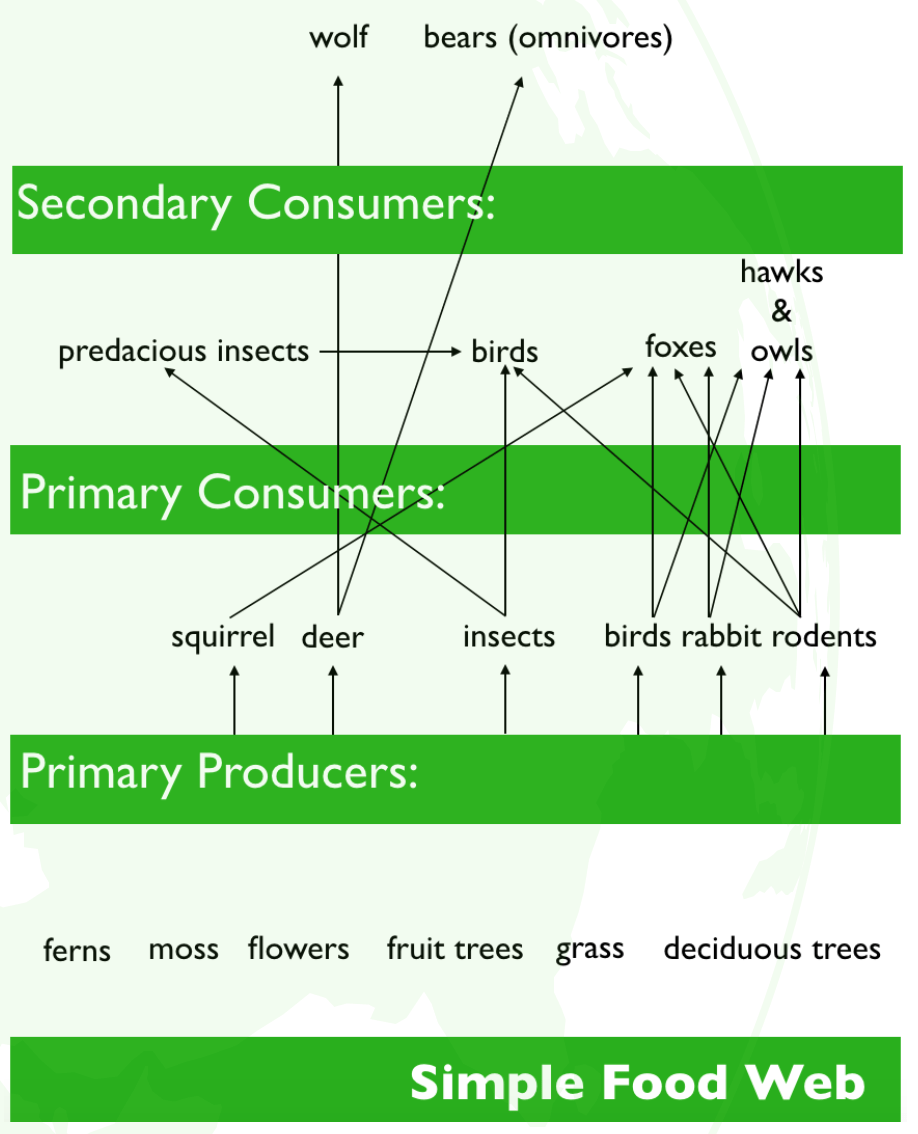
A food web
What is the nutrient cycle?
The transfer of nutrients through the ecosystem is known as the nutrient cycle.
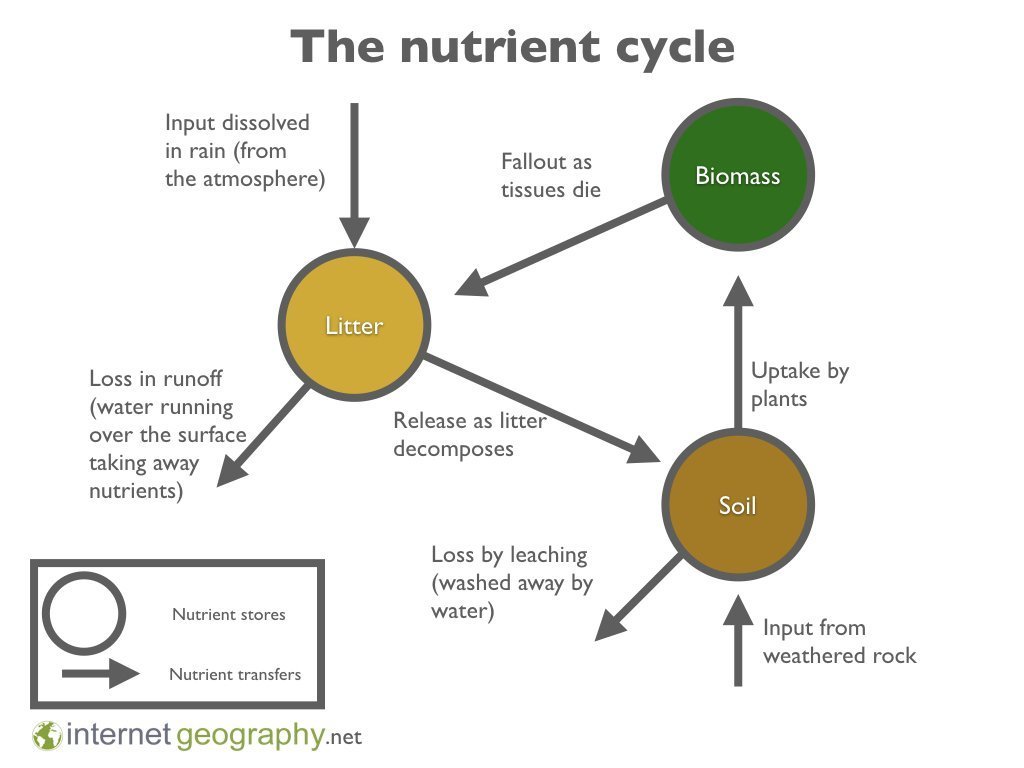
The Nutrient Cycle
The nutrient cycle shows pathways through which nutrients flow. All plants and animals depend on nutrients in food for their survival.
A hedgerow – an example of a small-scale ecosystem
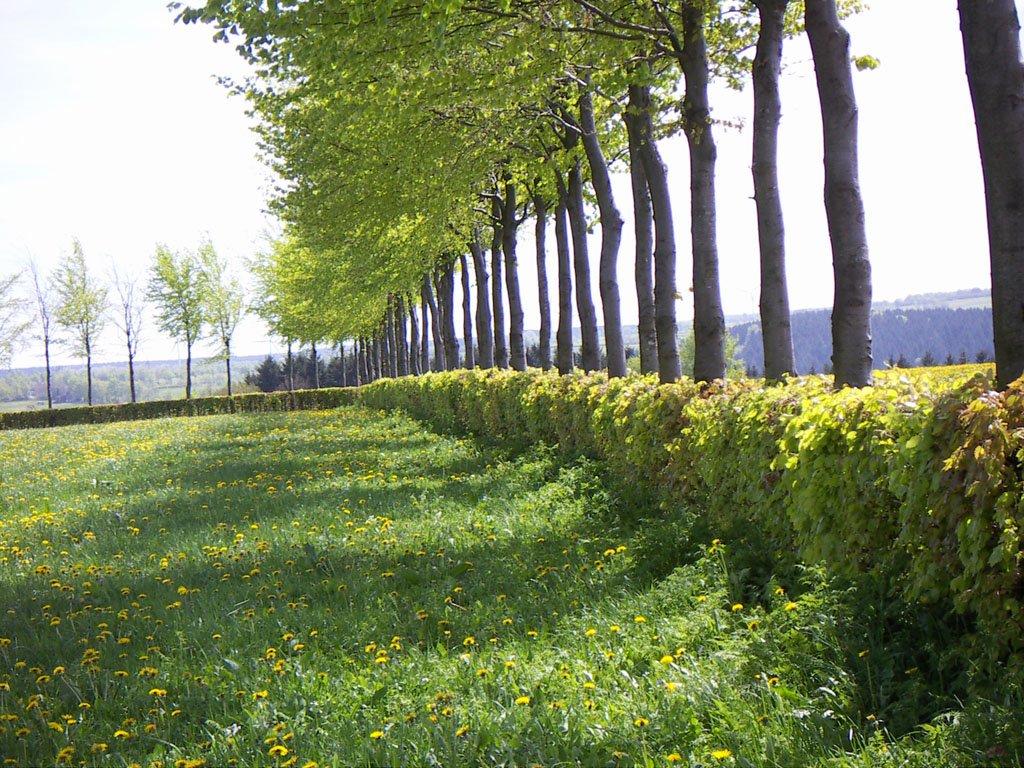
A hedgerow is an example of a small-scale ecosystem
A hedgerow ecosystem includes the plants that make up the hedgerow, the organisms that live in it and feed on it, the soil in the area and the rainfall and sunshine it receives.
The producers include hawthorn bushes and blackberry bushes. The consumers include thrushes, ladybirds, spiders, greenfly, sparrows and sparrowhawks.
Take a look at Epping Forest, a case study of a small-scale ecosystem.
The largest ecosystems are called biomes.


