Sustainable Management of the Tropical Rainforest

It’s important that the future of the rainforest is preserved for a range of reasons. These include:
If development is going to be sustainable (resources will support current economic development, but will still be available for future generations to use) then sustainable management of the tropical rainforest is required.
Sustainable management of the rainforest occurs at a range of levels. International, national and local solutions can support the future of our tropical rainforests.
Debt reduction programme – Many tropical rainforests are located in LICs. Many LICs are heavily in debt and often use natural resources such as the rainforest as a way of making money to pay off loans. However, there have been instances when wealthier countries have agreed to write off the debt in return for protecting the rainforest. In 2010 The USA and Brazil signed an agreement converting $21m (£13.5m) of Brazilian debt into a fund to protect tropical ecosystems.
Instead of paying back the debt, Brazil will use the money to conserve its Atlantic coastal rainforest, as well as the Cerrado and Caatinga ecosystems.
International Agreements – Tropical hardwood, such as mahogany, is in high demand in richer countries to make things like furniture. This high demand is leading to increased rates of illegal deforestation. To overcome this international agreements are in place to restrict wood that is not from a sustainable sourced being imported into countries. An example of this is FSC. The Forest Stewardship council source sustainable timber and mark these products with their logo so people buying the wood know that the wood is sustainably sourced.
Education – ensuring those involved in the exploitation and management of the forest understand the consequences behind their actions. an example of this is the roll-out of Coffee Sustainability Curriculum through a new app and advanced training courses in Brazil.
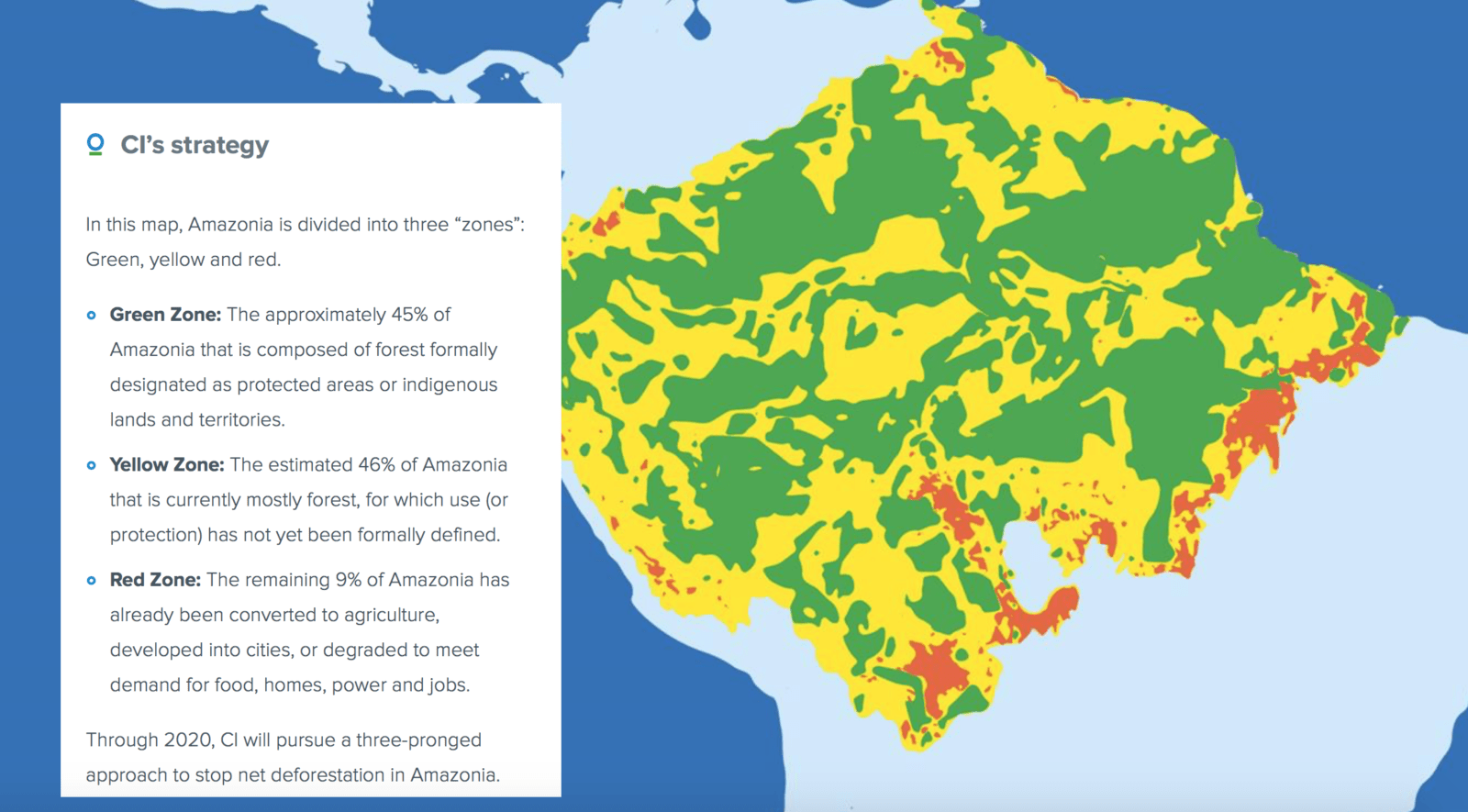
Map of the Amazon by Conservation International – https://www.conservation.org/where/Pages/amazonia.aspx
Forest reserves – areas protected from exploitation.
Monitoring – use of satellite technology and photography to check that any activities taking place are legal and follow guidelines for sustainability.
Afforestation – the opposite of deforestation. If trees are cut down, they are replaced to maintain the canopy.
Shifting Cultivation – Farmers should move on after 2-3 years to allow the rainforest to recover.
Rubber tapping – More sustainable methods of exploiting the rainforest should be pursued e.g. rubber tapping.
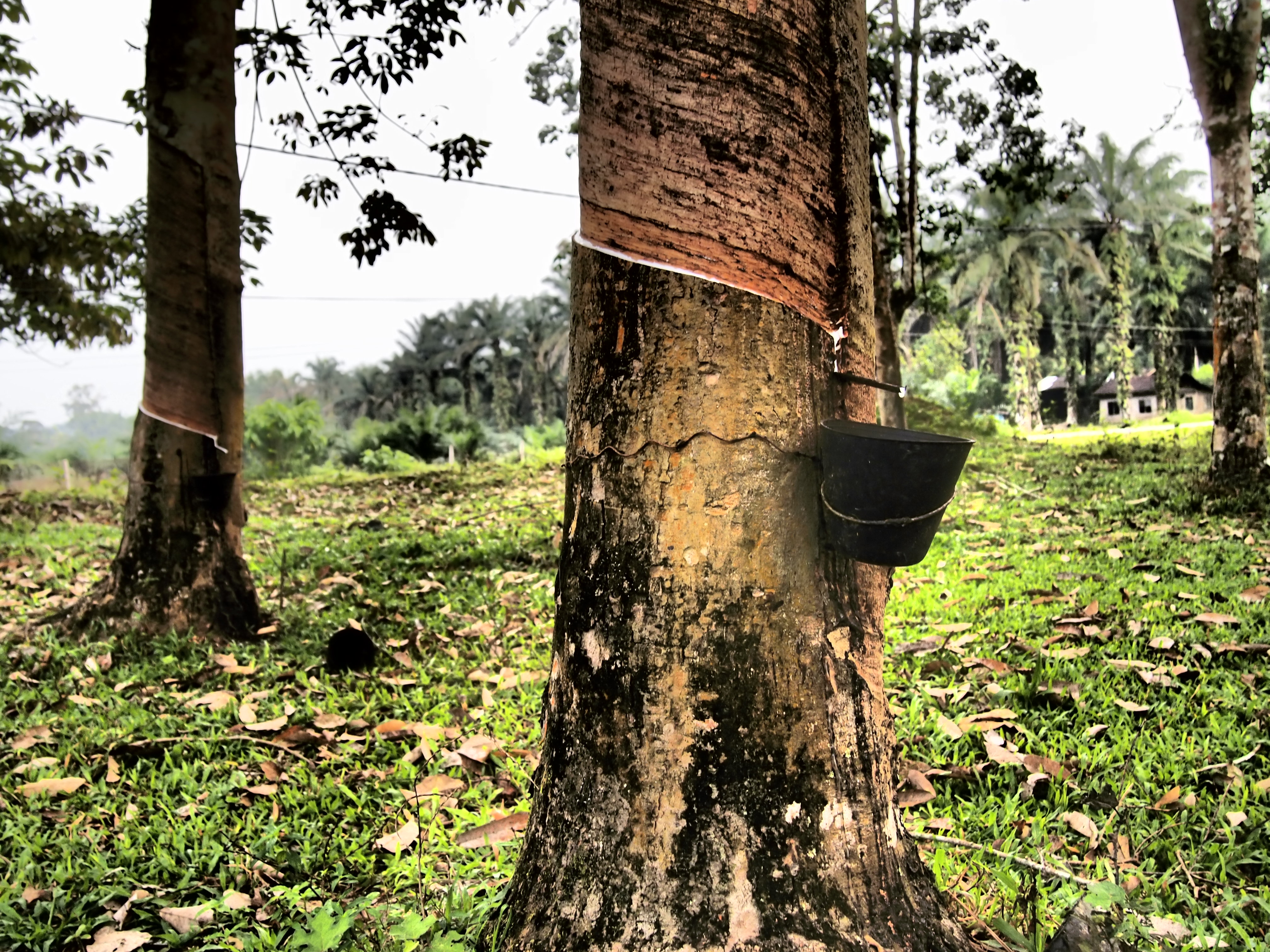
Rubber Tapping
Selective Logging – Only certain trees (e.g. just the older or inferior ones) are cut down – most trees in the area are left standing. This causes less damage as the trees that remain provide soil cover, avoiding leaching of nutrients and soil erosion and protecting the nutrient cycle. Selective logging allows young trees a guaranteed life span and the forest will regain full maturity after around 30-50 years. This maintains the health of the forest and ensures it can be used by future generations.
In some areas, horse logging is used which involves horses dragging the felled trees out of the rainforest which is more environmentally friendly than using heavy machinery. Helicopter logging is also an alternative to using heavy machinery to extract timber. This occurs in the Malaysian state of Sarawak.
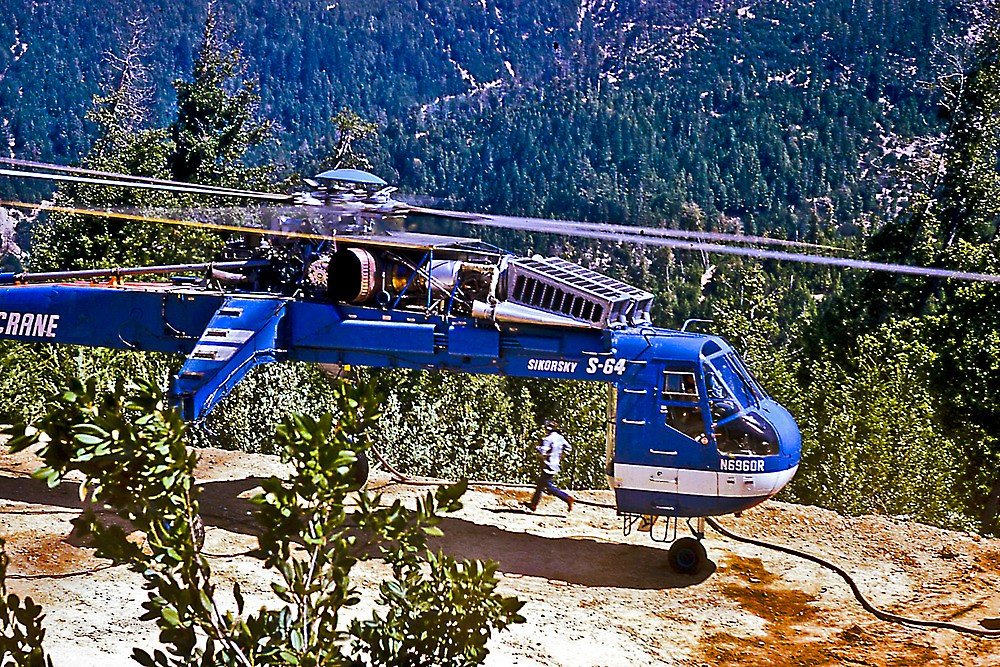
Heli Logging
Agroforestry – growing trees and crops at the same time. This lets farmers take advantage of shelter from the canopy of trees. It prevents soil erosion and the crops benefit from the nutrients from the dead organic matter.




Use the images below to explore related GeoTopics.


