What is the structure of the tropical rainforest?

There are clear layers in the rainforest. Each layer has animals and plants which have adapted to the conditions found there.
The image below shows a typical cross-section in the rainforest.
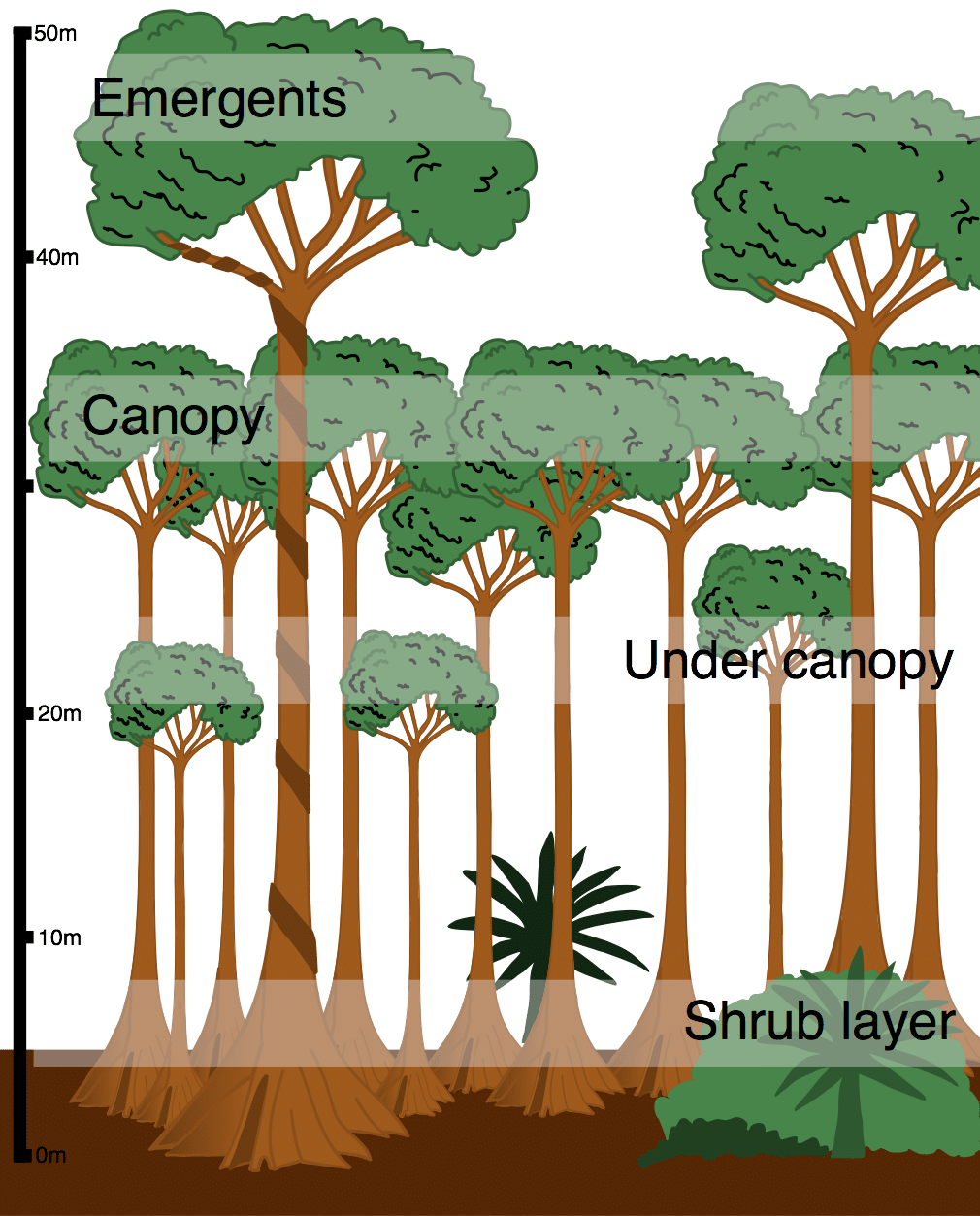
Layers in the tropical rainforest
Emergents are the tallest trees and are usually over 50 metres tall. The Kapok tree is an example of an emergent.
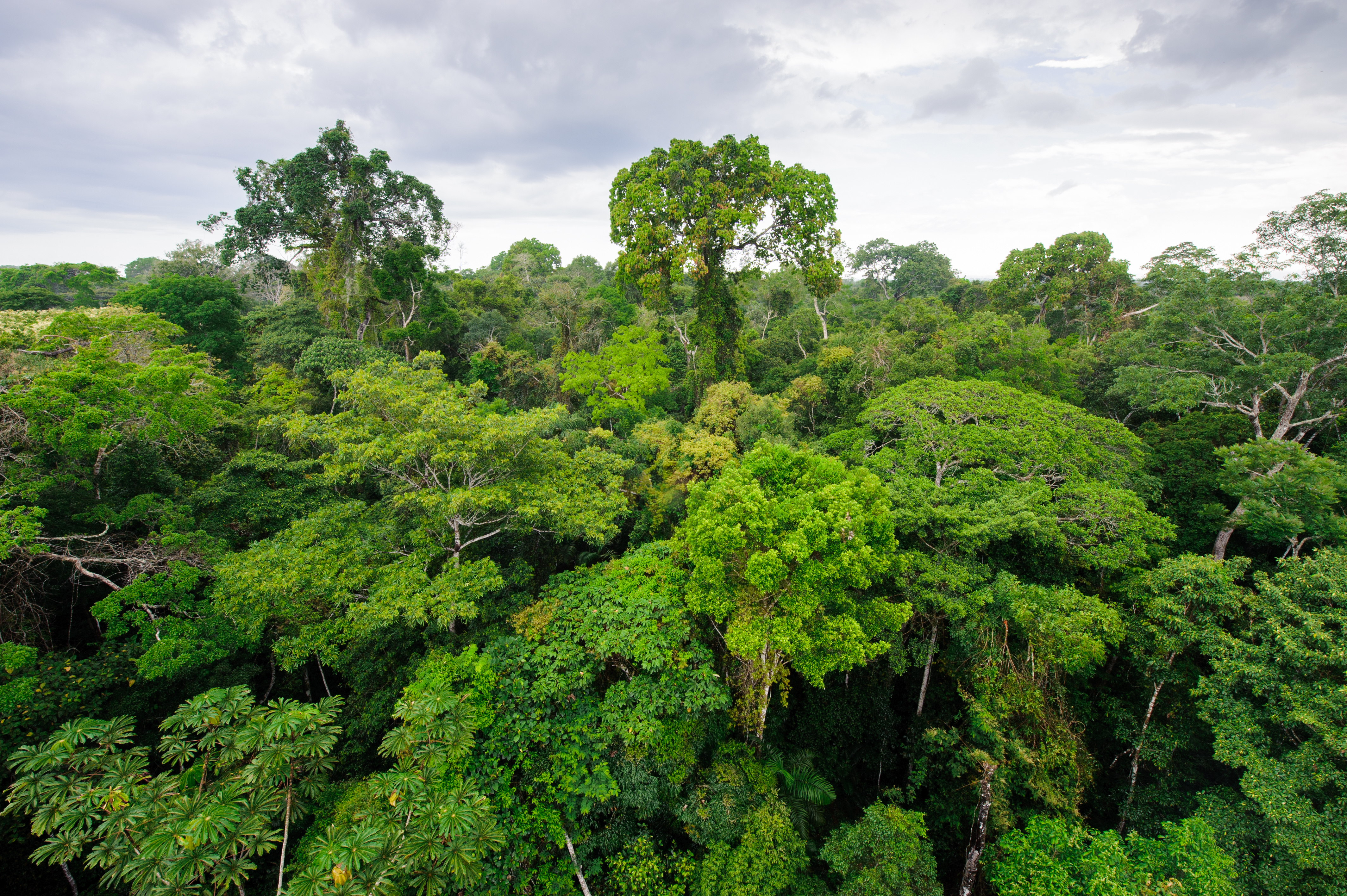
Emergents rising from the canopy in the Amazon Rainforest
The sea of leaves blocking out the sun from the lower layers is called the canopy. The canopy contains over 50% of the rainforest wildlife. This includes birds, snakes and monkeys. Lianas (vines) climb to the canopy to reach sunlight. Epiphytes, or air plants, are also found in this layer. An epiphyte is an organism that grows on the surface of a plant and gets its moisture and nutrients from the air, rain, water or from debris gathering around it.
The under canopy mainly contains bare tree trunks and lianas. Lianas are vines that climb the vegetation in a bid to reach sunlight.
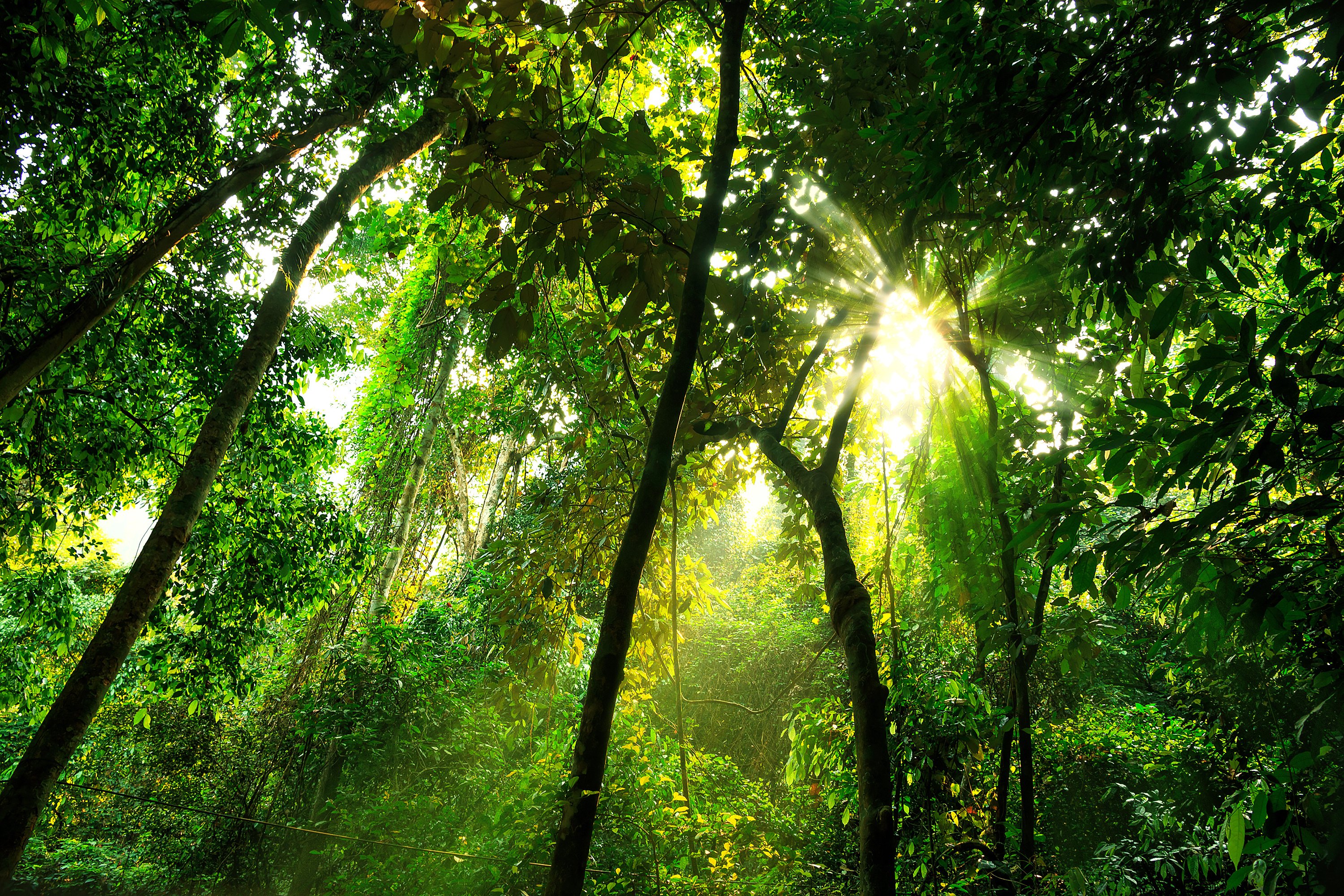
Tropical rainforest under canopy
The shrub layer has the densest plant growth. It contains shrubs and ferns and other plants needing less light. Saplings of emergents and canopy trees can also be found here.
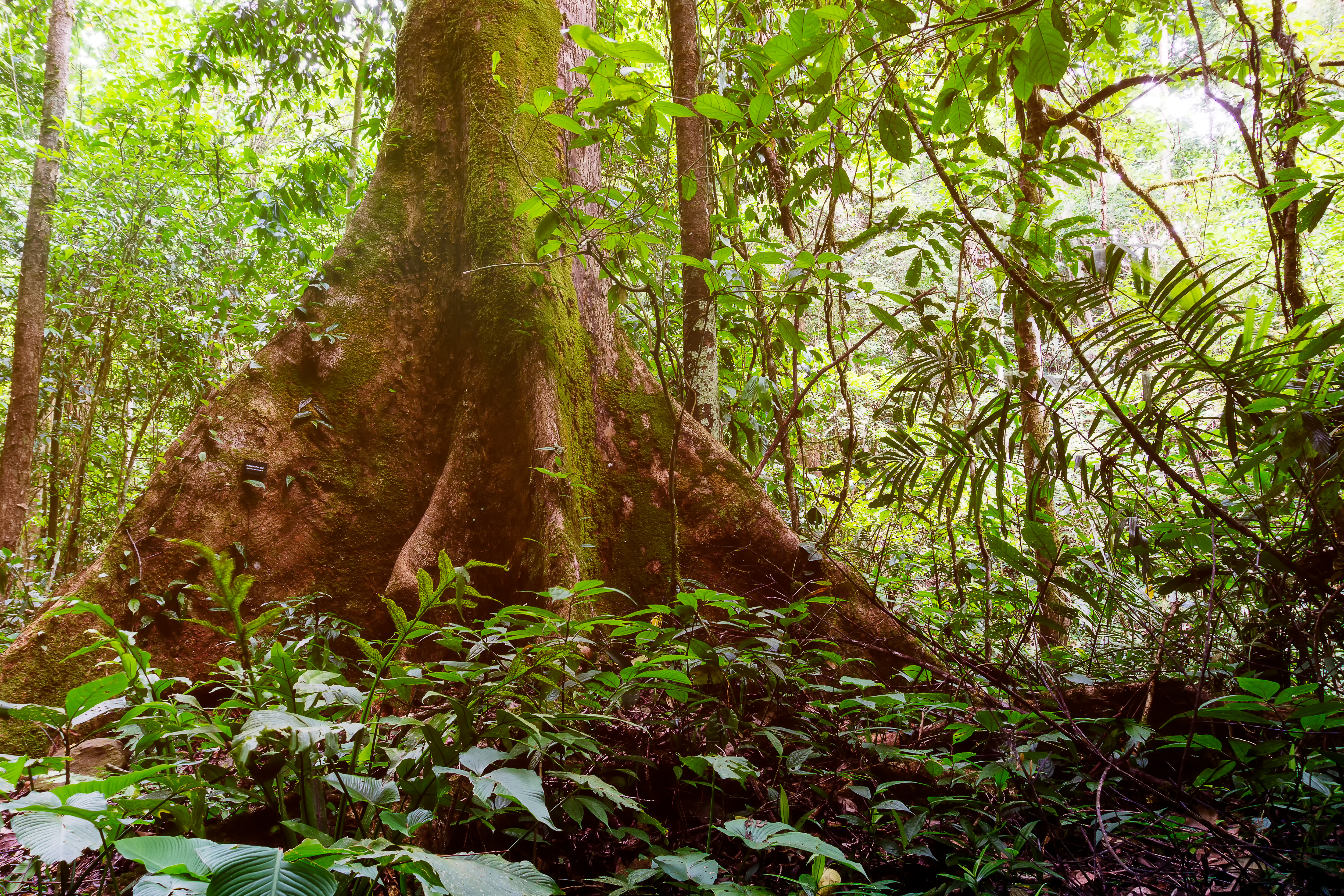
Shrub layer in the tropical rainforest
The forest floor is usually dark and damp. It contains a layer of rotting leaves and dead animals called litter. This decomposes rapidly (within 6 weeks) to form a thin humus, rich in nutrients. Below the rich top soil the soil lacks nutrients. This is because nutrients are rapidly absorbed by vegetation.
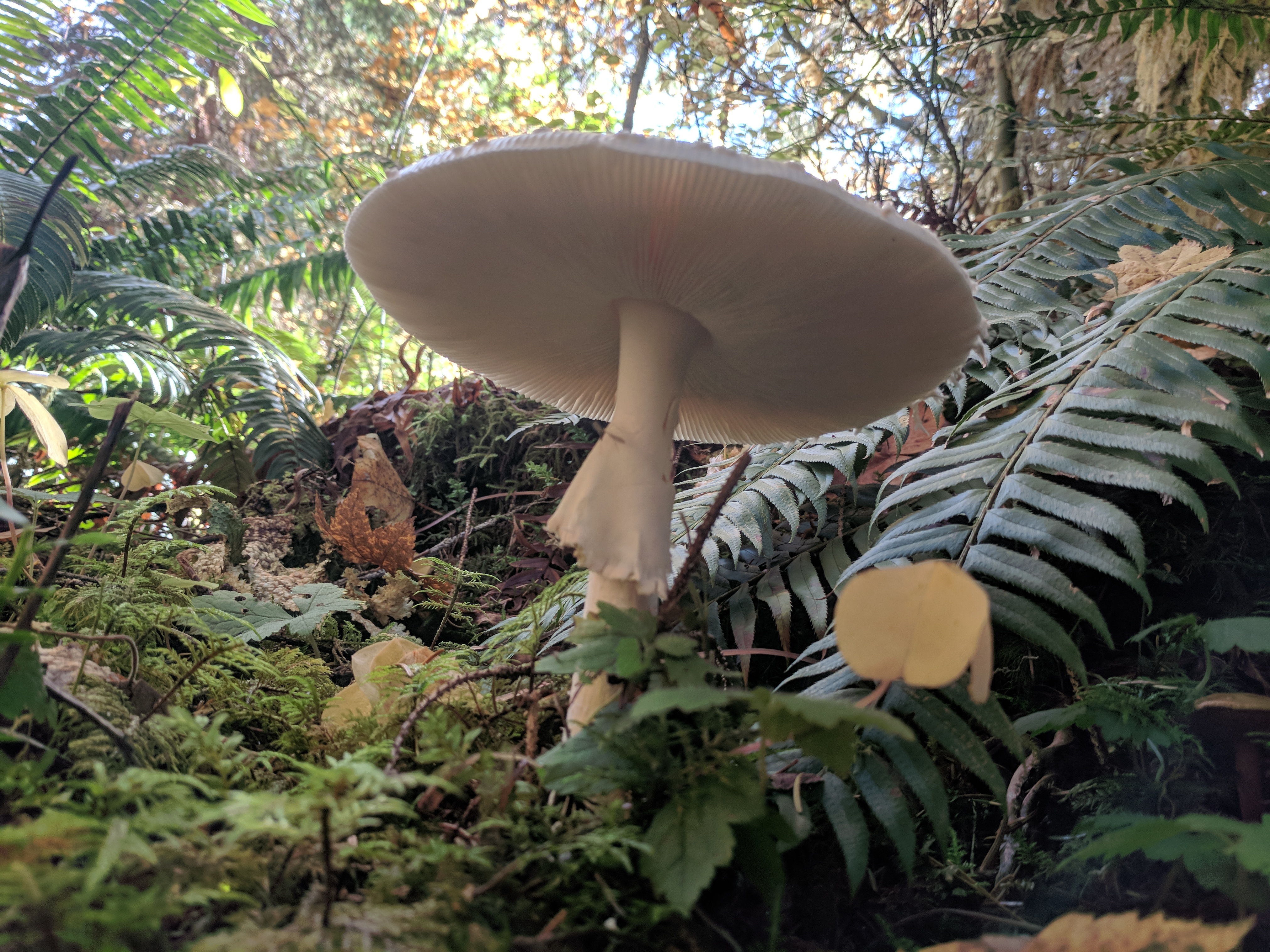
Decomposers on the rainforest floor
Find out how vegetation has adapted to thrive in the tropical rainforest.




Use the images below to explore related GeoTopics.


