Plate Boundaries

The point where two or more plates meet is known as a plate boundary. It is at these locations where earthquakes, volcanoes and fold mountain form. There are four main types of plate boundary. These are constructive, destructive, conservative and collision margins.
Constructive / Tensional (divergent ) Plate Boundary
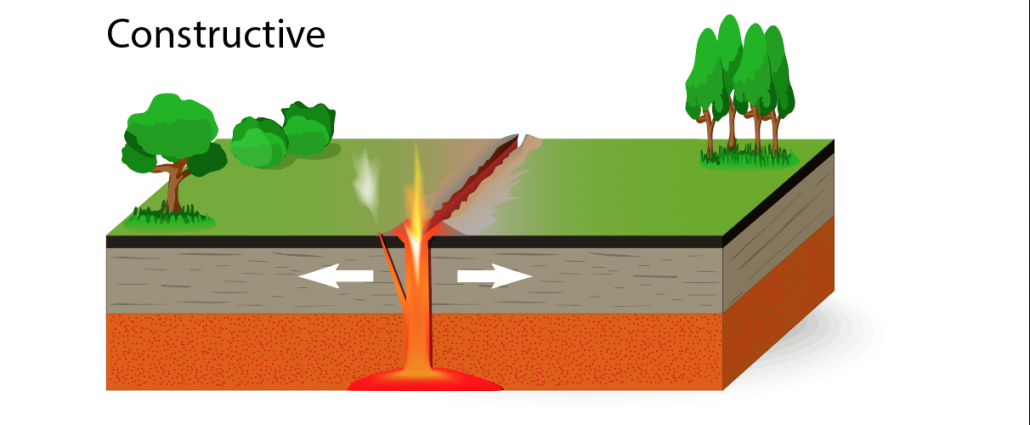
A constructive plate margin
A constructive plate boundary occurs when two plates move away from each other.
Landforms: Ocean ridge and volcanic islands
Find out more about constructive plate margins.
Destructive plate boundary (subduction zones)
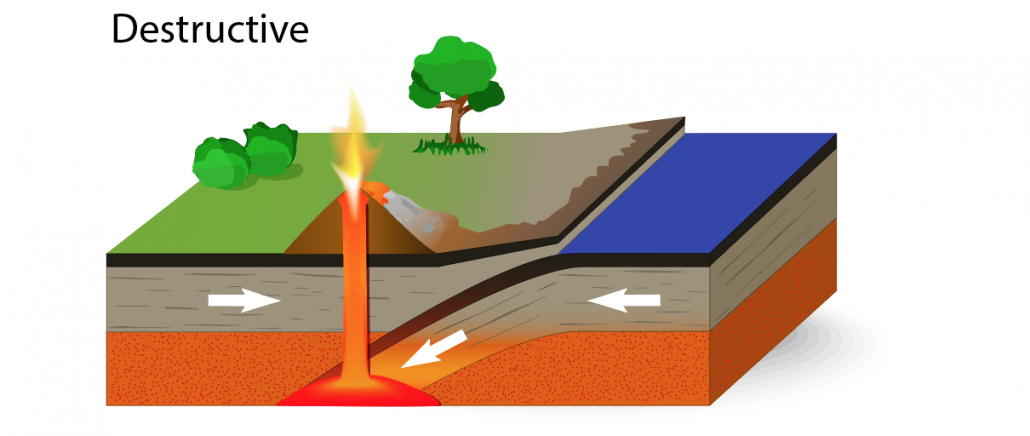
A destructive plate margin
A destructive plate boundary occurs when an oceanic plate is forced under (or subducts) a continental plate.
Landforms: Fold Mountains and Oceanic trenches
Example: Pacific Plate and the Eurasian Plate
Find out more about destructive plate margins.
Conservative (transform faults) plate boundary
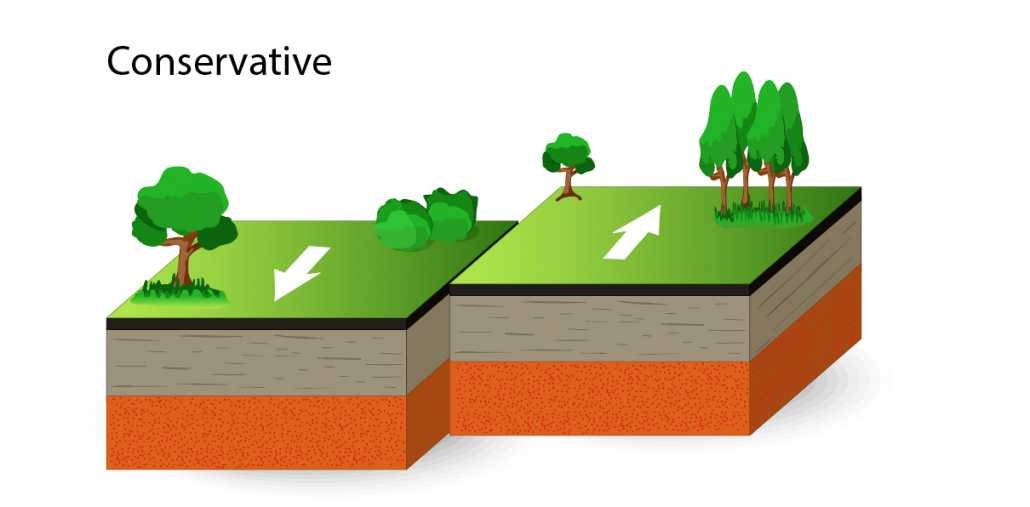
A conservative plate margin
A conservative plate boundary occurs when two plates slide past each other.
Example: North American Plate and the Pacific Plate
Find out more about conservative plate margins.
Collision plate boundaries
Collision plate boundaries occur when two continental plates move towards each other.
Landforms: Fold Mountains
Example: Australian and the Eurasian Plate
Take our plate margins or landforms at plate margins quiz to test your knowledge.





Use the images below to explore related GeoTopics.


