Sustainable Food Supplies in an LIC – Bangladesh
Farmers in Jamalpur, Bangladesh have been supported in introducing rice-fish farming.

Jamalpur is a region in northern Bangladesh. Many farmers are subsistence farmers, which means they only grow enough food for themselves and their families. Rice and wheat farming are most common in this area. The charity, Practical Action, has been supporting farmers in the region by introducing a new type of farming called rice-fish culture.
Rice grows in paddy fields. A paddy field is a level, flooded area. Practical Action has been working with small scale rice farmers on a technique called rice-fish culture. Rice-fish culture involves introducing small fish into the paddy fields. Not only do the fish thrive due to the dense vegetation protecting them from birds, but in turn they provide a natural source of fertiliser with their droppings, eat insect pests and help circulate oxygen around the paddy field. Keeping fish can increase yields by 10% as well as providing extra protein in the farmer’s diet. Fish is an excellent source of protein, bringing giving health benefits to people in the area. Additionally, due to the larger yields, farmers have extra rice they can sell at market.
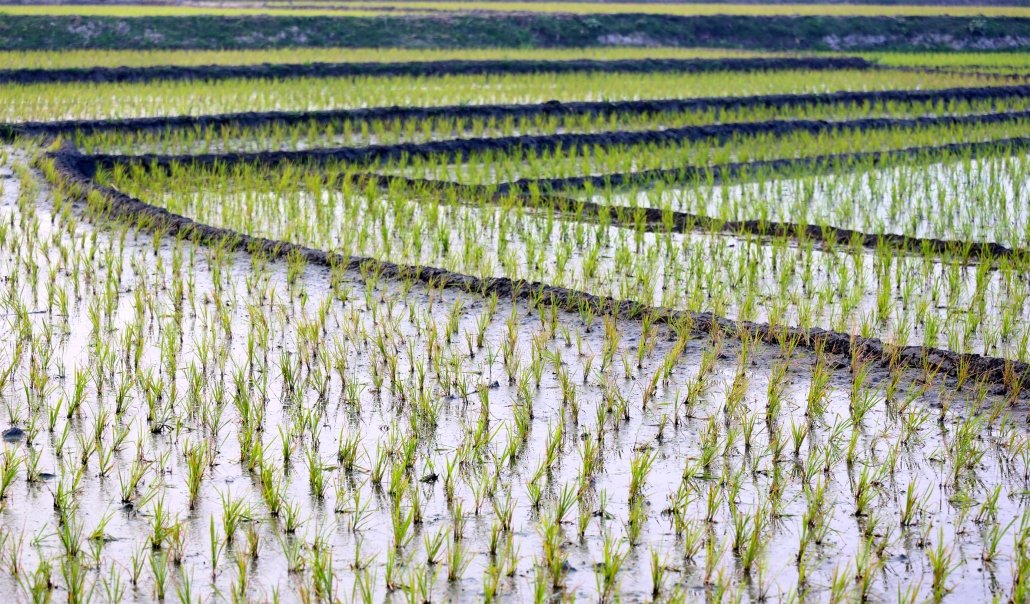
Rice-fish farming in Bangladesh
Rice-fish farming is an excellent example of a sustainable approach to increasing food supplies as it does not involve any artificial fertiliser or pesticide. Also, it does not require expensive equipment or external expertise. It is also not harmful to the environment.
Farmers follow the steps below in developing rice-fish cultivation:
Find out more about rice-fish culture.




Use the images below to explore related GeoTopics.


