Flamborough
Classic erosional landforms dominate this area of the Holderness Coast.

Flamborough is the headland that forms the most northerly point of the Holderness Coast.
The most striking aspect of Flamborough Head is the white chalk cliffs that surround it. The chalk lies in distinct horizontal layers, formed from the remains of tiny sea creatures millions of years ago. Above the chalk at the top of the cliffs is a layer of till (glacial deposits) left behind by glaciers 18,000 years ago, during the last ice age. As the action of the waves wears away the cliffs below, the clay soil often falls into the sea in huge landslips.
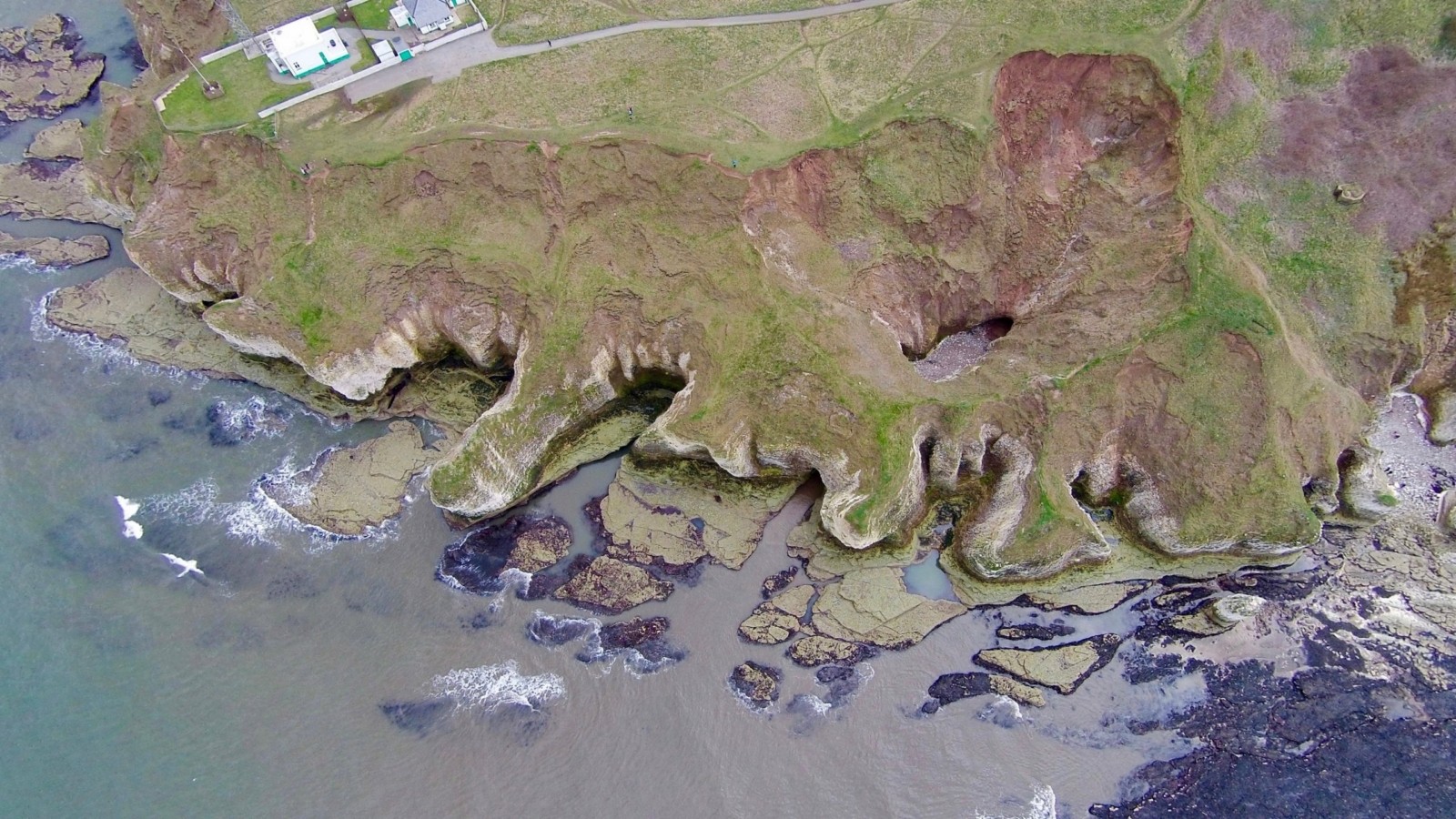
The aerial photograph below shows Selwicks Bay, the most easterly bay at Flamborough and the location of the lighthouse. To the north of the bay is an arch, and to the south, you can see a stack.
The photograph below overlooks Selwicks Bay, looking west from the cliff top.

Landforms at Selwicks Bay, Flamborough.
The sea attacks the coast around the headland in two ways. Waves beat against the vertical cliffs, and at the high water line, weak points in the chalk are worn away into caves. The weakest points are where vertical cracks or fault lines have appeared in the horizontal beds of chalk. These caves are worn away into rock arches at places on the cliffs where the chalk juts out. If the top of an arch collapses, the result is a pillar of chalk cut off from the rest of the headland – called a stack. Flamborough Head has many caves, arches, and several stacks. The process of erosion that has created them can take hundreds of years to do its work.




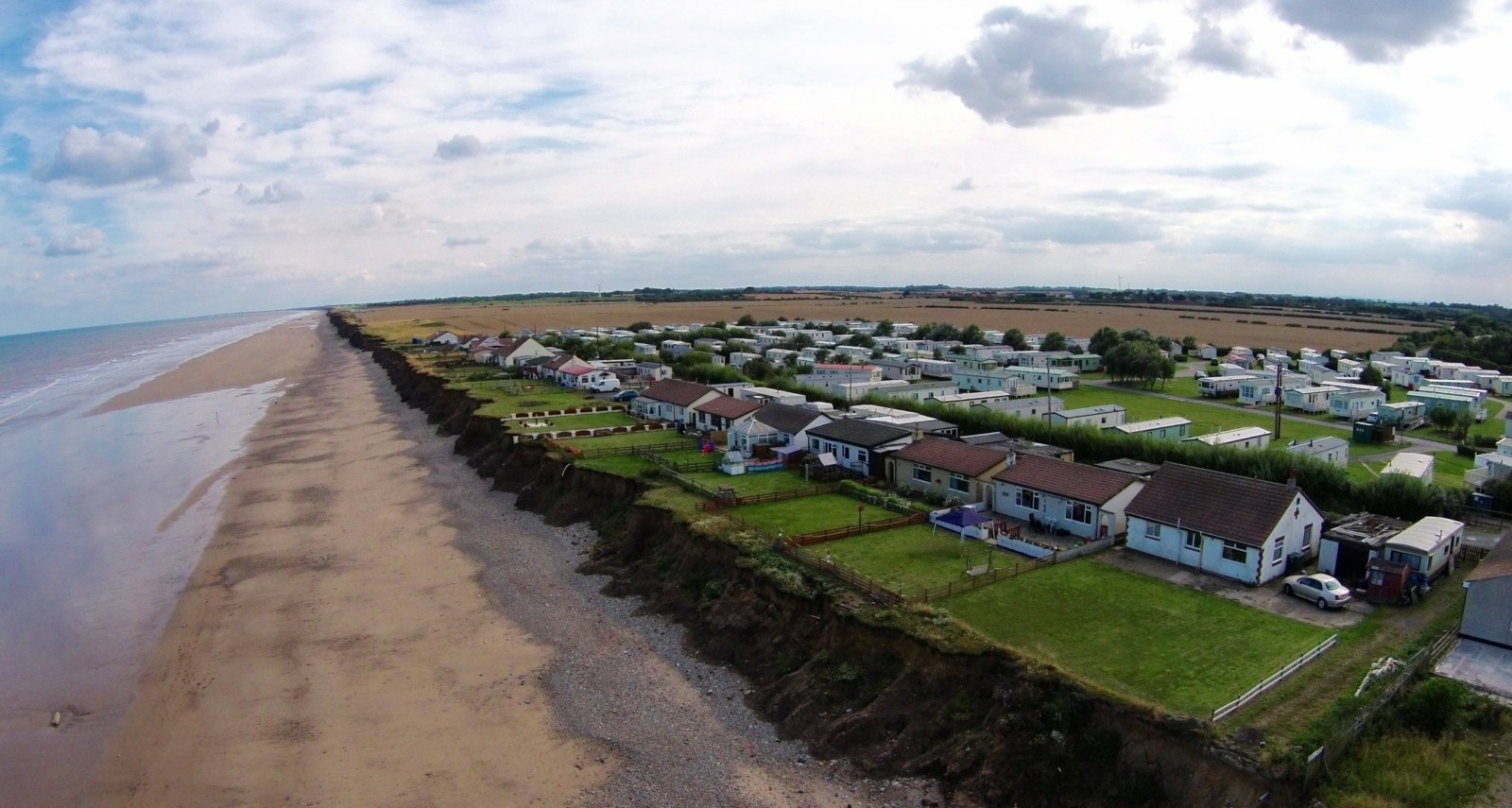
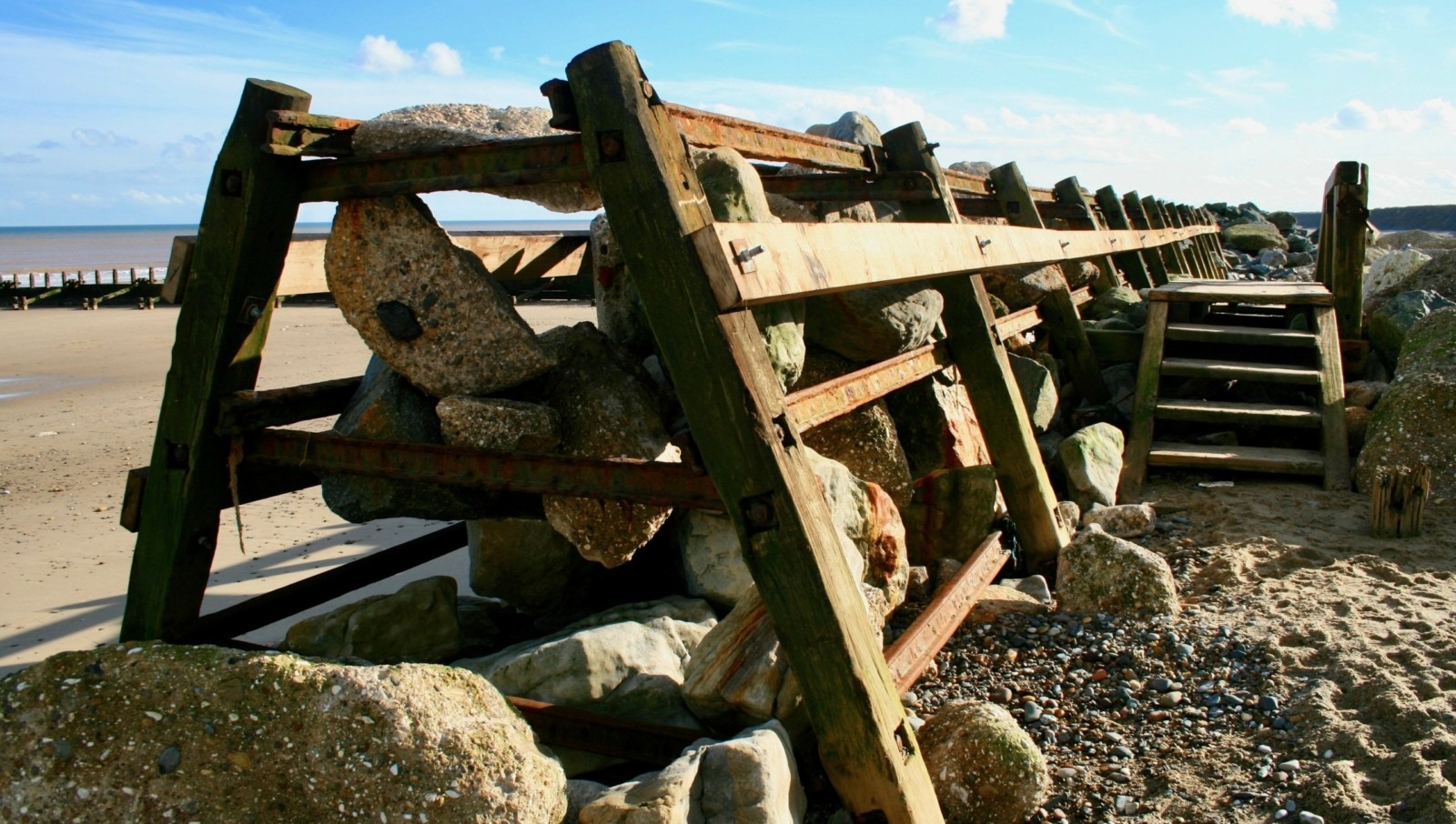
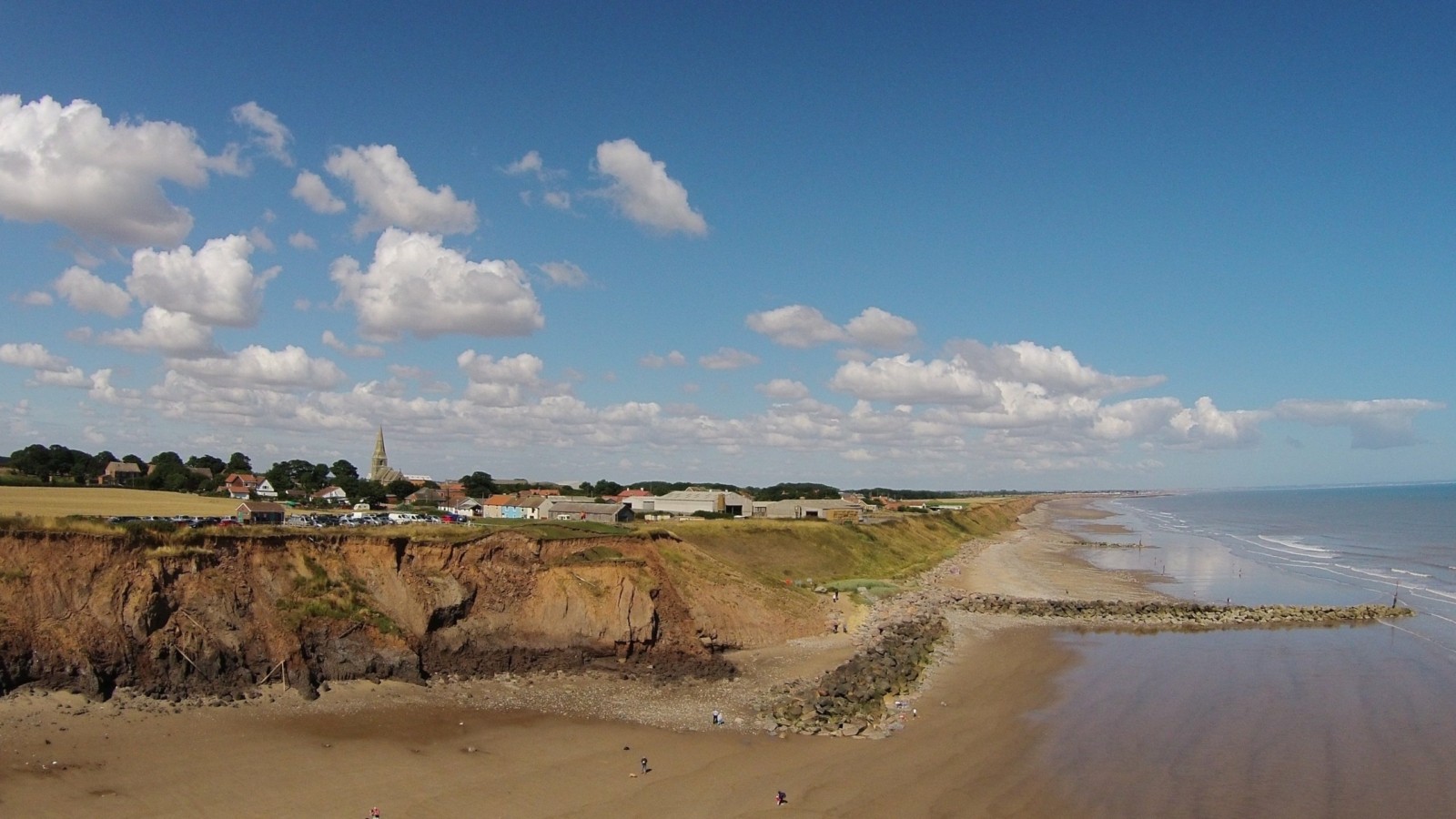
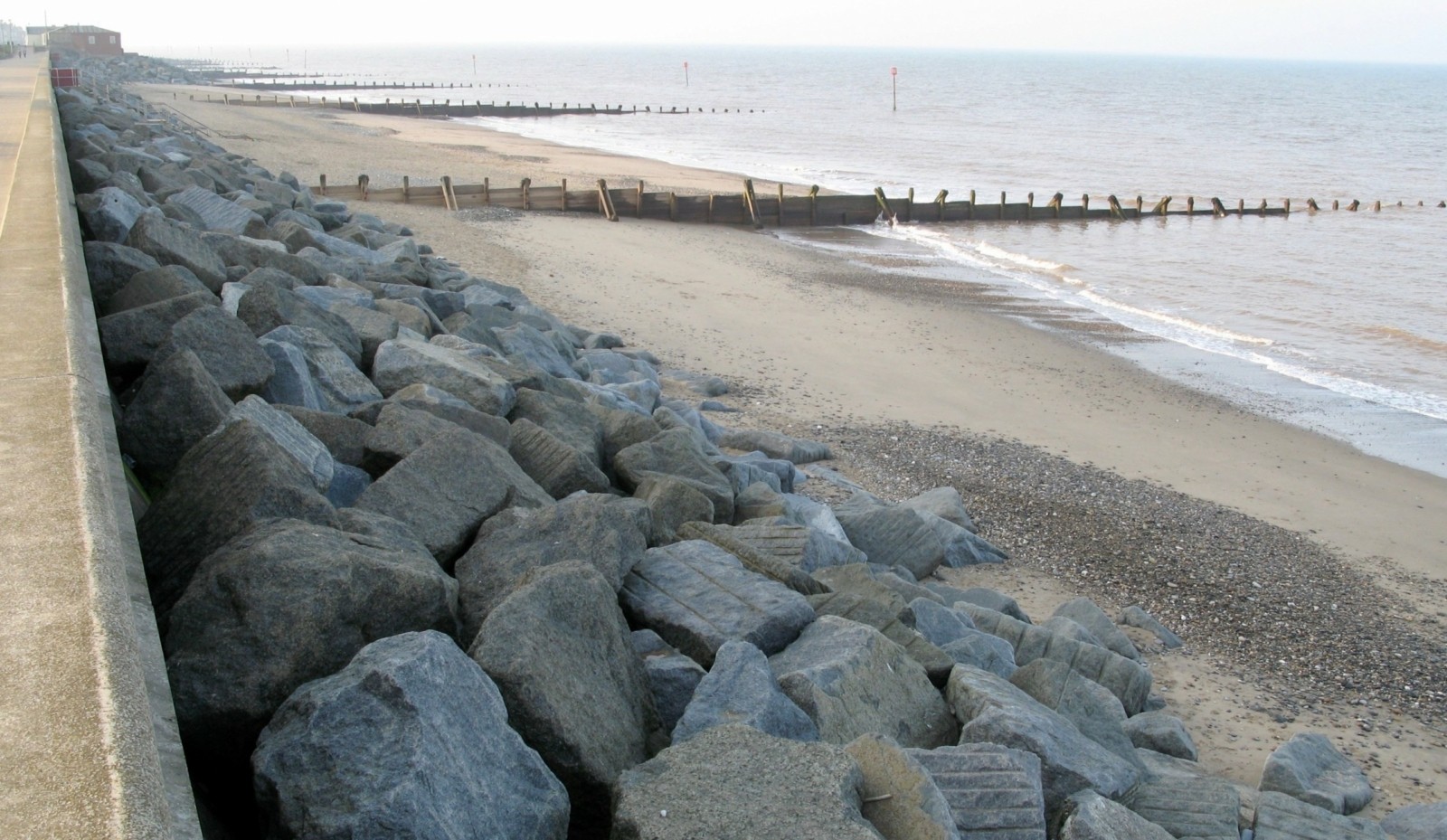
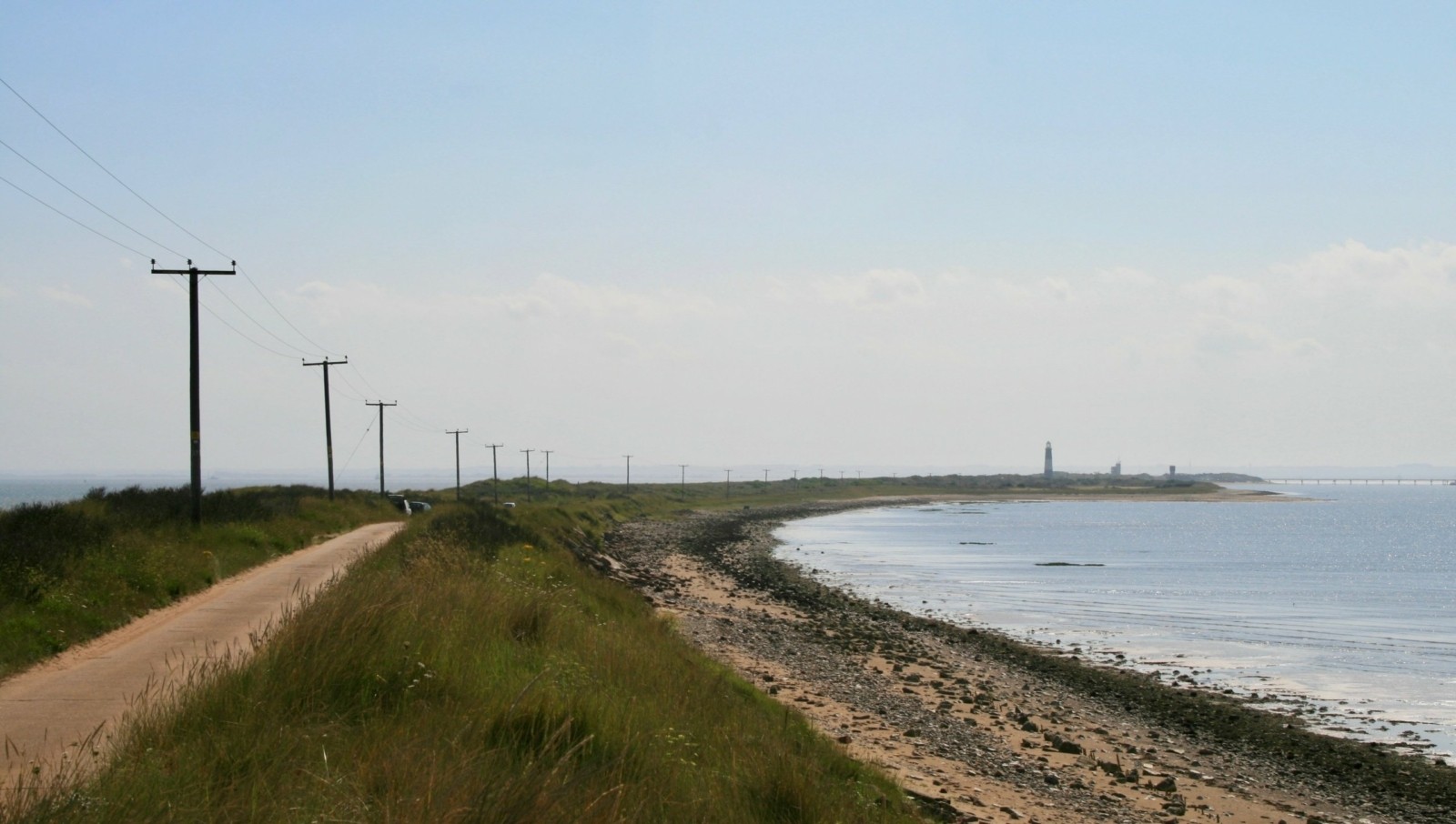
Use the images below to explore locations along the Holderness Coast.