OCR B GCSE Geography Revision
Revision materials to support you in preparing for your GCSE Geography exams.

‘El Niño’ refers to the periodic warming of sea surface temperatures every few years in the central and eastern equatorial Pacific.
An El Niño event is officially declared when sea temperatures rise by 0.5 °C above the long-term average in the tropical eastern Pacific. During El Niño, the tropical eastern Pacific experiences significantly warmer than average weather.
The effects of El Niño often reach their peak in December. The name “El Niño,” meaning “the boy,” is believed to have originated centuries ago from Peruvian fishermen who called the weather phenomenon “El Niño de Navidad,” in reference to the newborn Christ.
The El Niño effect occurs every 3-7 years (and lasts around nine months) when trade winds blowing from east to west are weakened by tropical Pacific weather systems or slow changes in the ocean around the equator. This allows warm water to travel east across the Pacific Ocean, increasing surface sea temperatures in the tropical central and eastern Pacific.
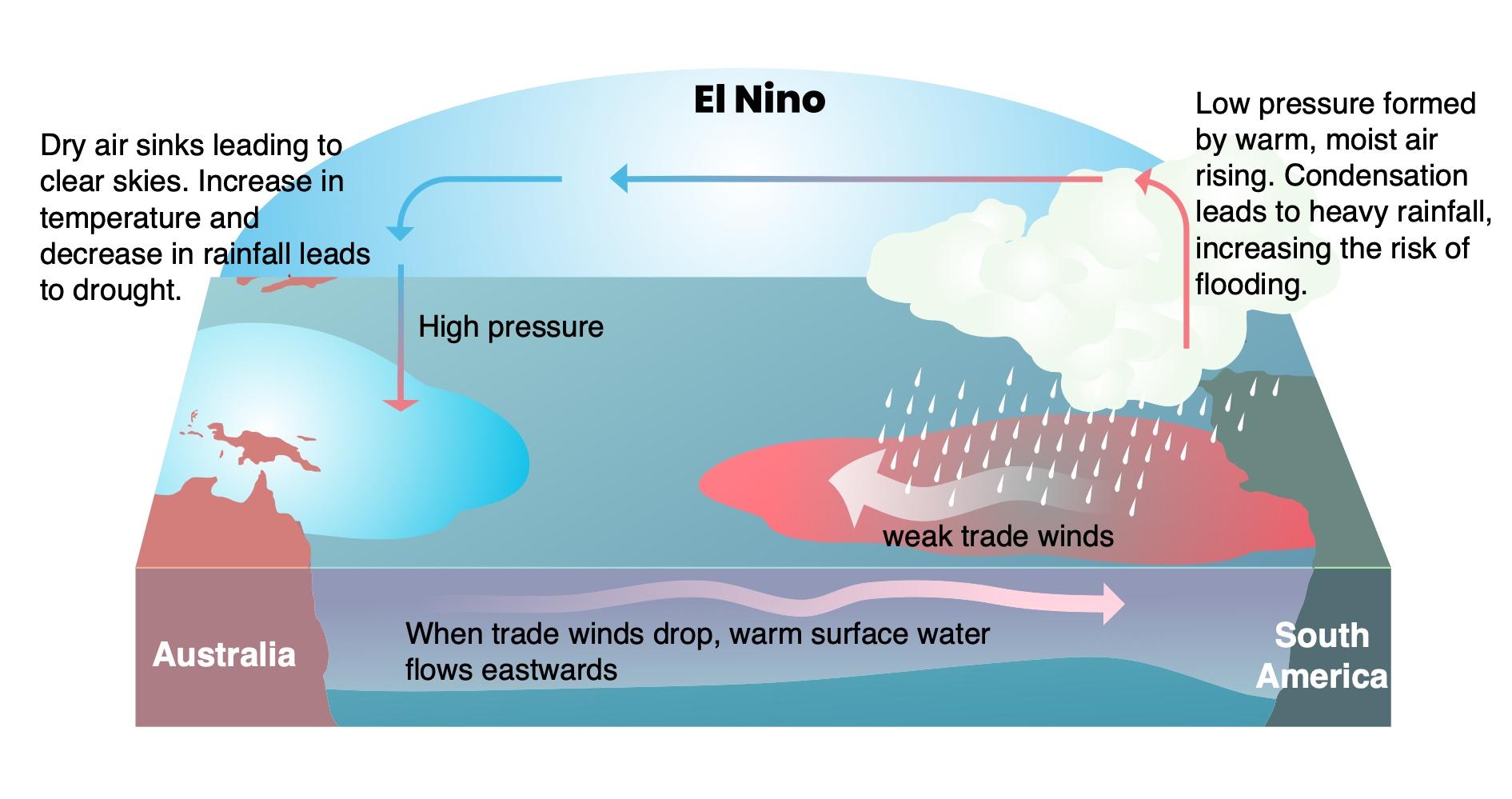
El Nino
Because the area of warm water moves, so does the area of unsettled, wet weather, with low pressure and increased rainfall over the west coast of South America.
The dry air travels west in the upper atmosphere and sinks, forming high pressure over Australasia and Asia. Clear skies lead to an increase in temperature; combined with the lack of moisture, drought is common.
El Niño and La Niña
La Niña


