
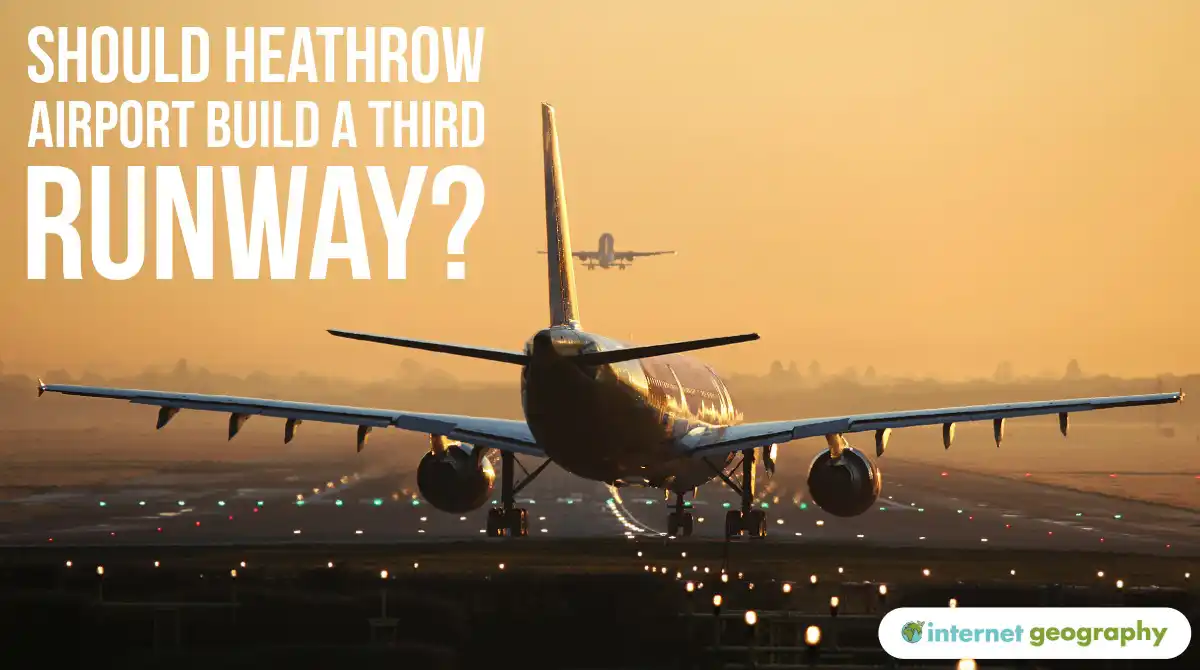
Heathrow Airport is one of the world’s busiest airports. It is the world’s second-busiest airport for international passengers (passengers who travel from one country and land in another), and the UK’s most popular airport, with 84.5 million passengers each year.
Located on the western edge of London, the airport currently has two runways. Because of its popularity, it wants to open a third runway. The UK Government is reviewing proposals to develop a new runway at Heathrow.
Supporters of the expansion argue that it would create thousands of jobs and improve the UK’s connections with the rest of the world. Opponents worry about noise, pollution, and the impact on nearby communities.
Demand for a new runway
Heathrow wants to expand to a third runway, arguing it would increase the number of destinations passengers can travel to.
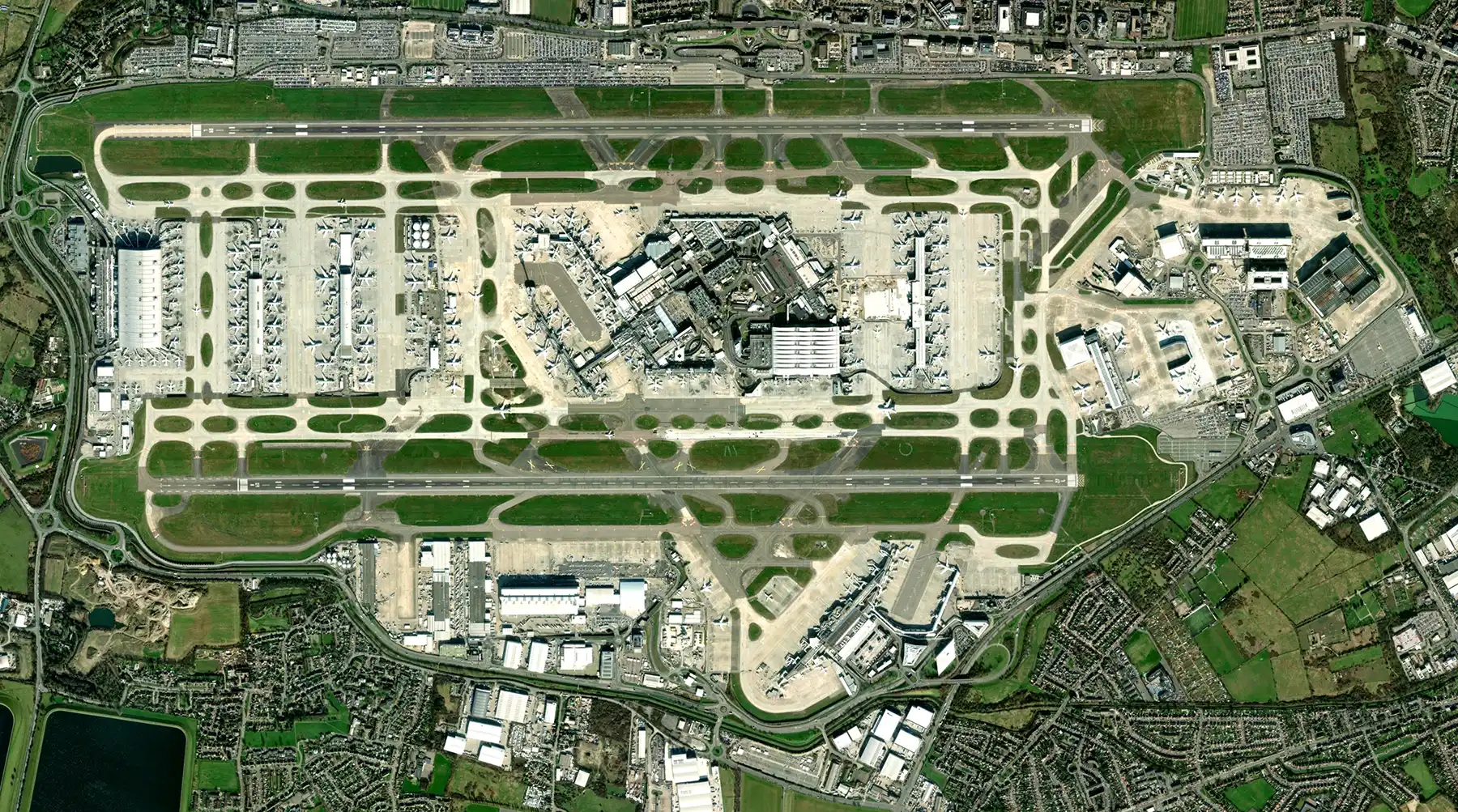
Heathrow airport from above
They also argue it would improve international trade. After all, airports move goods as well as passengers. This could benefit many UK businesses.
Heathrow estimates the expansion could create 100,000 jobs across the UK in construction, engineering, transport, and businesses supplying materials and services.
The proposed expansion will involve £33 billion from private investment. This money will come from businesses and investors, not the government.
Heathrow argues that the benefits of expanding the airport will be felt across the UK, not just in London, because improved transport connections will spread the benefits.
Why are people against the plan?
Residents are very concerned about the proposed Heathrow expansion. Building a new runway requires land. Some homes and buildings in the area will need to be demolished. This will force some residents to move away from their neighbourhoods.
Noise is a significant concern. The expansion will mean more flights. More flights mean more noise from aircraft taking off and landing.
Air pollution is another concern. More aircraft and road traffic will negatively affect air quality.
There are wider
Heathrow Airport is one of the world’s busiest airports. It is the world’s second-busiest airport for international passengers (passengers who travel from one country and land in another), and the UK’s most popular airport, with 84.5 million passengers each year.
Located on the western edge of London, the airport currently has two runways. Because of its popularity, it wants to open a third runway. The UK Government is currently reviewing proposals to develop a new runway at Heathrow.
Supporters of the expansion argue that it would create thousands of jobs and improve the UK’s connections with the rest of the world. Those who oppose worry about noise, pollution, and its impact on nearby communities.
Demand for a new runway
Heathrow wants to expand to a third runway, arguing it would increase the number of destinations passengers can travel to.
They also argue it would improve international trade. After all, airports move goods as well as passengers. This could benefit many UK businesses.
Heathrow estimates the expansion could create 100,000 jobs across the UK in construction, engineering, transport, and businesses supplying materials and services.
The proposed expansion will involve £33 billion from private investment. This money will come from businesses and investors, not the government.
Heathrow argues that the benefits of expanding the airport will be felt across the UK, not just in London, because improved transport connections will spread the benefits.
Why are people against the plan?
Residents are very concerned about the proposed Heathrow expansion. Building a new runway requires land. Some homes and buildings in the area will need to be demolished. This will force some residents to move away from their neighbourhoods.
Noise is a significant concern. The expansion will mean more flights. More flights mean more noise from aircraft taking off and landing.
Air pollution is another concern. More aircraft and road traffic will negatively affect air quality.
There are also wider environmental concerns. When aircraft burn fuel, they release carbon dioxide, a greenhouse gas that contributes to climate change. Critics argue that expanding the airport will make it harder for the UK to reduce its greenhouse gas emissions.
Opponents also argue that investment in transport infrastructure should be more evenly spread across the UK. They argue that investment in other airports and transport networks could spread economic benefits more fairly.
What happens next?
The third runway has not received final planning permission.
Parliament is currently reviewing the government’s planning framework for the expansion. The airport also needs to submit a detailed planning application. Both must be assessed before a final decision is made.
Local people will have another opportunity to have their say during a public consultation from 27th October 2026.
If the plans are approved, construction would take several years. Some recent reports have suggested the new runway would not open until at least 2039.
The people making the final decision will consider whether the potential benefits of the expansion outweigh the costs.
If you had the final say, what would you do?