
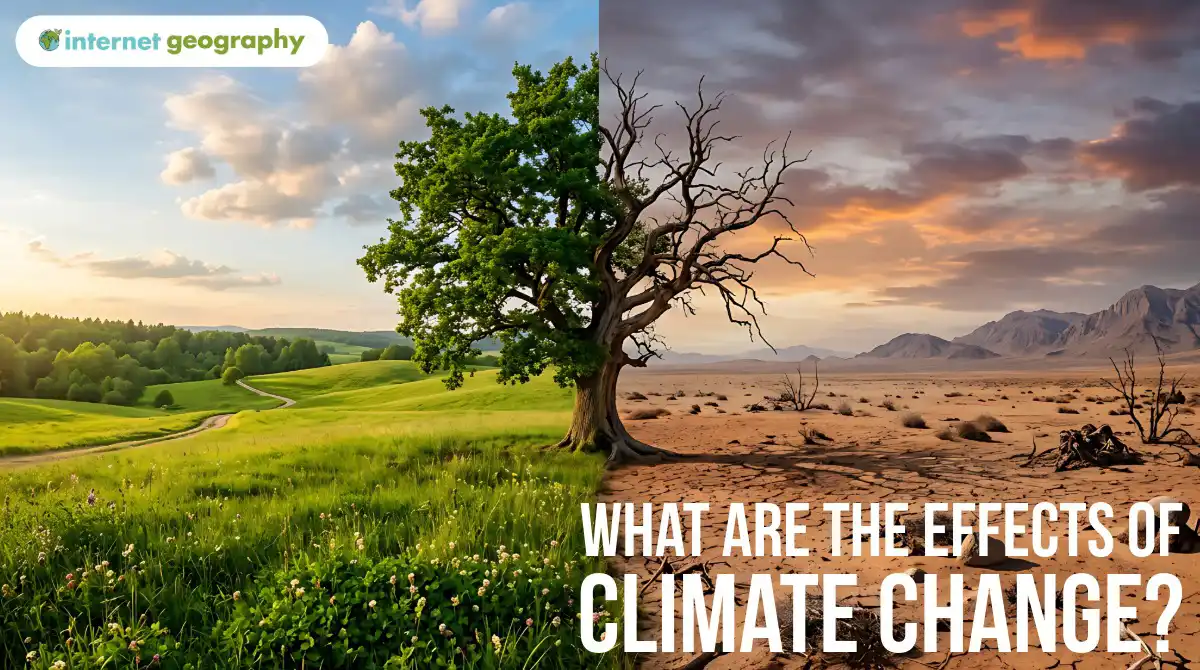
Climate change is already affecting both the natural environment and human societies across the world. While there may be a few small benefits in some regions, the overall impacts are largely negative and are becoming more severe over time.
To understand these impacts clearly, they can be grouped into environmental and human effects.
Environmental Effects
Rising temperatures
Global temperatures are increasing, leading to more frequent and intense heatwaves. Polar regions are warming fastest (a phenomenon known as polar amplification). Higher temperatures also increase evaporation, which can dry out soils and vegetation.
Melting ice and rising sea levels
Glaciers and ice sheets are melting at an increasing rate. This, combined with the thermal expansion of seawater as it warms, is causing sea levels to rise. As a result, low-lying coastal areas are increasingly at risk of flooding and erosion.
Changing weather patterns
Climate change is altering global rainfall patterns. Some areas are becoming wetter, leading to more frequent flooding, while others are becoming drier, increasing the risk of drought.
More extreme weather
There is growing evidence that climate change is increasing the frequency and intensity of extreme weather events. These include storms, hurricanes, heavy rainfall, droughts and wildfires.
Ecosystem disruption
Plants and animals are struggling to adapt to rapidly changing conditions. Some species are forced to migrate, while others face extinction. Marine ecosystems are also affected, particularly coral reefs, which suffer from coral bleaching due to rising sea temperatures.
Effects on People
Food security
Changes in temperature and rainfall affect crop growth and yields. In some regions, this can reduce food production and increase the risk of famine, particularly in vulnerable countries.
Water supply
Droughts reduce water availability, while higher temperatures increase demand. This puts pressure on water supplies, especially in already dry regions.
Coastal flooding and displacement
Rising sea levels increase the risk of coastal flooding, threatening homes, infrastructure and livelihoods. In some cases, people are forced to move away from affected areas, becoming climate migrants.
Health impacts
Heatwaves can lead to increased illness and deaths, particularly among vulnerable groups such as the elderly. Climate change can also allow diseases to spread to new areas. In addition, air quality may worsen due to wildfires.
Economic impacts
Climate change can damage infrastructure, disrupt businesses and increase costs for governments. Key industries such as agriculture, tourism and insurance are particularly affected.
Effects of Climate Change in the UK
Climate change is already having noticeable impacts in the UK, including:
- Increased risk of flooding due to more intense rainfall
- Greater likelihood of water shortages during hotter, drier summers
- Increased coastal erosion and risk from sea level rise
There may be some limited benefits:
- Longer growing seasons for some crops
- Reduced energy demand for heating in winter
However, these benefits are outweighed by the overall negative impacts.
Are There Any Benefits?
Some regions may experience short-term benefits from climate change, such as longer growing seasons or the ability to grow new crops. However, these benefits are unevenly distributed and are small compared to the global risks and negative impacts.
Key Idea
Climate change has widespread environmental and social impacts, including rising sea levels, extreme weather and threats to food and water security. While there may be a few localised benefits, the overall impact is negative, uneven, and increasingly severe over time.
Humans can manage the effects of climate change through adaptation and mitigation.


