
Characteristics of Rivers and Drainage Basins
Rivers are dynamic systems that change as they flow from their source to their mouth. These changes affect the river’s shape, speed and the amount of water it carries. Understanding river characteristics is essential for explaining river processes, landforms and flood risk.
The Drainage Basin System
A drainage basin (also known as a river basin or catchment) is the area of land drained by a river and its tributaries. Any precipitation that falls within the drainage basin will eventually flow into the main river channel.
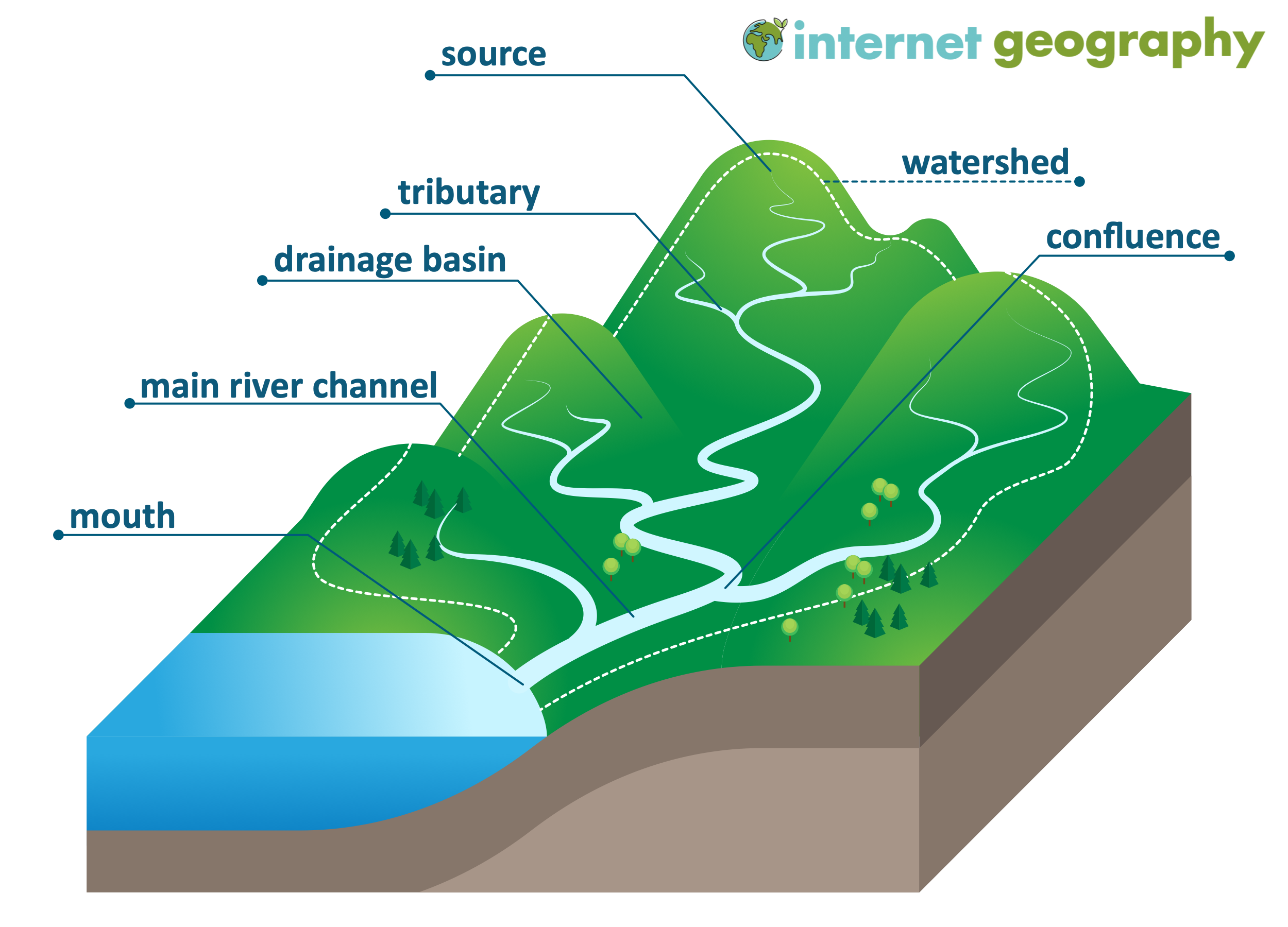
The main features of a drainage basin
Key Drainage Basin Terms
- Source – the starting point of a river, often found in highland areas.
- Tributary – a smaller river or stream that flows into a larger river.
- Confluence – the point where two rivers meet.
- Channel – the bed and banks through which a river flows.
- Watershed – high land that forms the boundary between drainage basins.
- Mouth – where a river ends, usually flowing into the sea, a lake or another river.
The Long Profile of a River
The long profile shows how the height of a river above sea level changes from source to mouth.
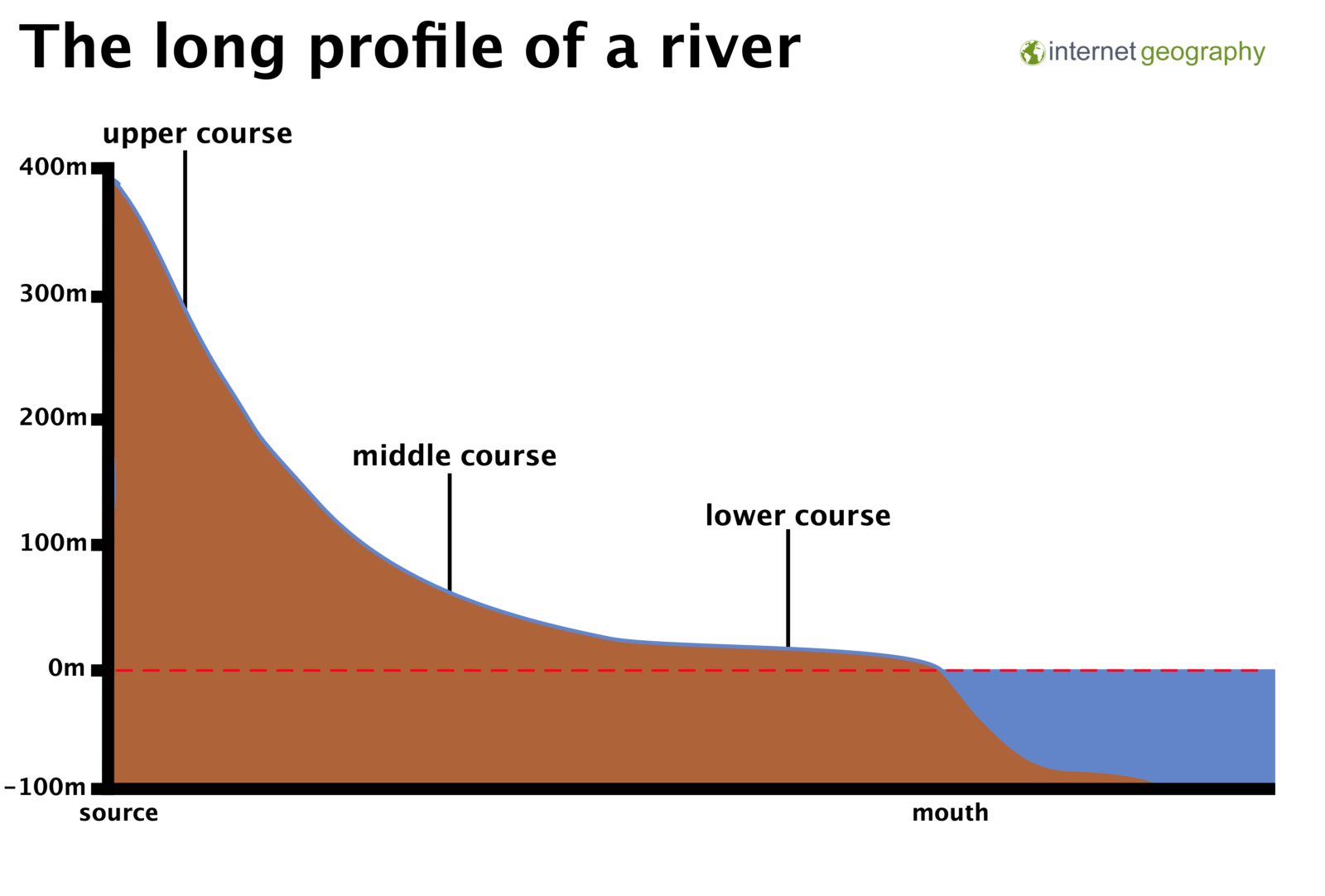
The long profile of a river
- Near the source, the river flows down a steep gradient.
- As the river moves downstream, the gradient becomes gentler.
- The long profile is usually concave, meaning it becomes progressively less steep towards the mouth.
Changes in River Channel Characteristics Downstream
As a river flows from its source to its mouth, its physical characteristics change.
Width and Depth
- Rivers are narrow and shallow in their upper course.
- Downstream, rivers widen and deepen as erosion increases and tributaries add more water.
Speed of Flow (Velocity)
- Velocity is the speed at which water flows in a river.
- Water flows more slowly near the river bed and banks due to friction
- Overall velocity generally increases downstream because the channel becomes smoother and deeper, reducing friction.
Discharge
- Discharge is the volume of water flowing in a river per second.
- It is measured in cubic metres per second (m³/s).
- Discharge downstream increases as tributaries contribute more water to the main river.
Wetted Perimeter
The wetted perimeter is the length of the river channel that is in contact with the water.
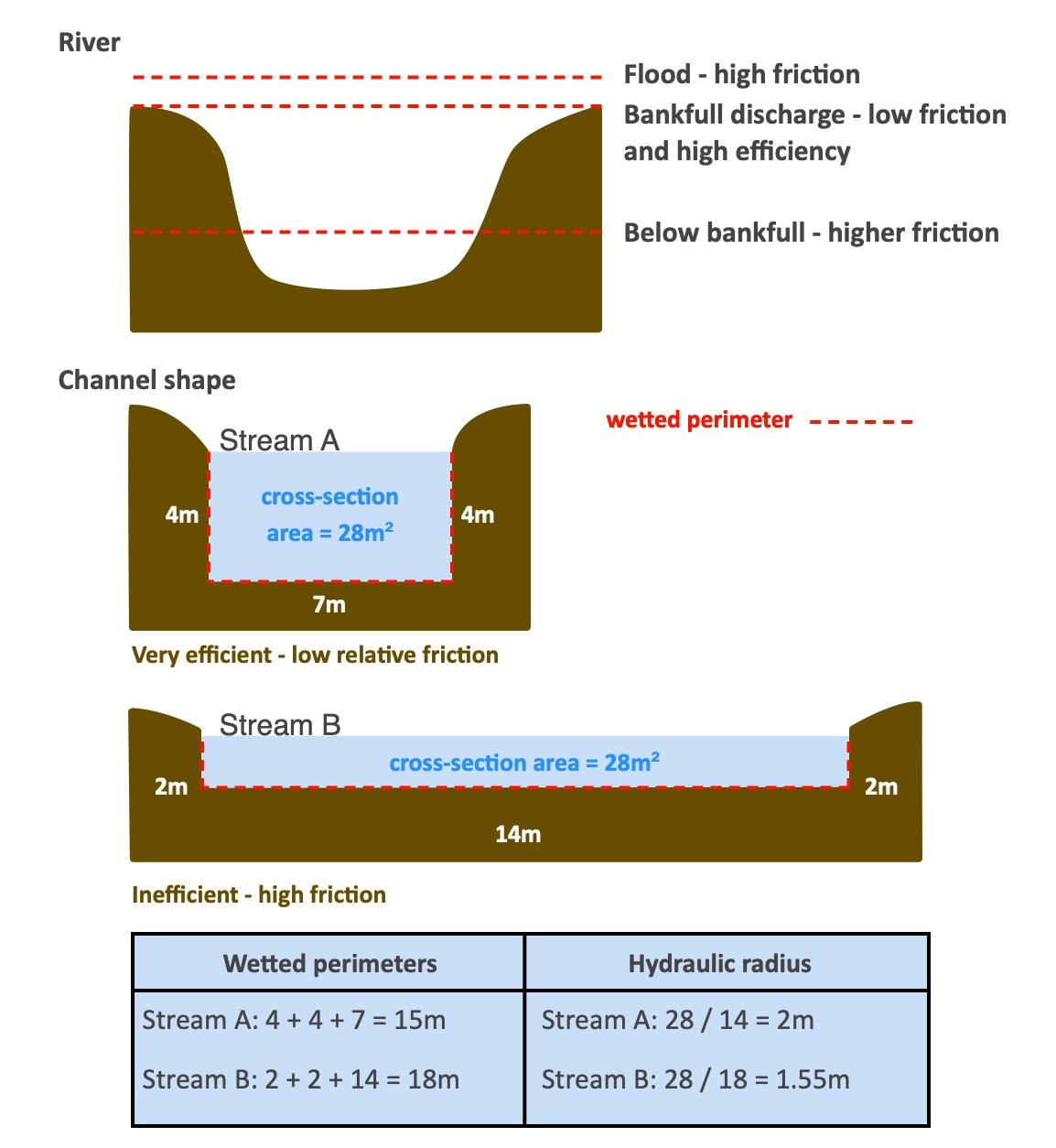
- A larger wetted perimeter increases friction.
- Although the wetted perimeter increases downstream, frictional resistance per unit volume decreases because the channel is deeper and smoother, thereby allowing faster flow.
How Rivers Change from Source to Mouth
- Gradient decreases
- The channel becomes wider and deeper
- Velocity increases overall
- Discharge increases
- Energy shifts from vertical erosion to lateral erosion


