How have animals adapted to the desert?



How have animals adapted to the desert?

Few animals, besides scorpions and small reptiles, have adapted to survive the hottest desert regions. In areas with a greater water supply, biodiversity increases as vegetation such as shrubs, cacti, and hardy trees form the foundation of a more extensive food web. As deserts are found on most continents, different consumer species have evolved to survive the harsh desert environment.

How have camels adapted to the desert?

A family of camels in the Thar Desert

A family of camels in the Thar Desert

Camels have been domesticated for at least 3500 years and have long been valued as pack animals. They can carry large loads 25 miles a day. Camels have adapted to survive hot deserts because they:
  • have humps to store fat which a camel can break down into water and energy when nourishment is not available;
  • rarely sweat, even in hot temperatures, so when they do take in fluids, they can conserve them for long periods;
  • have large, tough lips that enable them to pick at dry and thorny desert vegetation;
  • have broad, flat, leathery feet to spread their weight and provide protection from hot sand; 
  • have a light, woolly coast that reflects the sun during the day and provides warmth during cold desert nights;
  • lose little water through concentrated urination and perspiration, and
  • they have slit-like nostrils and two eyelashes to protect themselves from the sand.

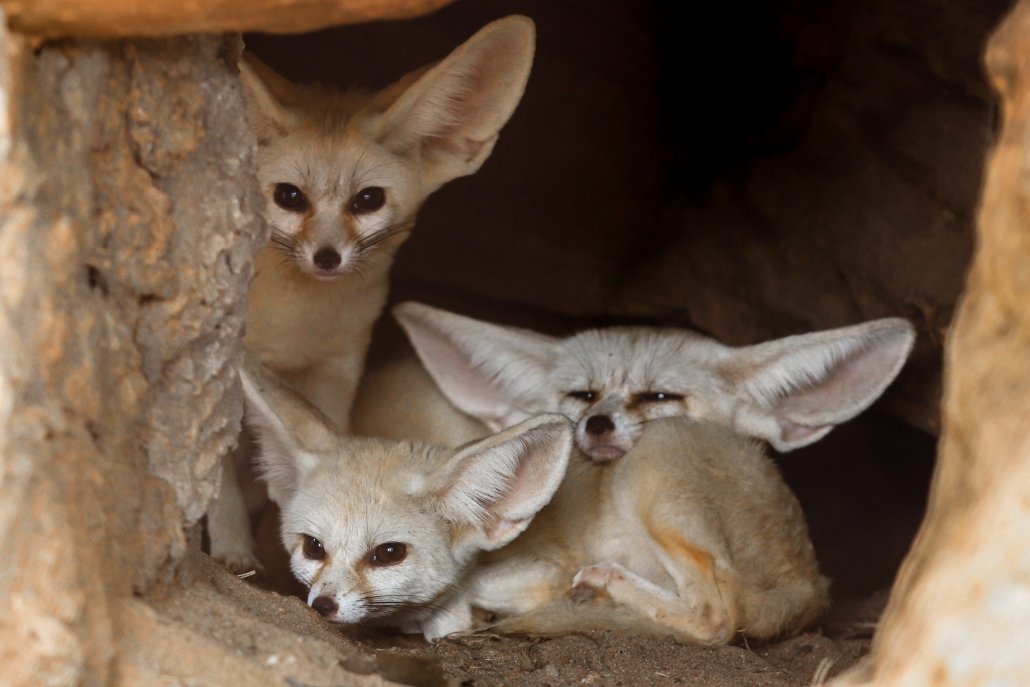
How have fennec foxes adapted to the desert?

A family of fennec foxes

A family of fennec foxes

The fennec fox is the smallest of all fox species. They are found in the Sahara Desert and elsewhere in North Africa. They are nocturnal, which helps them deal with the heat of the desert environment. They have also made some physical adaptations to help as well. For example, they:
  • have thick fur on their feet protecting them from the hot ground;
  • have large, bat-like ears radiate body heat and help keep them cool;
  • have long, thick hair that insulates them during cold nights and protects them from the hot sun during the day;
  • have light-coloured fur to reflect sunlight and keep their bodies cool. 

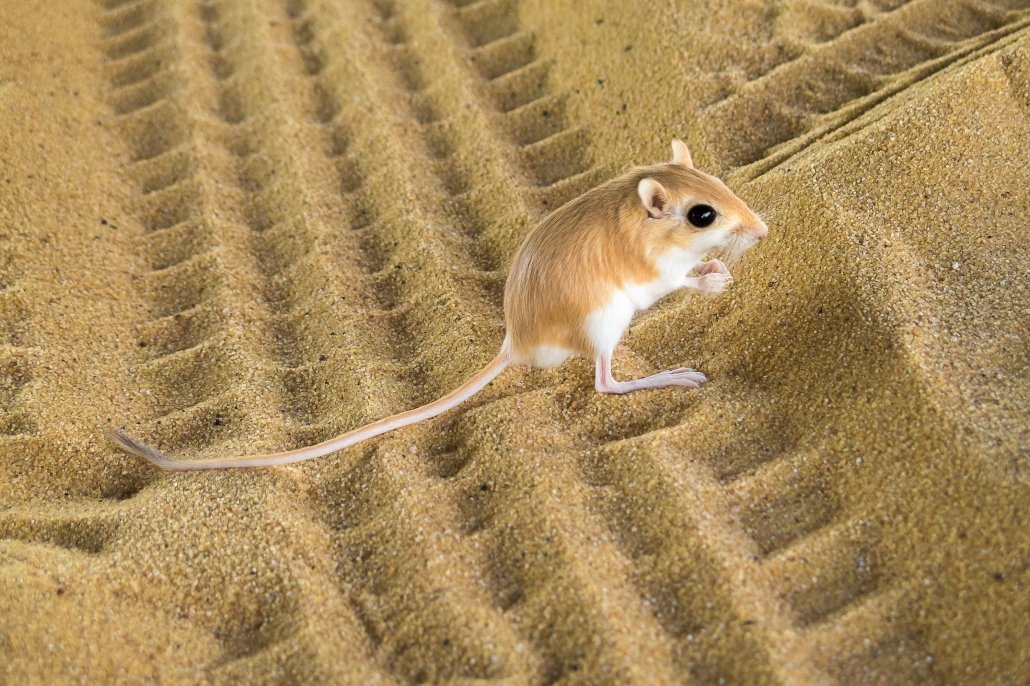
How have kangaroo rats adapted to the desert?

Kangaroo rat

A kangaroo rat

A kangaroo rat is a rodent found in desert areas in southwestern North America. Desert kangaroo rats live in areas with loose sand, often dune terrain. Kangaroo rats have made several adaptations to enable them to survive in the desert, including:

  • getting moisture from their seed diet;
  • living in burrows during the day to avoid extreme heat;
  • having large back legs that allow them to jump almost 3m to avoid predators;
  • having large ears, which enables them to hear approaching predators.
Internet Geography Plus


Related Topics

Use the images below to explore related GeoTopics.

Pin It on Pinterest

Share This