
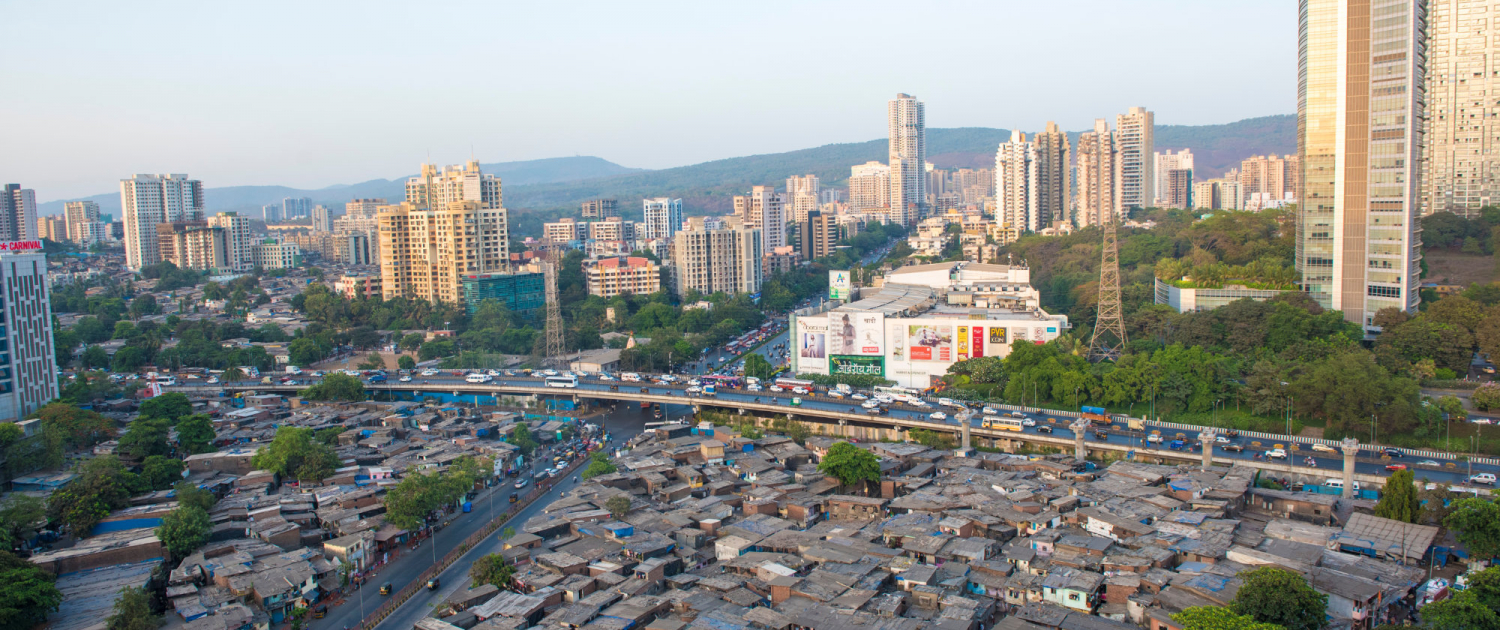
What are Mumbai’s social and economic opportunities?
Urban growth in Mumbai has brought a range of social and economic opportunities.
How has urban growth in Mumbai caused social opportunities?
Healthcare and education
Access to healthcare is improving in Mumbai. The city has more hospitals than any other urban area in India. Mumbai’s biggest public medical centre, Sion Hospital, has grown from 50 beds in 1950 to more than 1400 beds today. The hospital admits more than 60000 patients each year.
There are over 1000 primary and secondary schools in Mumbai. The Maharashtra government is duty-bound to provide compulsory, free education to every child from age 6 to 14. According to the 2011 Census, Mumbai literacy rates are high at 89.7% compared to the national average, which is 74.04 per cent. Even in the slums, the literacy rate is estimated to be more than 69%.
Mumbai also has a world-renowned university along with other important education and research institutions.
Water supply
Mumbai has a chlorinated central water supply managed by the government. However, the rapid growth of informal settlements in Mumbai has put enormous pressure on freshwater supplies. People living in notified informal settlements (where residents are safe from eviction) are also usually entitled to access city services, including water connections. In December 2014, the Bombay High Court ordered the city government to extend access to Mumbai’s water supply to residents living in non-notified informal settlements (where the residents do not hold any property rights and can be evicted at any time).
The rapid growth of informal settlements in Mumbai has put enormous pressure on the city’s sewage systems. In some areas, hundreds of people share a single toilet, and it is estimated that 1 in 20 people use the street as a toilet. The Mumbai Slum Sanitation project aims to improve sanitation facilities for up to a million dwellers across the city. Over 300 community toilet blocks have been built, housing more than 5100 individual toilets, with separate facilities for men and women.
Energy
Many informal settlements lack access to electricity and rely on bottled gas for cooking and heating. This is expensive and very dangerous. Also, the fumes created can cause health problems. The Global Partnership on Output-Based Aid (GPOBA) has recently completed a project that provided 8,000 to 10,000 households with new or upgraded electricity connections.
In 2016, the Indian utility company Municipal Corporation agreed on a deal with the US Agency for International Development to work towards establishing legal and safe electrical connections to the informal settlements of Mumbai.
How has urban growth in Mumbai caused economic opportunities?
Mumbai is the commercial and financial capital of India. 60% of India’s sea trade is based here. Nationally, Mumbai accounts for 33% of all income tax and 60% of all customs duty collected from trade. The largest number of TNC headquarters in Asia, including those of GSK, Walt Disney, and Volkswagen. It is home to the Indian stock market, the busiest port and the airports in India.
It has most of India’s specialised technical industries, e.g. aerospace, optical engineering, medical research, computers and electronic equipment, shipbuilding and salvaging and renewable energy.
The rapidly growing population of Mumbai has driven demand for goods and services, creating employment opportunities. Many migrants have been able to find jobs in the service sector as couriers, hairdressers and cleaners.
Mumbai has many job opportunities because it alone accounts for 6% of India’s GDP and 40% of its foreign trade. It is also a manufacturing hub that creates many jobs, 25% of India’s industrial production is in Mumbai. The port area also creates many valuable jobs.
It also houses the headquarters of many Indian financial institutions, such as the Bombay Stock Exchange and the Reserve Bank of India, as well as numerous Indian companies, such as the Tata Group. Most of these offices are located in downtown South Mumbai, which is the nerve centre of the Indian economy.
The rapid urban growth of Mumbai has also created a range of challenges.


Related Topics
Use the images below to explore related GeoTopics.


