
Mekong River Flooding Case Study
The Mekong River is one of the world’s largest river systems, flowing for around 4,300 km from China through Laos, Thailand and Cambodia before forming a large delta in southern Vietnam.
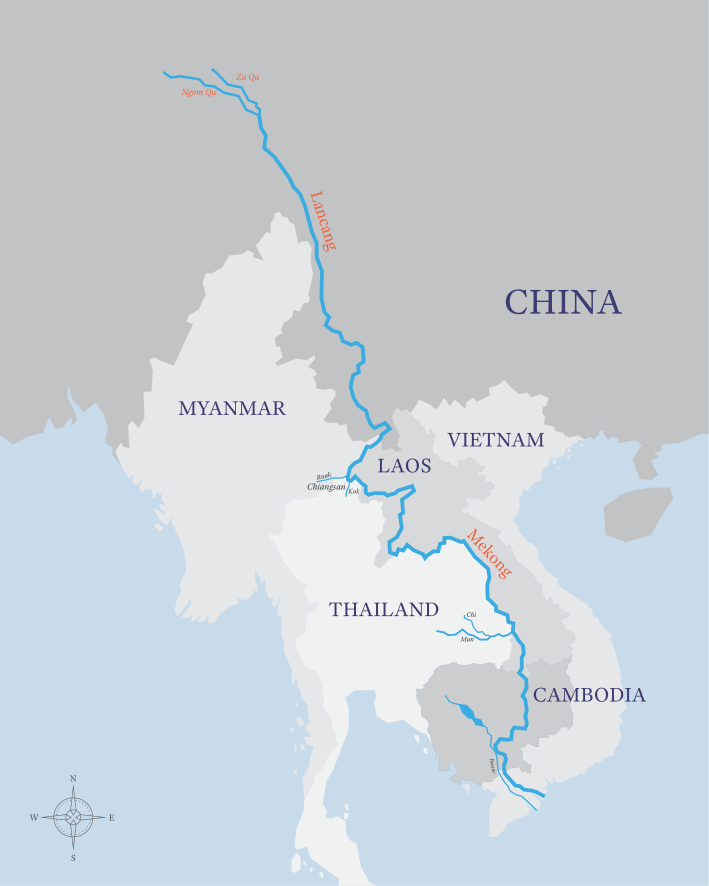
The Mekong River
Over 70 million people depend on the river for fishing, farming and transport. Seasonal flooding is a natural part of the Mekong system, but increasing human pressures and climate change have made flooding more dangerous and unpredictable.
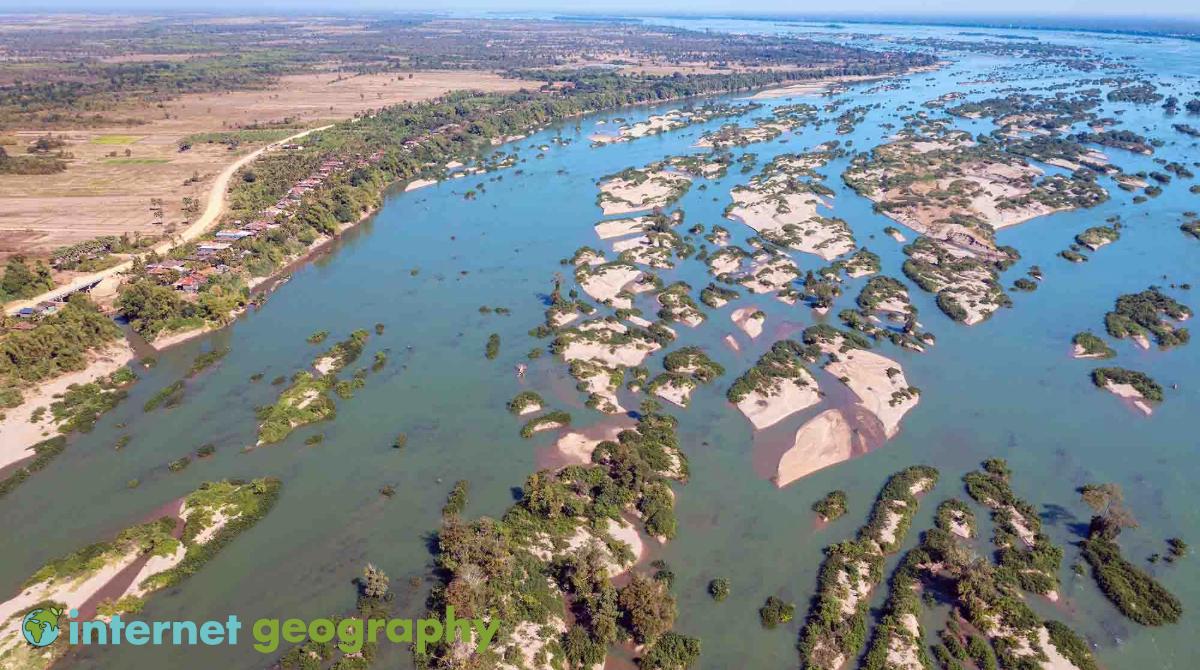
Causes of Flooding
Natural Causes
Monsoon rainfall
- Between May and October, the south-west monsoon brings prolonged and intense rainfall to the Lower Mekong Basin.
- Heavy rainfall increases river discharge until the Mekong overtops its banks.
The Tonle Sap system (Cambodia)
- The Tonle Sap is connected to the Mekong by the Tonle Sap River.
- During the wet season, high Mekong water levels reverse the river’s flow, pushing water into the lake.
- Once the lake reaches capacity, the surrounding low-lying land floods extensively, increasing the flood extent in central Cambodia.
Flat, low-lying floodplains
Much of Cambodia and the Mekong Delta lies only a few metres above sea level.
Floodwater spreads widely and drains away slowly, prolonging flooding.
Human Causes
Dam construction upstream
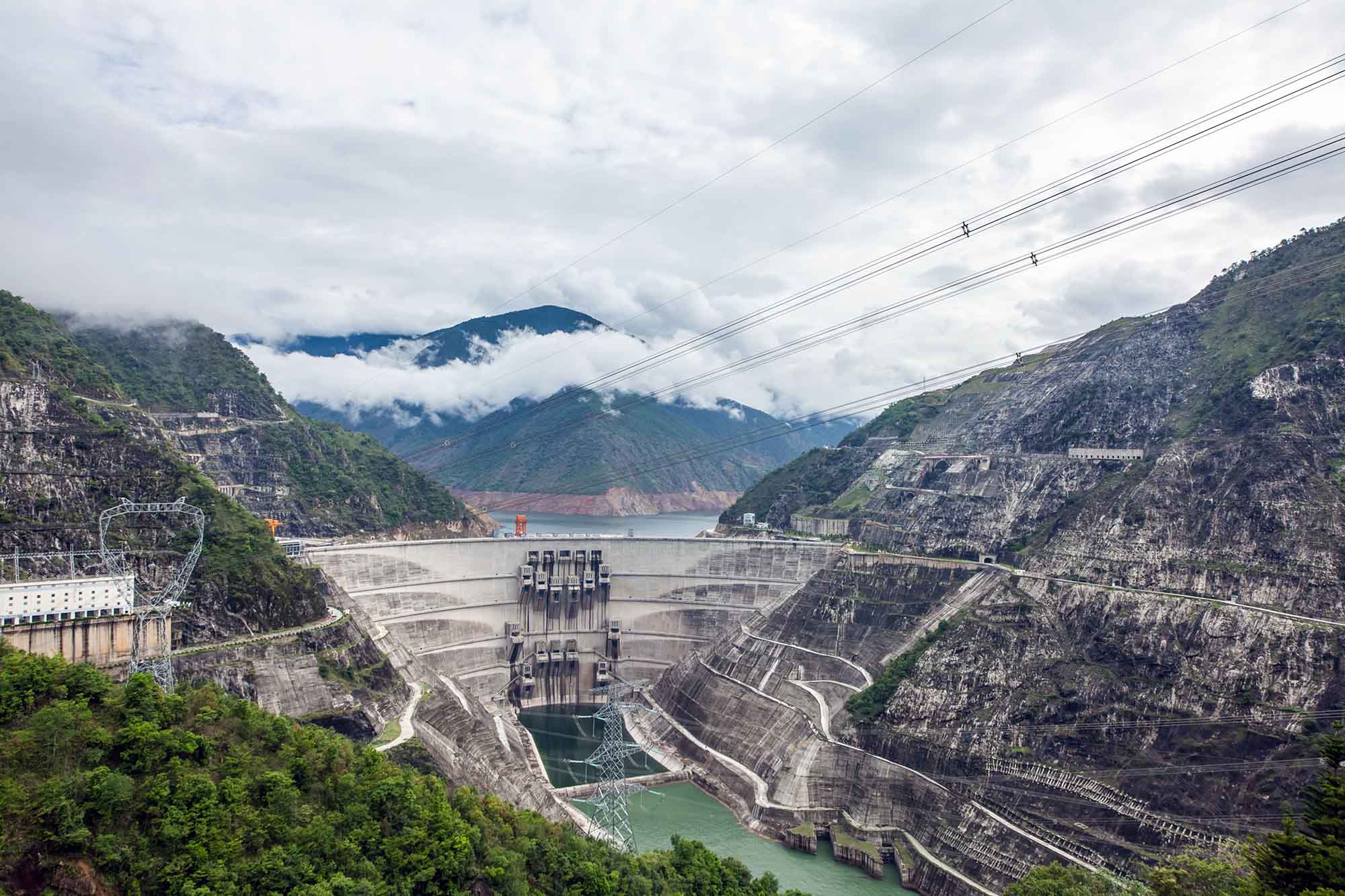
The Xiaowan Dam on The Mekong River in China
- Large hydroelectric dams in China and Laos store vast amounts of water.
- Sudden releases during the wet season can increase downstream discharge.
- Dams also reduce sediment supply, altering natural river processes.
Settlement and farming on floodplains
- Dense populations farm fertile alluvial soils along the Mekong.
- Housing, roads and embankments reduce natural floodwater storage, increasing flood depth.
Climate change
- Rainfall events are becoming more intense and less predictable.
- This increases peak discharge and flood risk.
Impacts of Flooding
Social Impacts
- Seasonal flooding regularly displaces tens of thousands of people in Cambodia and the Mekong Delta.
- Floodwater contamination of wells and latrines increases the risk of waterborne diseases, including diarrhoea and cholera.
- Roads and schools are often closed during peak floods.
Economic Impacts
- Rice crops are damaged if floods arrive too early or remain for too long.
- In the Mekong Delta, flooding disrupts transport routes used to move rice and fish to markets.
- Repairing homes and infrastructure places pressure on household incomes.
Environmental Impacts
- Severe floods can destroy crops and natural vegetation.
- However, regular flooding deposits nutrient-rich sediment, improving soil fertility.
- Flooding supports fish breeding in the Tonle Sap system, which is vital for Cambodia’s fishing industry.
Named Flood Event: Xe Namnoy Dam Failure, Laos (July 2018)
In July 2018, catastrophic flooding occurred after the collapse of the Xe Namnoy dam in southern Laos. Prolonged monsoon rainfall caused reservoir levels to rise dangerously, leading to structural failure. Floodwater surged downstream into Cambodia, destroying villages in Attapeu Province. At least 40 people were killed, thousands were displaced, and farmland, roads and bridges were destroyed. The event highlighted the risks of large-scale dam construction in a monsoon-dominated river basin affected by climate change.
Strategies to Manage Flooding
Hard Engineering
Dams and reservoirs
- Dams regulate river flow and can reduce flooding in some years.
- However, sudden releases can increase flood risk downstream.
- They disrupt sediment movement and fish migration, reducing sustainability.
Soft Engineering and Sustainable Strategies
Flood forecasting and early warning
- The Mekong River Commission operates river-level monitoring stations across the basin.
- Early warnings allow evacuation and preparation, reducing loss of life.
Living with floods
- Houses are built on stilts in flood-prone villages.
- Farming calendars are adapted to seasonal flooding.
- Flood-resistant rice varieties are used.
Floodplain and wetland management
- Allowing parts of the floodplain to flood naturally reduces peak discharge.
- Wetlands store floodwater and support biodiversity.
- This is a long-term, sustainable approach.
Evaluation
Engineering strategies such as dams provide some control but are expensive and can increase risk downstream. Sustainable approaches, including floodplain management, early warning systems and community adaptation, reduce vulnerability without damaging ecosystems. The most effective flood management in the Mekong basin uses an integrated, basin-wide approach that works with natural river processes rather than attempting to eliminate flooding completely.
Summary
Flooding of the Mekong River in Cambodia and Vietnam is caused by monsoon rainfall, the Tonle Sap system, flat floodplains and human activity, including dam construction and climate change. Floods create serious social and economic challenges but also provide long-term environmental benefits. Sustainable flood management, combined with regional cooperation, offers the most effective long-term solution.


