
Nairobi River Pollution Case Study
The Nairobi River and its tributaries flow through Nairobi, Kenya’s capital. The river passes through some of the most densely populated and industrialised parts of the city, including informal settlements such as Kibera and Mathare. Rapid population growth, urbanisation and weak infrastructure have caused severe pollution, making the Nairobi River one of the most polluted rivers in Kenya.
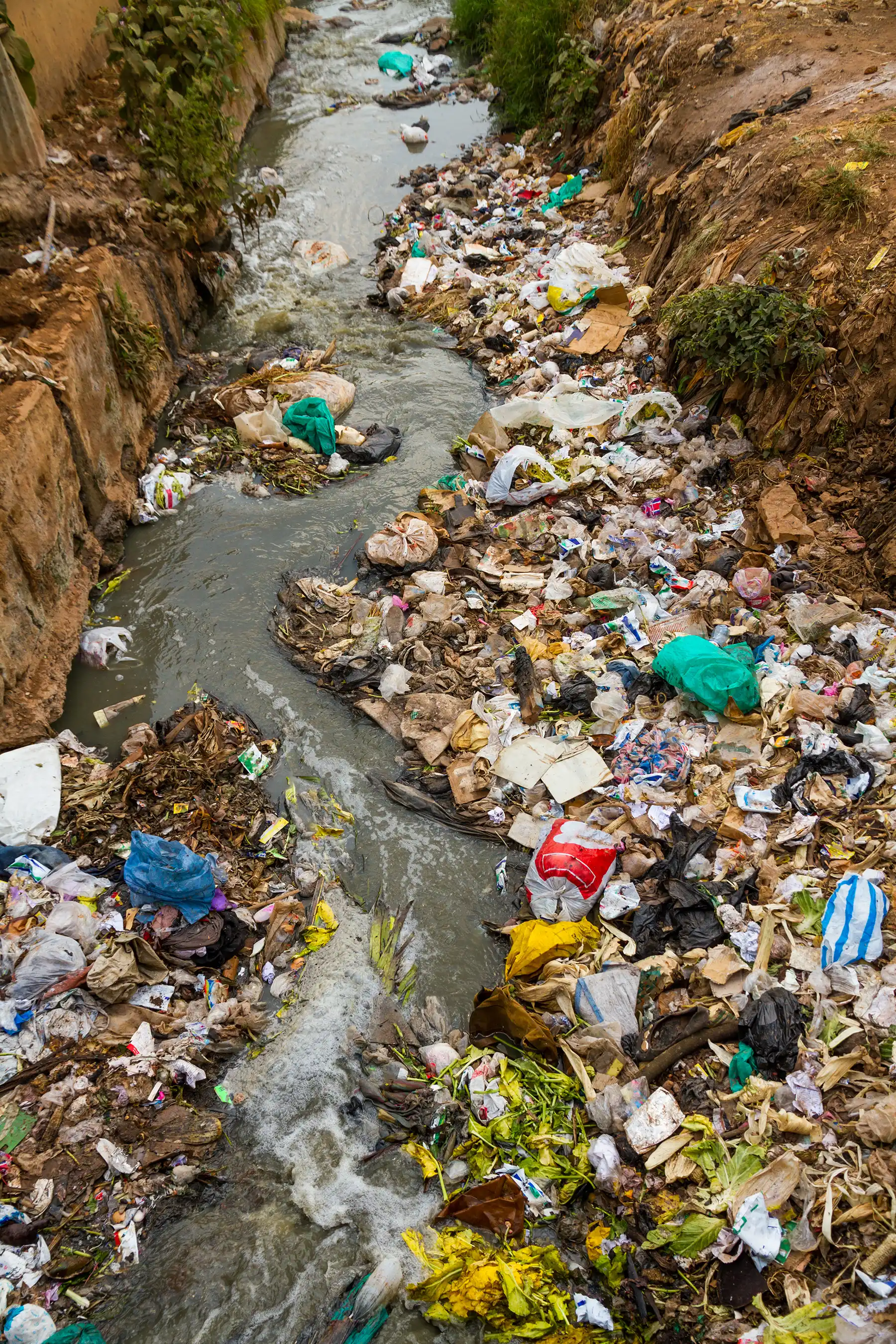
Plastic pollution in a tributary of the Nairobi River in Kibera, a district in Nairobi
Causes of Pollution
Human Causes
Untreated sewage
- Large areas of Nairobi lack effective sewerage systems.
- Open sewage channels and leaking pipes discharge raw human waste directly into the river.
- During heavy rainfall, sewage is washed rapidly into the river, increasing contamination.
Industrial waste
- Factories located along the river release chemicals, heavy metals and oils.
- Poor regulation and enforcement result in waste often being discharged illegally.
- These pollutants reduce water quality and harm aquatic life.
Solid waste and plastic pollution
- Household waste is frequently dumped into the river, particularly in informal settlements.
- Plastic bags, bottles and packaging block the channel and reduce oxygen levels in the water.
- Waste is carried downstream, spreading pollution.
Urban runoff
- Rainfall washes oil, fuel, detergents and litter from roads and buildings into the river.
- Impermeable surfaces increase runoff, allowing pollutants to reach the river quickly.
Agricultural pollution (upstream)
- Pesticides and fertilisers from farming on the outskirts of Nairobi enter the river.
- These chemicals increase nutrient levels and worsen water quality.
Impacts of Pollution
Environmental Impacts
- Low oxygen levels caused by organic waste lead to fish deaths.
- Pollution encourages the spread of water hyacinth, an invasive species that clogs waterways and blocks sunlight.
- Biodiversity in and around the river has declined significantly.
Social Impacts
- Communities using river water for washing or household use are exposed to waterborne diseases such as cholera and diarrhoea.
- Polluted water contaminates soils and shallow groundwater, increasing health risks.
- Living conditions in riverside settlements are worsened by foul smells and waste accumulation.
Economic Impacts
- Cleaning polluted water for domestic or industrial use is expensive.
- Flooding is worsened when waste blocks channels, damaging homes and infrastructure.
- The polluted river reduces recreational and economic opportunities in the city.
Strategies to Manage Pollution
Government and Organisational Action
Nairobi Rivers Regeneration Programme
- The Kenyan government launched a programme to clean the Nairobi River and its tributaries.
- Activities include removing waste, clearing river banks and improving drainage.
- Thousands of local people have been employed in clean-up schemes.
Improving sewage and sanitation
- Investment is being made to repair and expand sewerage systems.
- Reducing the amount of untreated sewage entering the river improves water quality.
- Progress is slow due to cost and rapid population growth.
Sustainable Strategies
Riverbank restoration and tree planting
- Trees are planted along river banks to stabilise soil and reduce runoff.
- Vegetation filters pollutants before they enter the river.
- This is a low-cost, sustainable approach that also improves biodiversity.
Waste management and plastic reduction
- Proposals include stricter controls on plastic use and improved waste collection.
- Reducing waste at source lowers long-term pollution levels.
Community education and involvement
- Local communities are educated about pollution and waste disposal.
- Community-led clean-ups encourage long-term behaviour change.
- This reduces pollution without relying solely on expensive technology.
Evaluation
Management of pollution in the Nairobi River has had limited short-term success. Cleanup projects improve local conditions, but pollution persists due to rapid urban growth and weak enforcement. Sustainable strategies, such as improving sanitation, restoring riverbanks and educating communities, offer the best long-term solution. However, these require consistent funding, political commitment, and cooperation among government, industry, and residents.
Summary
Pollution of the Nairobi River is primarily caused by untreated sewage, industrial waste, plastic pollution, and urban runoff. The impacts are environmental, social and economic, affecting ecosystems, human health and quality of life. While clean-up programmes and regulations help reduce pollution, sustainable, long-term strategies are essential to improve river water quality in the future.


