
River Processes
Processes Which Operate Within a River
Rivers shape landscapes through three key processes: erosion, transportation and deposition. These processes work together as water flows downstream from the source to the mouth of a river.
Erosion in Rivers
Erosion is the wearing away of the river bed and banks by the force of flowing water and the material carried by the river. Erosion is most effective where the river has high energy.
Types of River Erosion
Hydraulic action
The force of fast-flowing water hits the river bed and banks, forcing air into cracks and weakening the rock until it breaks away.
Abrasion (corrasion)
Rock fragments carried by the river scrape and grind against the bed and banks, wearing them away.
Attrition
Rocks carried by the river collide with each other, breaking into smaller, smoother and rounder pieces.
Solution (corrosion)
Slightly acidic river water dissolves soluble rocks such as limestone and chalk.
Transportation in Rivers
Transportation is the movement of eroded material downstream by the river. The type of transportation depends on the size and weight of the sediment and the velocity of the river.
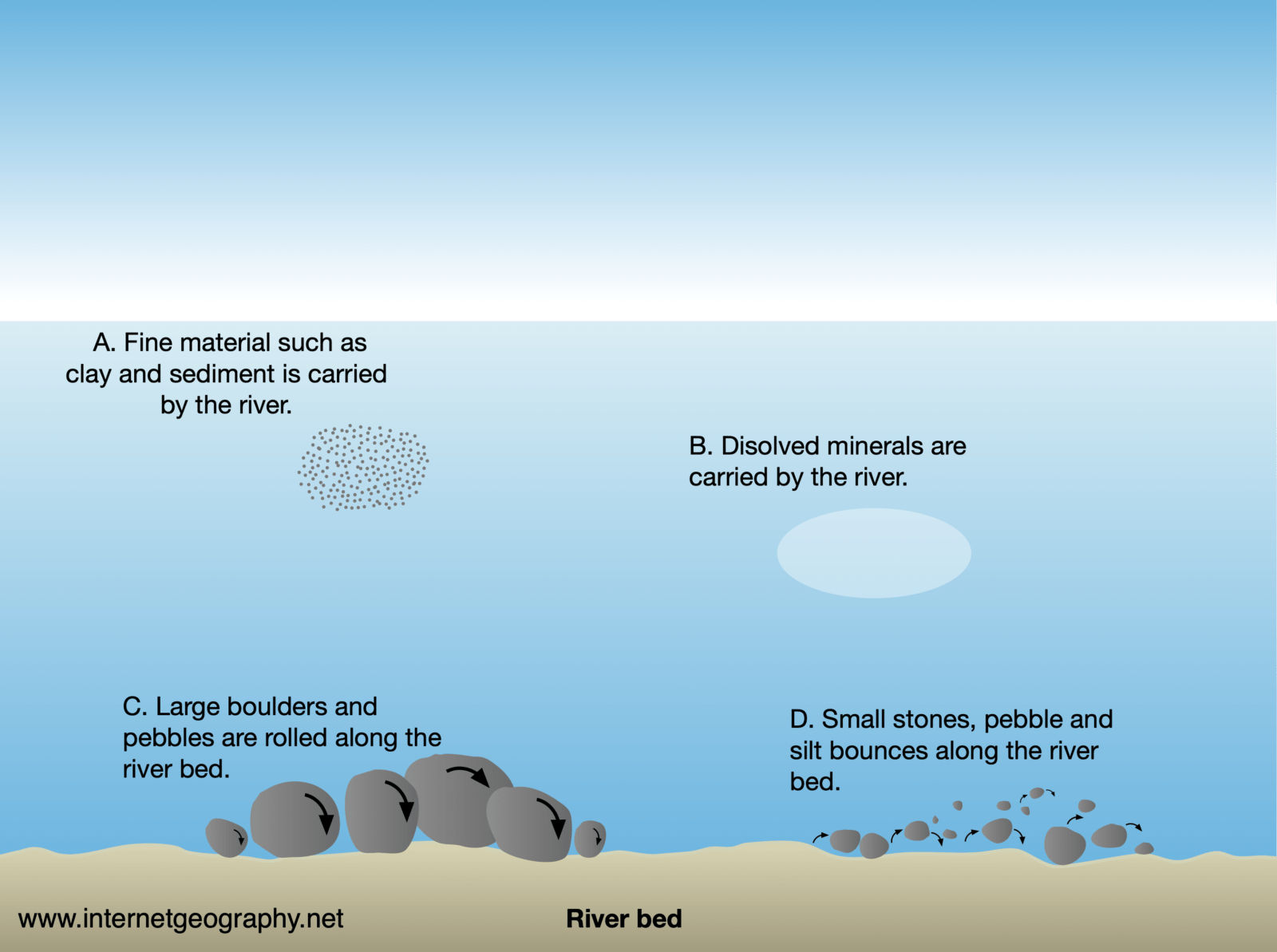
Processes of river transportation
Types of River Transportation
Traction
Large rocks and boulders are rolled along the riverbed.
Saltation
Smaller pebbles and stones bounce along the riverbed.
Suspension
Fine sediment, such as silt and clay, is carried within the water, often making the river look cloudy.
Solution
Dissolved minerals are carried within the river water.
Deposition in Rivers
Deposition occurs when a river loses energy and can no longer carry its load. This may happen when:
- The river slows down
- Discharge decreases
- The gradient becomes gentler
- The river enters a lake, estuary or the sea
Deposited material is often sorted, with larger and heavier sediment deposited first, followed by finer material
Common locations of deposition include:
- The inside of meanders
- Floodplains
- The mouth of the river
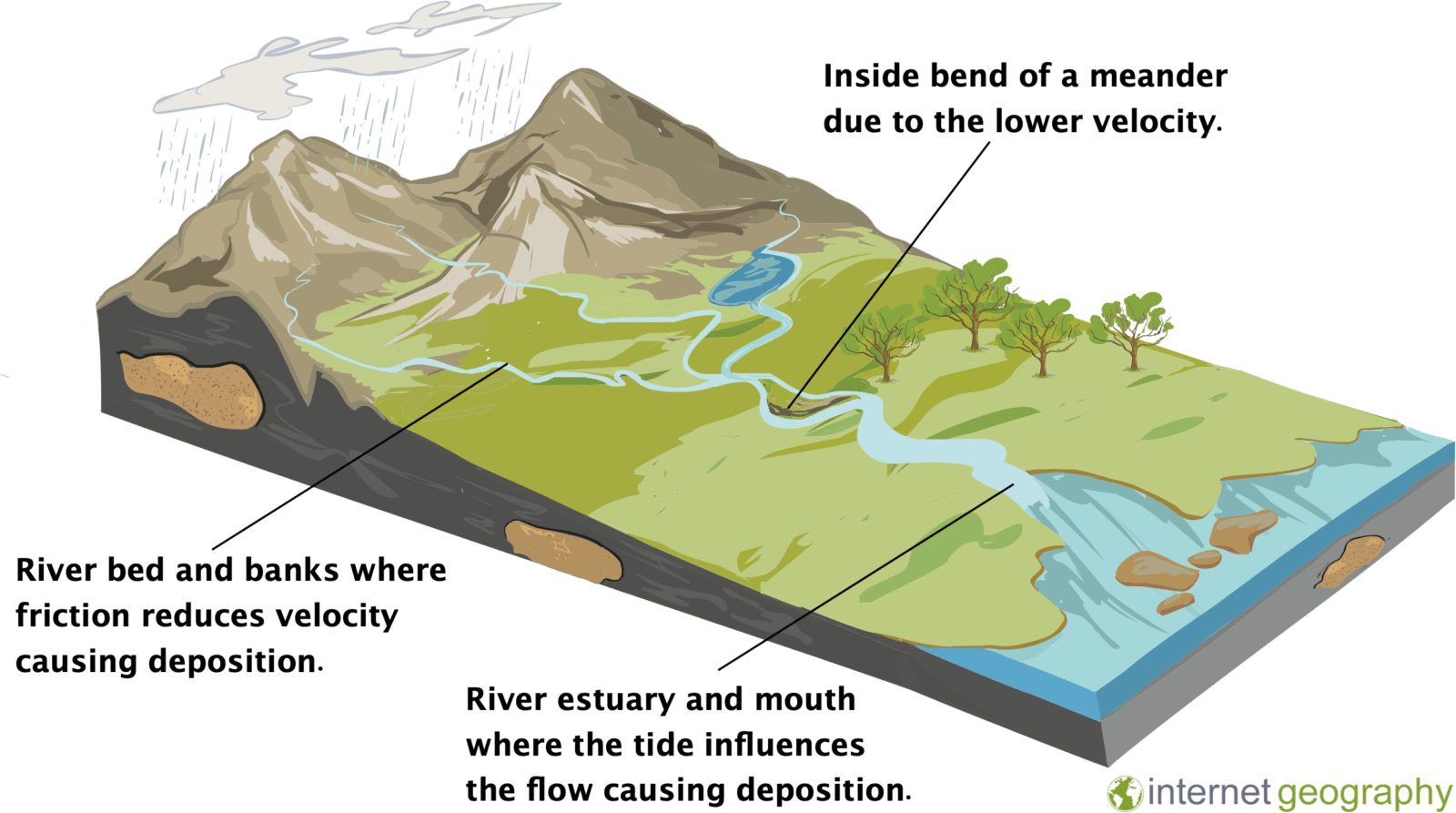
Deposition locations on a river
How River Processes Change Downstream
- Upper course – erosion is dominant, particularly vertical erosion
- Middle course – transportation is dominant
- Lower course – deposition becomes more important
These changes reflect variations in gradient, velocity and discharge.


