
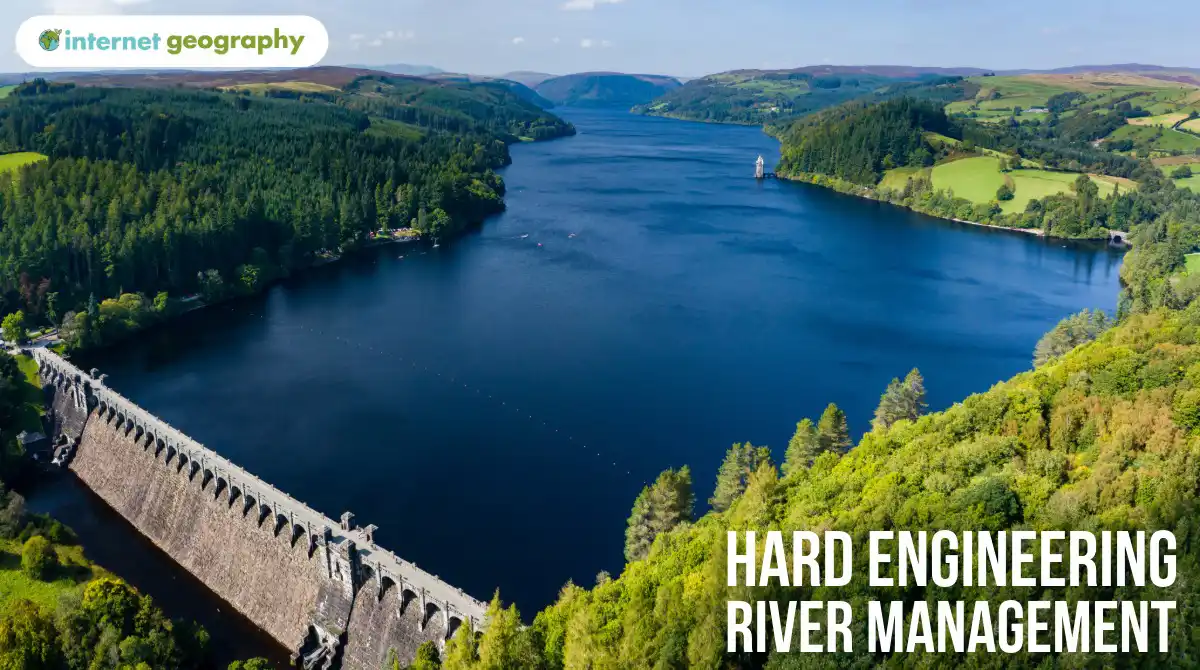
Hard Engineering River Management
Hard engineering involves building large structures to control rivers and protect people, property and infrastructure from flooding.
The main hard engineering strategies used to manage rivers include:
- Dams and reservoirs
- Channel straightening
- Embankments
- Flood relief channels
Each strategy has advantages and disadvantages.
Dams and reservoirs
Dams are large barriers built across rivers to control the flow of water. Water stored behind the dam forms a reservoir. During periods of heavy rainfall, the dam can control how much water flows downstream, reducing flood risk.
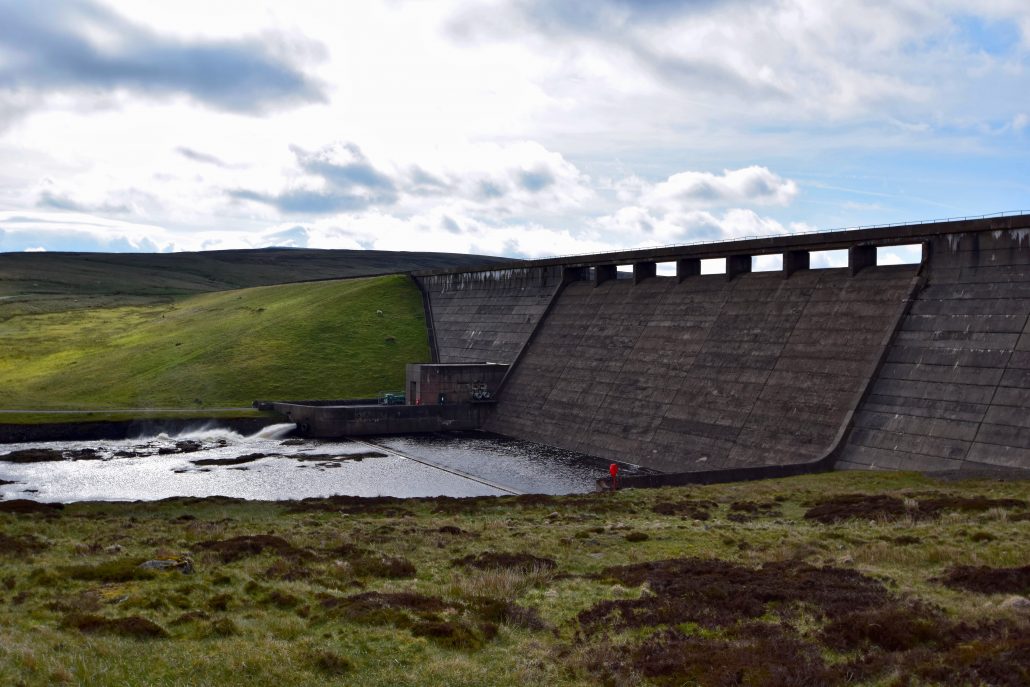
The dam at Cow Green Reservoir, River Tees.
Advantages of dams and reservoirs
- Water can be stored during periods of heavy rainfall, reducing flooding downstream.
- Reservoirs provide a reliable water supply for homes, agriculture and industry.
- Some dams generate hydroelectric power, producing renewable energy.
- Reservoirs can provide recreation and tourism opportunities, such as sailing and fishing.
Disadvantages of dams and reservoirs
- Building dams is very expensive and can take many years.
- Large areas of land may be flooded to create the reservoir, destroying farmland, habitats and sometimes settlements.
- Sediment becomes trapped behind the dam, reducing downstream sediment supply and potentially reducing soil fertility on the floodplain and increasing river erosion.
- Dams can disrupt fish migration and natural ecosystems.
Channel Straightening
Channel straightening involves removing meanders and making the river channel straighter so water can move downstream more quickly.
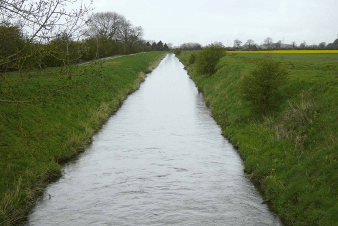
Channel Straightening
Advantages of channel straightening
- Water flows more quickly downstream, helping to reduce flooding in specific areas.
- The river channel becomes shorter and more efficient, allowing water to leave an area faster.
- It can reduce flood risk in urban areas where space for natural floodplains is limited.
Disadvantages of channel straightening
- Faster water flow can increase flood risk further downstream.
- Increased velocity may lead to greater erosion of river banks and beds.
- Straightening the channel reduces natural habitats and can damage river ecosystems.
- The process can be expensive and disruptive to build.
- Unless the riverbanks are reinforced, the river’s natural flow will cause meanders to form again.
Embankments
Embankments are raised riverbanks, often built with concrete walls or earth (levées), that increase the river’s channel capacity, allowing it to hold more water.
The image below shows embankments at Cockermouth. They were created to reduce the risk of flooding.
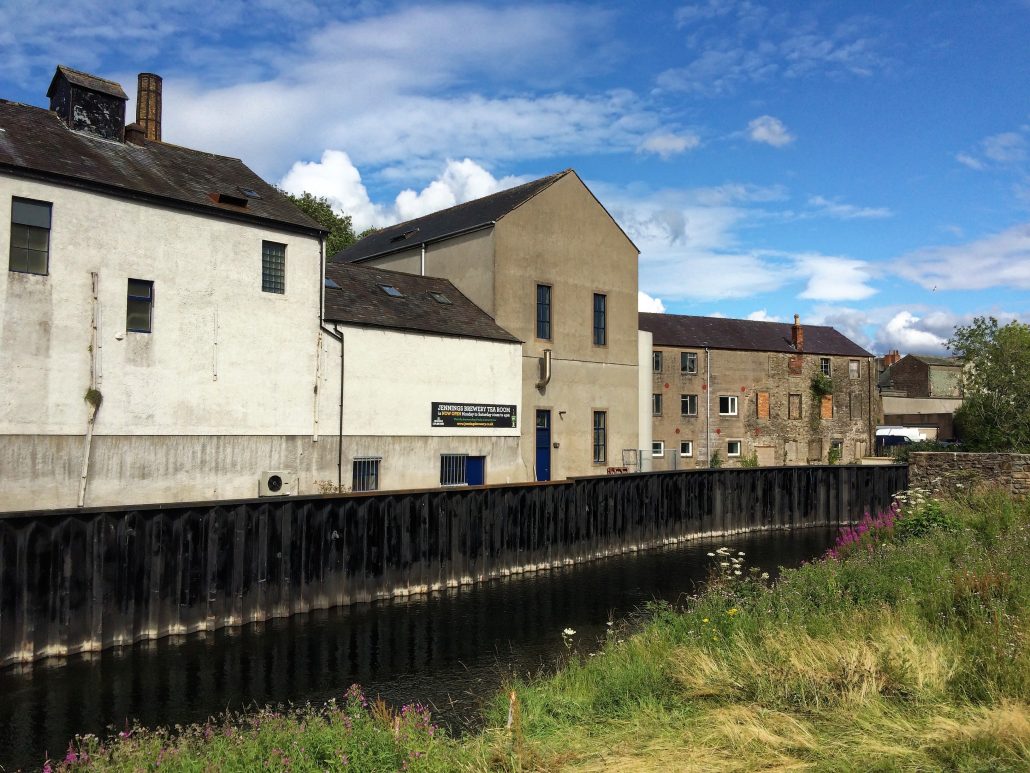
Flood defences at Cockermouth
Advantages of embankments
- They increase the capacity of the river channel, allowing it to carry more water.
- They help protect towns and cities located close to rivers.
- Embankments can be constructed relatively quickly compared to large dams.
Disadvantages of embankments
- If water overtops or breaches the embankment, flooding can be sudden and severe.
- Embankments can increase water velocity, potentially raising flood risk downstream.
- They may look unnatural and unattractive, affecting the local landscape.
- Natural floodplains are cut off, which can damage wetland habitats.
Flood relief channels
Flood relief channels are artificial channels built to divert excess river water away from areas at risk of flooding, such as towns and cities. They usually run parallel to the main river and rejoin it further downstream.
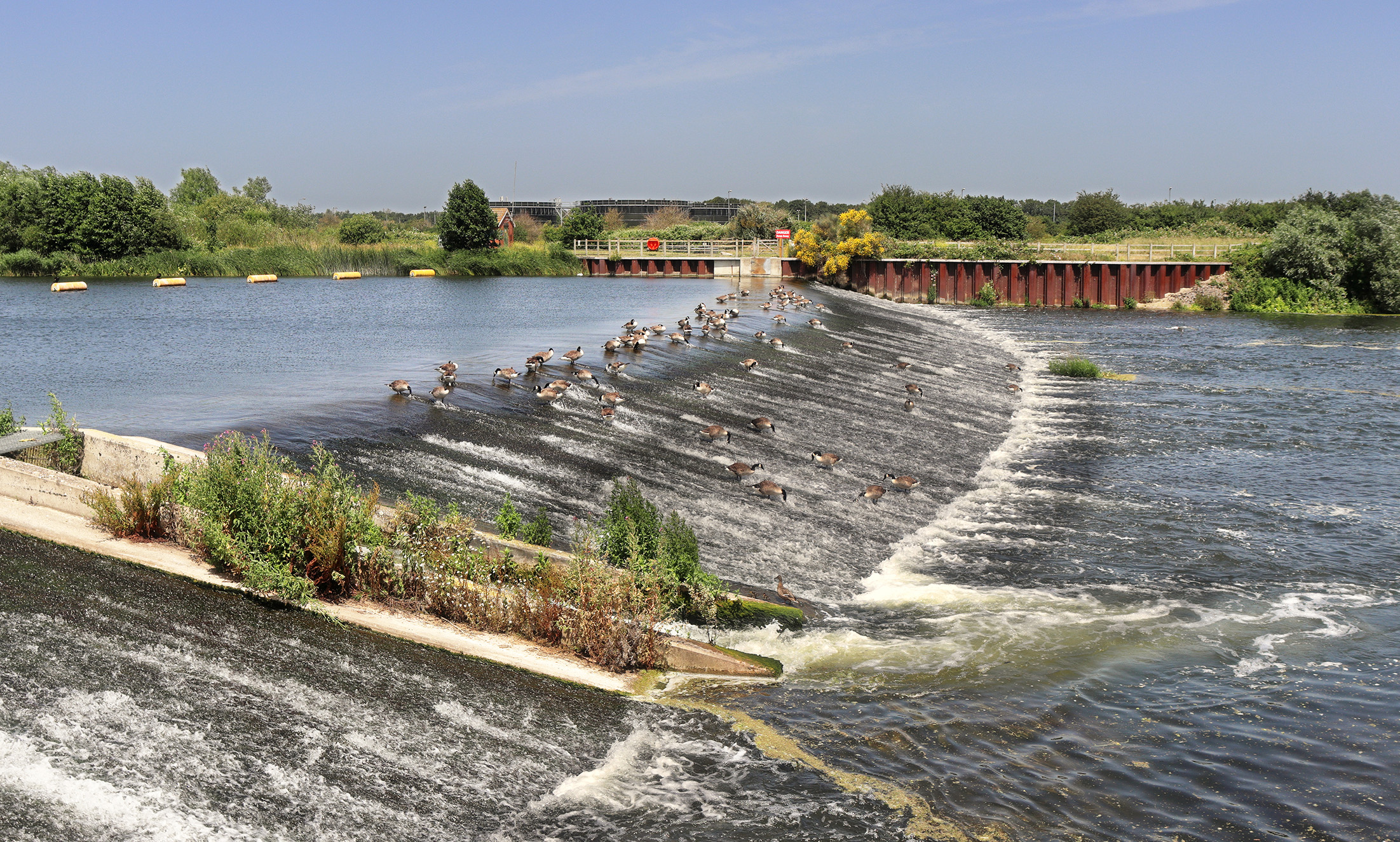
Jubilee River flood relief channel
Advantages of flood relief channels
- Excess water is diverted away from settlements, reducing flood risk.
- Flood relief channels can be designed to handle very large volumes of water during storms.
- Some schemes include new habitats or recreational areas.
Disadvantages of flood relief channels
- Construction can be very expensive.
- Large areas of land may be needed to build the new channel.
- Flood risk may increase downstream where the diverted water rejoins the river.
- Natural landscapes may be altered.
Summary
Flashcards
Coming soon
Quiz
Coming soon


