
What is the global distribution of energy consumption and supply?
Energy is required for various activities, including lighting, cooking, heating, agriculture, transport, and industrial processes. As a country becomes increasingly developed, its energy demand grows. The graph below illustrates the rapid increase in global primary energy consumption over the past 70 years.
In 1965, the bulk of total energy was consumed in North America, Europe and Eurasia – collectively, they accounted for more than 80 per cent of global energy consumption. Although energy consumption has increased in these regions since the 1960s, their relative share of total energy consumption has declined significantly. Consumption across the rest of the world has been increasing, most dramatically in the Asia Pacific, where the total consumption increased more than 12-fold over this period.
The map below shows energy use per capita for each country. Countries rich in energy resources, including North America, Europe, Australasia, and parts of the Middle East, have high energy consumption. These areas mostly contain HICs.
Some regions, including South America, North Africa, and parts of Asia, have relatively high energy use but limited energy resources. These countries rely on energy imports to meet demand.
Much of central and eastern Africa, where energy resources are scarce, has low energy consumption.
The map below shows energy production by country. The data is shown in Mtoe. In energy production and statistics, Mtoe stands for Million Tonnes of Oil Equivalent.
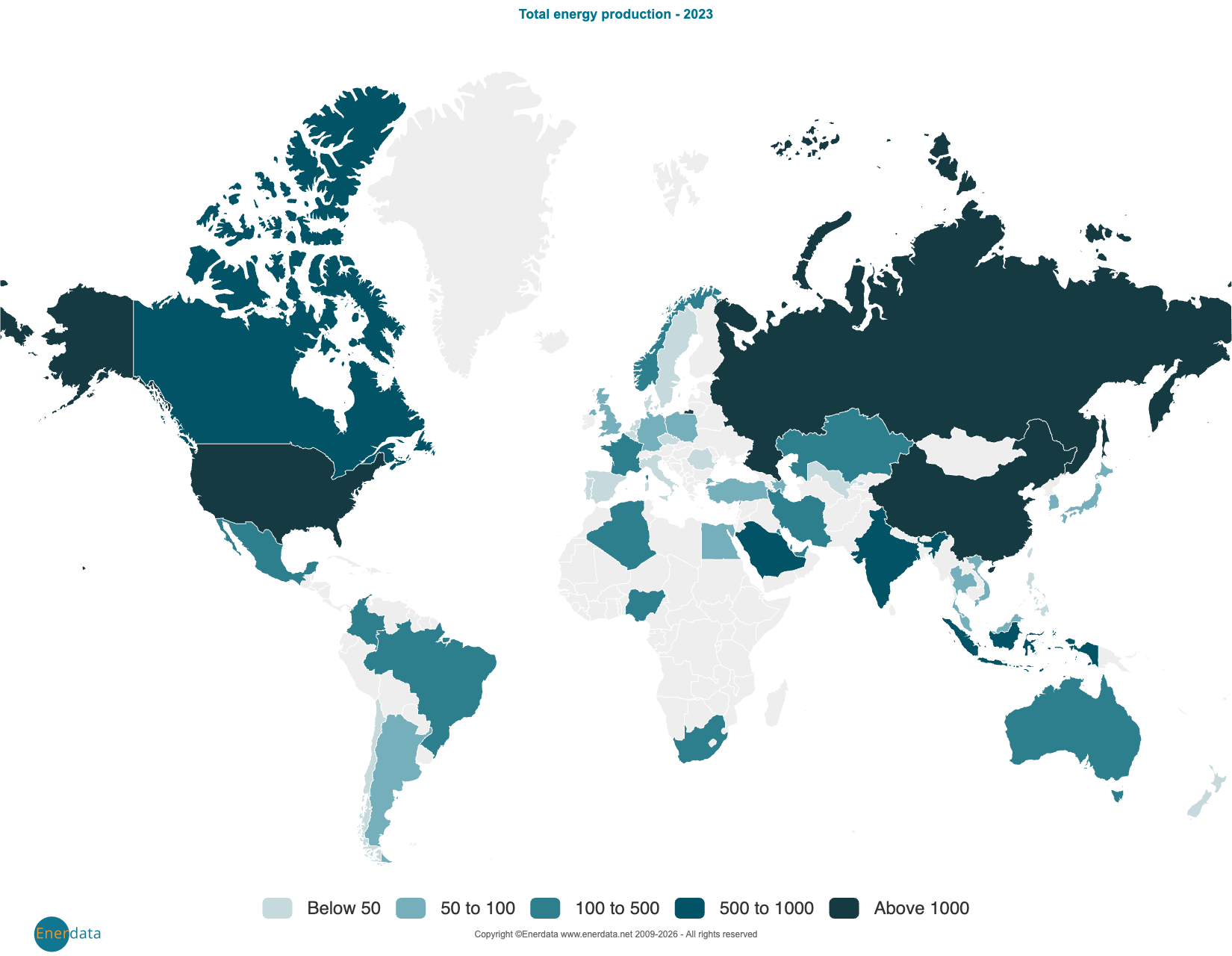
Total energy production (2023)
The world’s largest consumers of energy are also its main producers, and these are mostly high-income countries (HICs). These countries tend to prioritise energy security, aiming to ensure that energy supplies are reliable and affordable for their populations.
In contrast, energy production is much lower in countries with low energy demand, which are mainly low-income countries (LICs). As a result, many of these countries experience energy insecurity, with limited access to reliable and affordable energy.
Energy Security
Energy security is largely determined by energy supply and demand. Most of the world experiences energy insecurity. The map below shows that, despite having a high reliance on imports, North America and Europe are largely energy secure. However, large areas of central and southern Africa, Asia and South America experience energy insecurity.
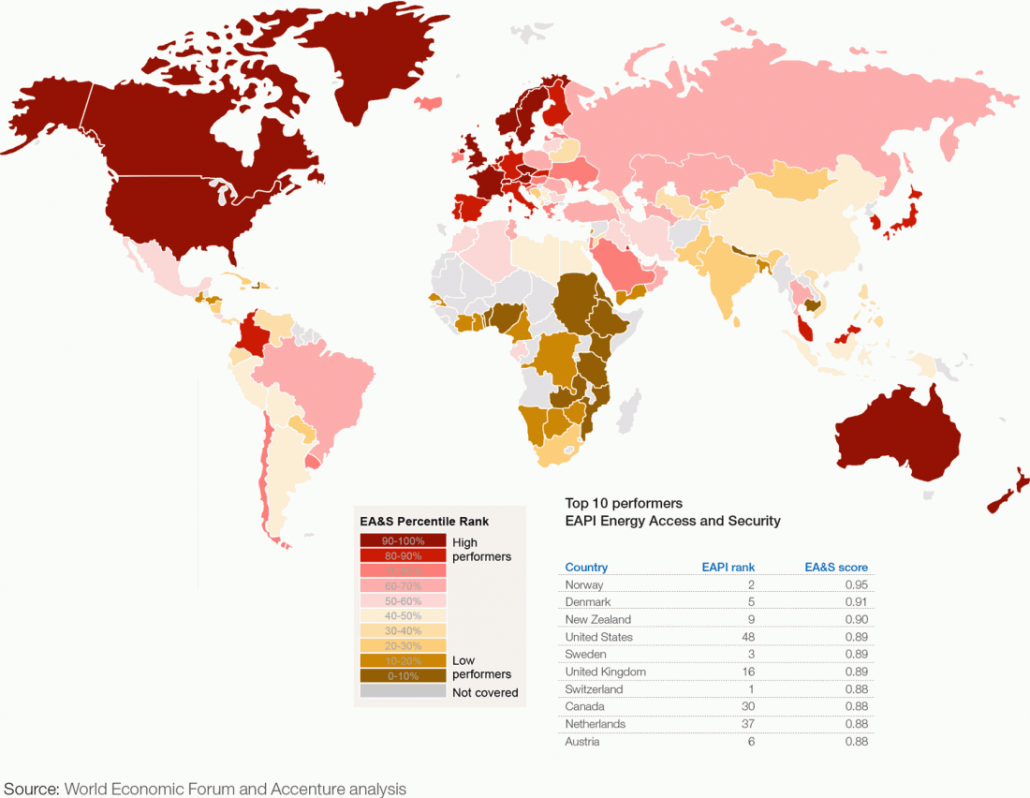
Energy security and access 2016




Related Topics
Use the images below to explore related GeoTopics.


