You are here: The Final Countdown > Home > Week 3
Mind Map
Create a mind map to summarise the areas above. We’ve got a guide to creating mind maps if you need support.


The Final Countdown is here to help you prepare for your final AQA GCSE geography exam. Following our weekly exercises will prepare you to take on the examiner.
This week you will revise hazards and tectonic hazards. It would help if you covered the following:
Use one of the three strategies below to revise these areas.
Create a mind map to summarise the areas above. We’ve got a guide to creating mind maps if you need support.
Create flashcards to summarise the areas above. We’ve got a guide to creating flashcards if you need support.
Create a knowledge organiser to summarise the areas above. We’ve got a guide to creating a knowledge organiser if you need support.
This week you are going to check your knowledge of hot deserts or cold environments (depending on which you studied), which you revised last week. Have a go at the interactive quizzes in our ecosystems area.
Question 1
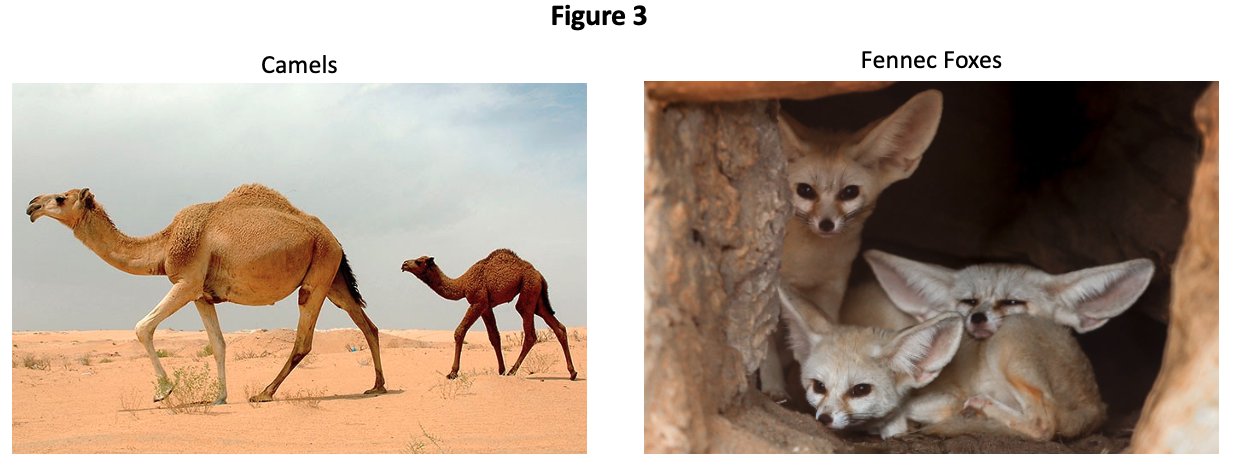
Using Figure 3 and your own knowledge, explain how animals have adapted to survive in a hostile environment you have studied. [6 marks]
Support
The command word for this question is explain. You should:
When you complete this question, you must make reference to what is shown in the images to reach the higher marks. You will not get any more than 2 marks if you do not use Figure 3. To do this, make explicit references to Figure 3, eg, ‘I can see… in Figure 3… which means that…’
This question is worth 6 marks. This means it is level-marked. The mark scheme would include:
Level 3 – Detailed (5-6 marks)
AO1 Demonstrates comprehensive and accurate knowledge of the way animals adapt to living in hot deserts.
AO2 Demonstrates a thorough understanding of how the different adaptations allow animals to live in hot deserts.
AO4 Demonstrates detailed use of Figure 3.
Level 2 – Clear (3-4 marks)
AO1 Demonstrates specific and clear knowledge of the ways plants adapt to living in hot deserts.
AO2 Demonstrates some understanding of the way plants adapt to living in hot deserts.
AO4 Demonstrates some use of Figure 3.
Level 1 – Clear (1-2 marks)
AO1 Demonstrates limited knowledge of the ways plants adapt to living in hot deserts.
AO2 Demonstrates a limited understanding of the way plants adapt to living in hot deserts.
AO4 Demonstrates little or no use of Figure 3.
0 Marks
No relevant content
Example Answer
With less than 250mm of annual rainfall, daytime temperatures up to 50°C, and cold evening temperatures, hot deserts are hostile environments. Animals have developed adaptations which allow them to survive in these conditions.
Camels are well adapted and can cope with wind-blown sand and cold at night. They have thick fur on the dorsal surface to provide shade, and thin fur elsewhere to facilitate heat loss. Camels have large, flat feet to spread their weight on the sand. They can survive for extended periods without water; they lose very little through urination and sweating. Their fatty hump provides energy in times of food shortages, which is essential when vegetation can be sparse. They also have slit-like nostrils and two rows of eyelashes to keep sand out of their eyes during sandstorms.
The fennec fox has large ears to give off heat, helping to keep them cool. They are nocturnal, sleeping in burrows where it is cool during the hot days. They have long, thick hair that insulates them during cold nights and protects them from the hot sun during the day.
Kangaroo rats have also adapted to the hot desert, having large back legs that allow them to jump almost 3m to avoid predators such as snakes. They also have have large ears, which enables them to hear approaching predators.
Question 2
Please note – this question may be different from the one on your sheet. You should attempt the question below.
Using a case study, to what extent have opportunities for economic activity been developed in your chosen environment? [9 marks]
Support
The command for this question is to what extent. This means you may state the degree to which economic development has occurred. For example, the statement may be completely untrue, true to some extent (partly but not completely true), to a great extent, or completely true. Extent of development may be considerable, significant, partial, limited, slight, etc.
You should:
This question is worth 9 marks. This means it is level-marked.
Example Answer
Despite the physical challenges posed by the Sahara Desert, there has been considerable economic development, particularly in mineral extraction and energy generation.
Major economic activities in the Sahara include mineral extraction. Morocco is the world’s largest exporter of phosphate. Phosphate is used in cleaning products, batteries and fertilisers. There are also major iron ore deposits in Algeria. In addition, uranium is widely found in the Sahara and has been particularly important in Niger.
Oil exploration and extraction occur in the Sahara Desert, particularly in the north. Sixty per cent of Algeria’s income comes from the oil and gas industry. Significant natural gas fields are exploited in Algeria and Egypt, and minor fields exist in Libya and Tunisia. These industries contribute to job creation, income growth, trade, and tax revenue, supporting the economic and social development of LICs/NEEs in the Sahara region. The multiplier effect leads to the development of companies that supply the mineral and energy resource extraction companies with parts, employing local people.
Morocco is building one of the world’s biggest solar power plants in a project funded mainly by the European Union. The 160-megawatt first phase of the Noor plant near the town of Ouarzazate has provided the country with a source of clean energy and created job opportunities in the plant’s construction and operation.
Commercial farming is limited to areas with sufficient irrigation water. This is water that is moved from one place to another. It can be achieved by constructing irrigation channels to convey water or by extracting water from large underground reservoirs called aquifers. They were discovered during oil and gas exploration. The Aswan Dam provides Egyptians with a year-round water supply through extensive irrigation. Providing considerable opportunities for economic development
In conclusion, while the Sahara Desert remains one of the harshest environments on Earth, recent initiatives indicate that economic activity can be developed in the region. The development of solar energy and the extraction of raw materials have created new opportunities for job creation and economic growth. However, more needs to be done to improve infrastructure and support sustained economic development in the region.
Question 1
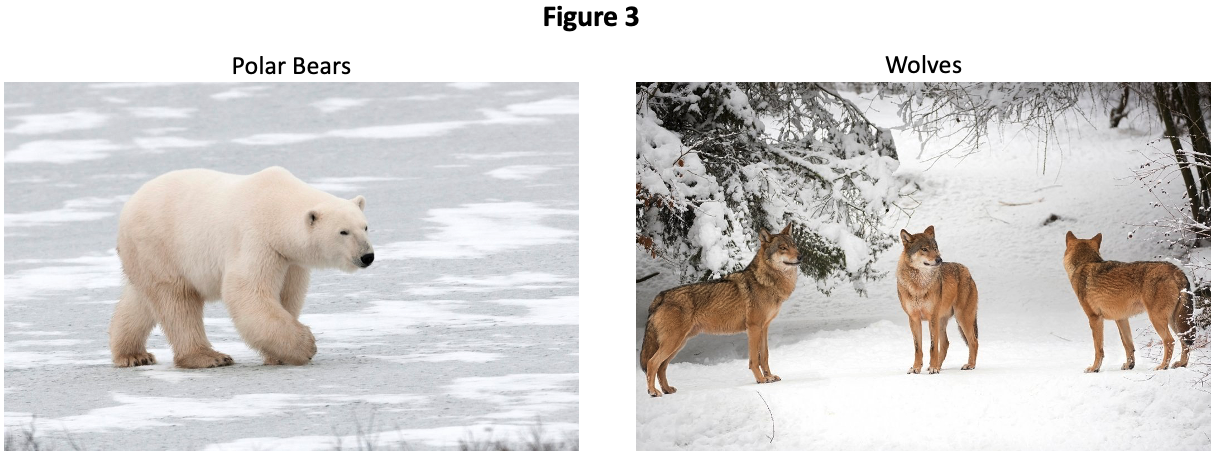
Using Figure 3 and your own knowledge, explain how animals have adapted to survive in a hostile environment you have studied. [6 marks]
Support
The command word for this question is explain. You should:
When you complete this question, you must make reference to what is shown in the images to reach the higher marks. You will not get any more than 2 marks if you do not use Figure 3. To do this, make explicit references to Figure 3, eg, ‘I can see… in Figure 3… which means that…’
This question is worth 6 marks. This means it is level-marked. The mark scheme would include:
Level 3 – Detailed (5-6 marks)
AO1 Demonstrates comprehensive and accurate knowledge of the way animals adapt to living in cold environments.
AO2 Demonstrates a thorough understanding of how the different adaptations allow animals to live in cold environments.
AO4 Demonstrates detailed use of Figure 3.
Level 2 – Clear (3-4 marks)
AO1 Demonstrates specific and clear knowledge of the ways plants adapt to living in cold environments.
AO2 Demonstrates some understanding of the way plants adapt to living in cold environments.
AO4 Demonstrates some use of Figure 3.
Level 1 – Clear (1-2 marks)
AO1 Demonstrates limited knowledge of the ways plants adapt to living in cold environments..
AO2 Demonstrates a limited understanding of the way plants adapt to living in cold environments..
AO4 Demonstrates little or no use of Figure 3.
0 Marks
No relevant content
Example Answer
Animals need shelter and insulation in the tundra and polar regions. They tend to have thicker and warmer feathers and fur. Many of them have larger bodies and shorter arms, legs, and tails, which help them retain heat more effectively and prevent heat loss.
Polar bears have thick fur and an insulating layer of fat to protect them from the harsh, cold conditions. They have a black nose and footpads to absorb sunshine. Their front feet are large, flat, and oar-like, making them excellent swimmers, which is essential when they travel between sea ice floes. Sharp claws and teeth are ideal for capturing and consuming prey, and their small ears reduce heat loss.
Wolves have white fur, which allows them to blend into their snowy surroundings, ideal when stalking prey, particularly in sparsely vegetated areas. They have more rounded ears to reduce heat loss in cold temperatures. They also have hair between their pads and long, thick fur to keep them warm in cold temperatures.
Many birds have two coats of feathers to help keep them warm. Animals often have feet lined with fur to help keep them warm. Many also migrate to warmer climates during the harsh winter months. Some animals (bears, marmots, arctic squirrels) hibernate for the winter, and others will burrow (lemmings, ermine). Many insects spend their entire lives buried in soil, rocks, or plants, which serve as shelters.
Question 2
Please note – this question may be different from the one on your sheet. You should attempt the question below.
Using a case study, to what extent have opportunities for economic activity been developed in your chosen environment? [9 marks]
Support
The command for this question is to what extent. This means you may state the degree to which economic development has occurred. For example, the statement may be completely untrue, true to some extent (partly but not completely true), to a great extent, or completely true. Extent of development may be considerable, significant, partial, limited, slight, etc.
You should:
This question is worth 9 marks. This means it is level-marked.
Example Answer
Alaska, with its harsh and remote location, has faced challenges in developing economic opportunities. However, the state has leveraged its natural resources to spur considerable economic growth. One example is the oil industry, which has become a major source of state revenue. The discovery of oil in the Prudhoe Bay area in the 1960s led to the development of the Trans-Alaska Pipeline System, which transports oil from the North Slope to the port of Valdez for shipment to markets worldwide. This has created jobs and increased economic activity in the region.
Another example is the fishing industry, which has been a staple of Alaska’s economy for centuries. The state is home to some of the largest fishing grounds in the world, and the commercial fishing industry provides jobs and revenue for many coastal communities.
Tourism is also a growing industry in Alaska, as more and more people are drawn to the state’s natural beauty and outdoor recreation opportunities. This has created jobs in hospitality, transportation, and related industries, resulting in a multiplier effect.
In conclusion, while Alaska’s cold and remote location has presented challenges, the state has leveraged its natural resources to create economic opportunities and spur growth, particularly in coastal areas. The tundra/polar environment is among the least disturbed ecosystems in the world. However, that is changing with the discovery of large reserves of raw materials. Although there is considerable economic potential, further inland development is partial, constrained by physical factors, environmental issues, technological limitations, access, and other factors.


