Wainfleet Floods Case Study 2019
Widespread flooding as 2 months’ rain falls in 2 days.

On Wednesday 12th June 2019 the River Steeping burst its banks causing flooding in and around Wainfleet, Lincolnshire. The River Steeping burst its banks after the equivalent of about two months’ rain fell in two days. The Steeping River breached river defences along the Wainfleet Relief channel, flooding around 130 properties, forcing 590 people out of their homes.
A 15-metre section of the flood bank collapsed, causing a significant amount of water to leave the river channel and flood Wainfleet.
Initially, some believed the breach in the river occurred as the result of badgers burrowing and weakening the river bank. However, according to an Environmental Agency spokesperson “The breach in this flood bank was not caused by badgers. The banks were put under extraordinary pressure because of the extreme amount of rainfall.”
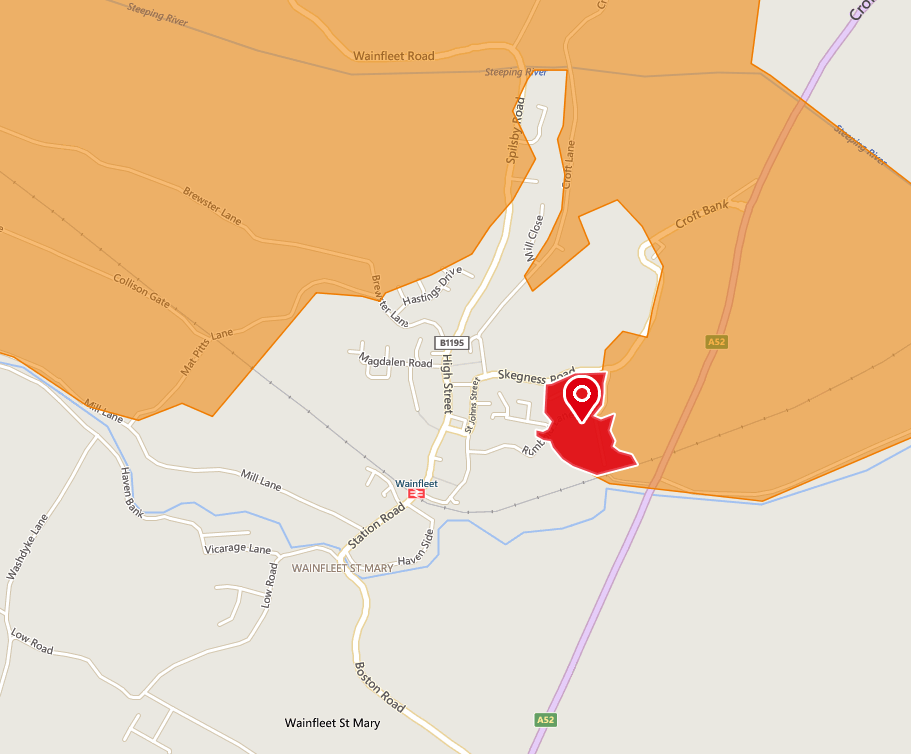
Wainfleet Flood Map by the Environment Agency
Some residents of Wainfleet were not able to get insurance as the area is a flood plain.
Wainfleet Flooding
Image from @lincsCOPter shows;
1️⃣Wainfleet
2️⃣Breach location (repaired by @Joint_Heli team on Fri & Sat)
3️⃣Pumping Station location
4️⃣High volume pump provided by @EnvAgency started operating yesterday afternoon pic.twitter.com/n1Uzw0I6SW
— Phil Vickers (@CIPhilVickers) June 17, 2019
The video below shows the area affected by the floods.
Social media was used to inform people in the local area of the need to evacuate. Lincolnshire Police tweeted a map of the place where inhabitants should “self-evacuate” to friends, family or an emergency centre set up at a school in nearby Skegness.
The dots on this map are the properties surrounding #Wainfleet which require evacuating.
Not sure if this means your address? Please crosscheck with the postcodes listed here:https://t.co/RqnIxPlRBBThank you for your understanding and we’ll keep you updated pic.twitter.com/hUtvu6jwFx
— Lincolnshire Police (@lincspolice) June 15, 2019
More than 340 tonnes of ballast were dropped by RAF helicopters to shore up a breach in the levee of the River Steeping after it burst its banks.
RAF Chinooks, Pumas and Joint Helicopter Support Squadron(@Joint_Heli) personnel from @RAFBenson are in Lincolnshire supporting the @EnvAgency in flood relief efforts. pic.twitter.com/gkRgQxCTDe
— Royal Air Force (@RoyalAirForce) June 14, 2019
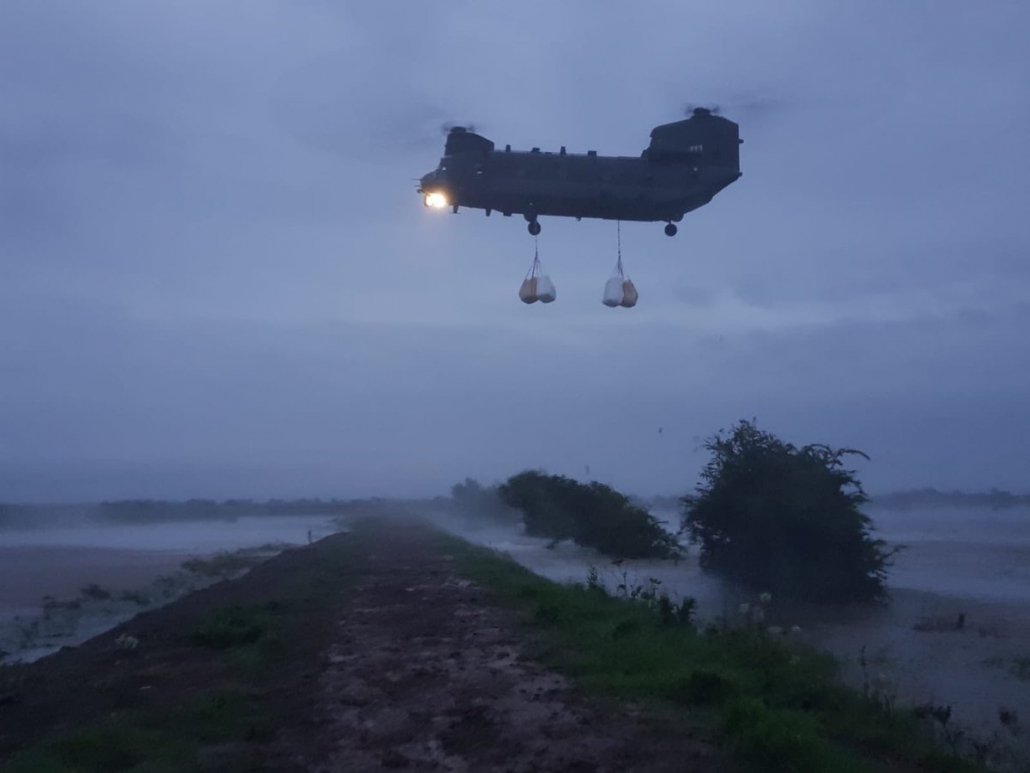
Chinook helicopter dropping 1-tonne bags of ballast
Forces TV broadcast this footage of the RAF responding to the flood.
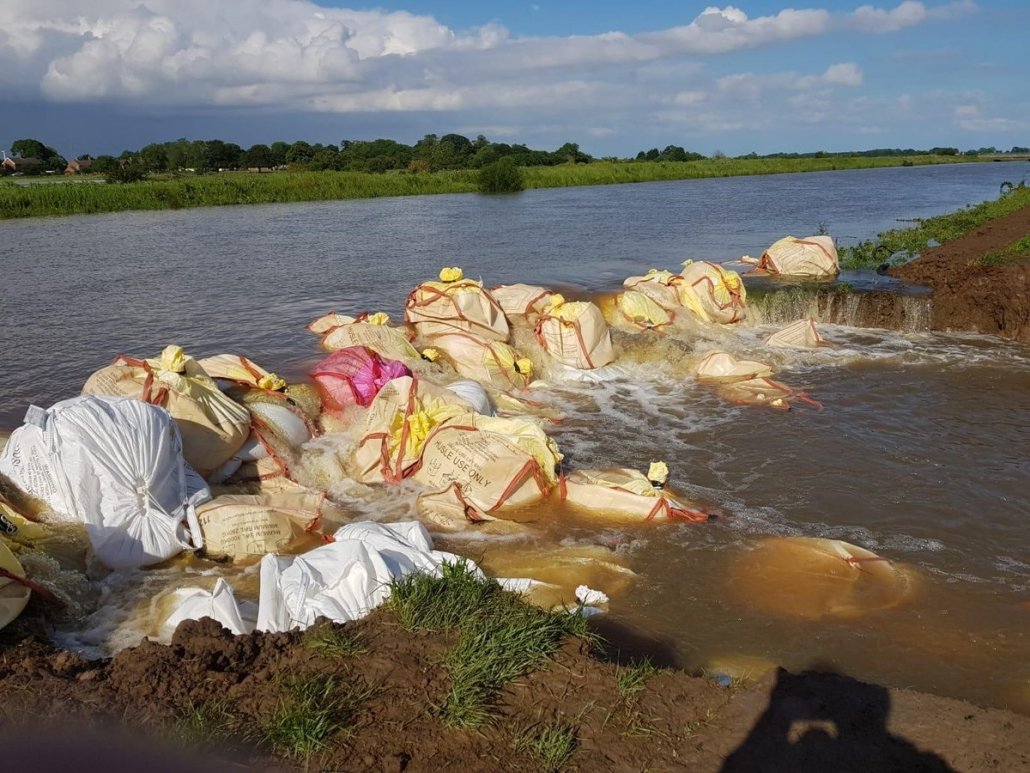
Ballast bags reinforcing the banks at Wainfleet
High volume pumps were used to remove flood water from the area. Twelve high-volume pumps were used to support Lincolnshire Fire and Rescue Service’s efforts to tackle flooding in Wainfleet. Six of these pumps are operational, and six are on standby in case the flood waters rise,
In addition to these two massive pumps were brought in by the Environment Agency. The high-volume pumps deployed at Wainfleet could pump five swimming pools’ worth of water away from the town every hour. The Environment Agency confirmed more than 225 Olympic-sized swimming pools’ worth of water was pumped out of flood-hit Wainfleet and into the sea in one night.
We will be pumping water away from #flooded areas in #Wainfleet. @Lincspolice are urging residents not to attempt returning to their homes until it is safe. Latest updates can be found here: https://t.co/ELF9PvaryY pic.twitter.com/SLHQLpEdJj
— Env Agency Midlands (@EnvAgencyMids) June 15, 2019
People in Lincolnshire were urged by the region’s water company to limit their use of showers, dishwashers and washing machines while the county was affected by flooding due to the strain on the sewerage system.
We’re still working with the Environment Agency and local authorities to support our customers in Lincolnshire affected by flooding. Drinking water supply is safe to use as normal but we advice customers to limit the use of showers, dishwashers and washing machines if possible. pic.twitter.com/kcFftUTyld
— Anglian Water (@AnglianWater) June 17, 2019
An emergency airspace restriction was placed over flood-hit Wainfleet and Thorpe Saint Peters – aimed at drone users to avoid mid-air collisions with RAF helicopters and the police helicopter that was used to monitor the floods.




Use the images below to explore related GeoTopics.


