Imagine spending hours every day washing clothes by hand. Not using a washing machine, but scrubbing clothes on rocks, bending over buckets, and carrying heavy water back and forth. For millions of people around the world, this is everyday life.
This is the problem The Washing Machine Project tackles, using simple technology to improve living standards in communities where electricity, clean water, and modern appliances are limited.
What Is the Washing Machine Project?
The Washing Machine Project is a UK-based social enterprise that works to reduce the hard physical labour of handwashing clothes in low-income and remote communities.
The idea began when engineers learned how much time and effort women in parts of the world spend washing clothes by hand. This inspired the creation of a new type of washing machine, one designed not for wealthy countries, but for places where everyday life looks very different.
The project designs, builds and distributes a hand-powered washing machine called Divya, named after a woman whose experiences helped inspire the idea.
How Do the Washing Machines Work?
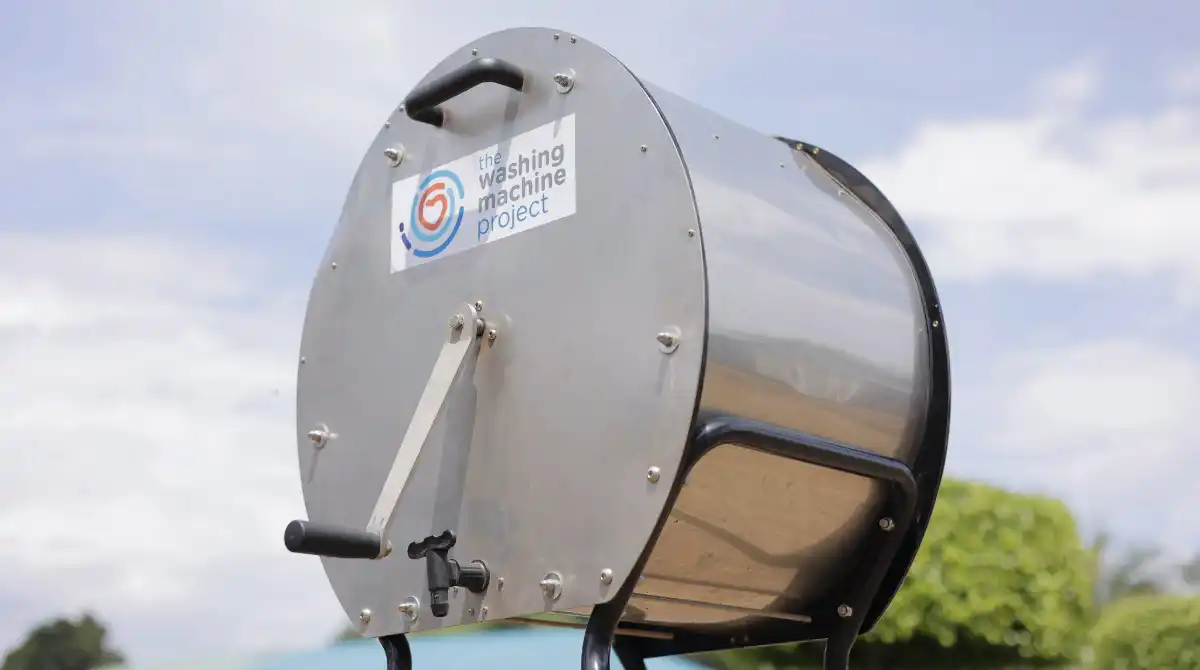
The Divya washing machine is simple but effective. It does not need electricity.
Clothes, water and detergent are placed inside the drum. A handle on the side is turned by hand, spinning the drum and cleaning the clothes in the same way a modern washing machine would, but powered by human rather than electrical energy.
Because the clothes are washed inside an enclosed drum, the machine:
- cleans clothes more thoroughly than hand-scrubbing
- uses less water
- reduces strain on the body
This makes it especially useful in places where water is scarce, electricity is unreliable, or people must wash clothes outdoors.
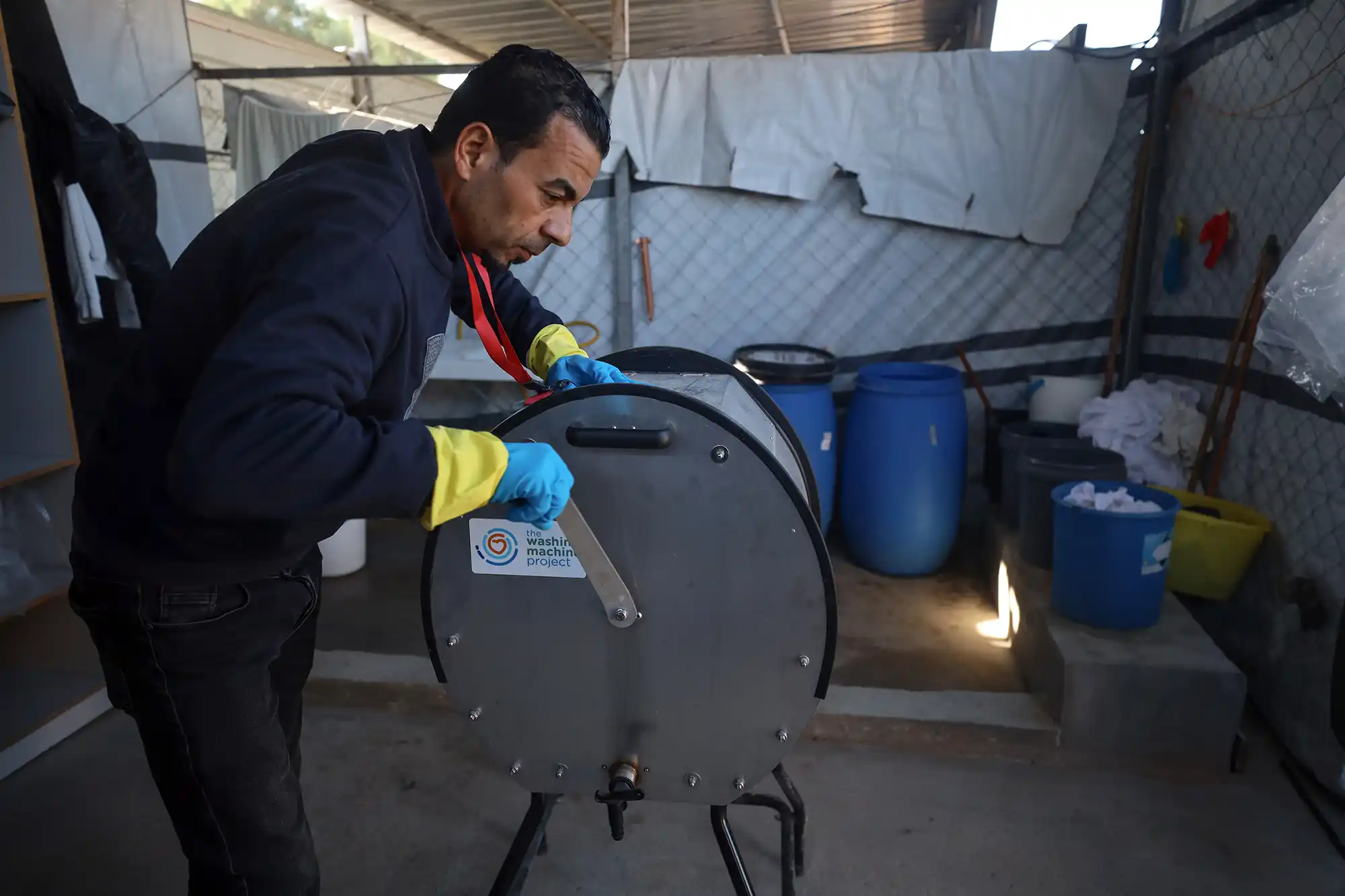
UKMed uses DWM in a field hospital in Gaza
Appropriate Technology in Action
Divya is an example of appropriate technology. In geography, appropriate technology refers to small-scale, affordable, and sustainable tools and techniques that fit the needs, skills, resources, and environment of a specific local community
In many parts of the world, electric washing machines are not practical. Power supplies may be unreliable, repairs may be expensive, and spare parts may be unavailable. Instead of imposing high-tech solutions on communities, appropriate technology focuses on what works best in each place.
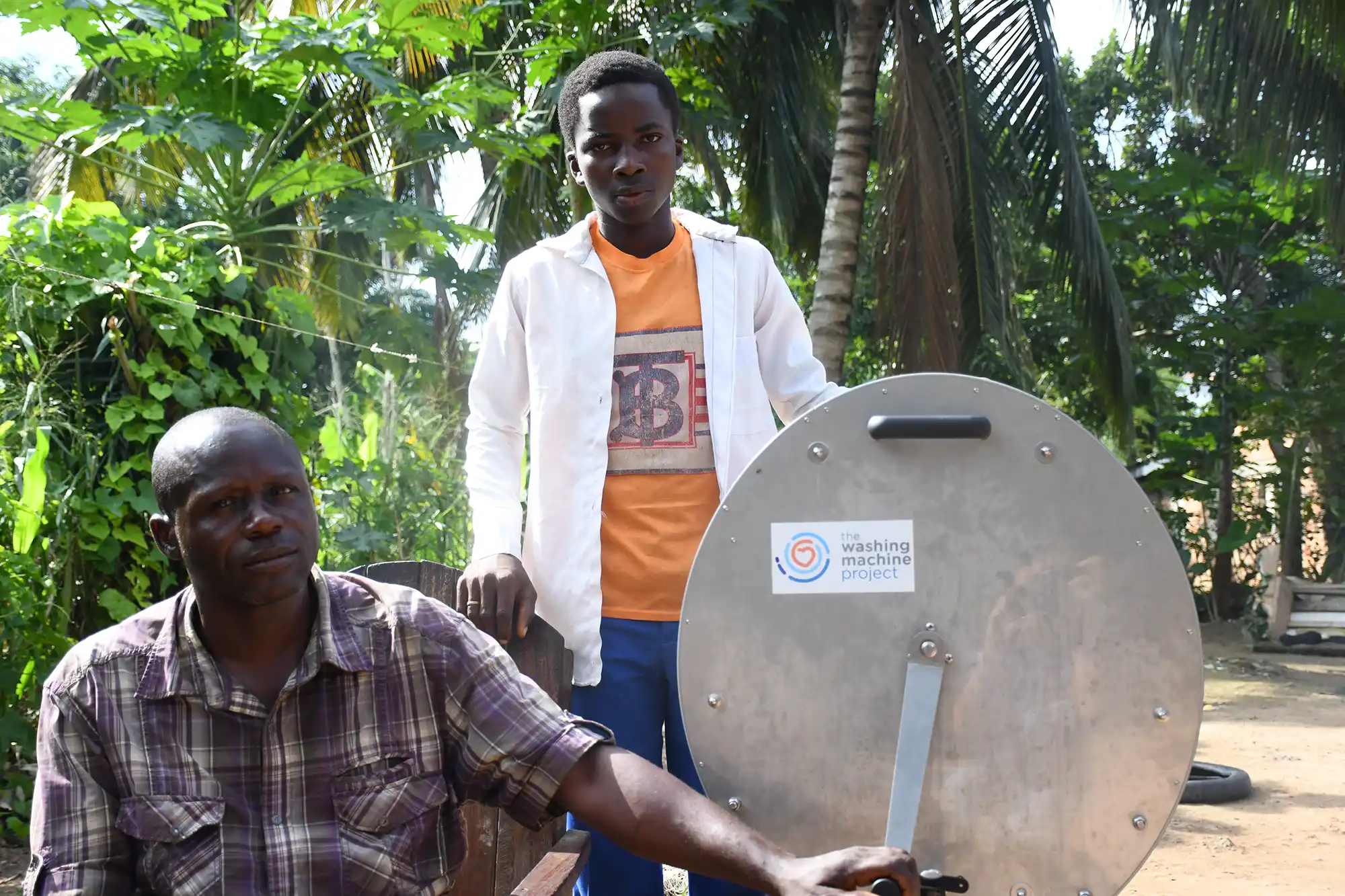
Joseph and son, Republic of Congo
This links closely to geography because development looks different in different regions. What works in the UK may not work in rural India, refugee camps, or remote villages in Africa or Latin America.
How Does This Help Raise Living Standards?
Living standards are about more than income. They include health, time, education, safety and well-being.
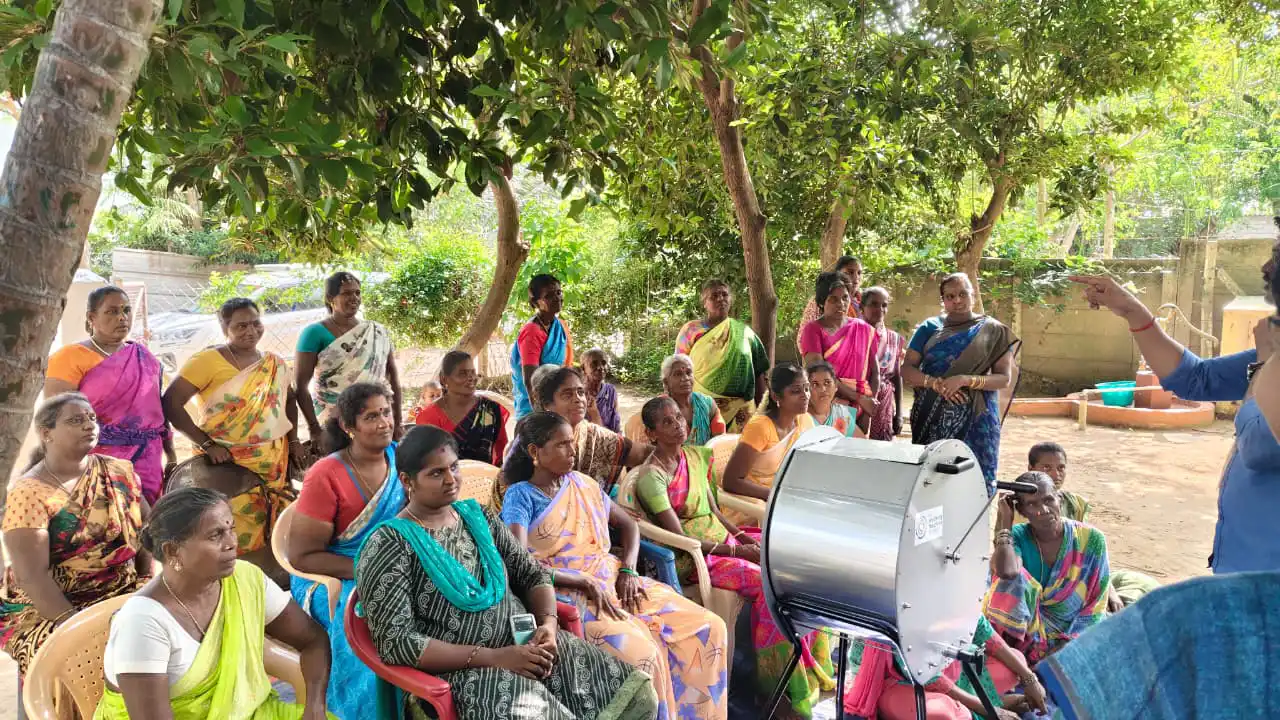
Tamil Nadu, India
In many communities, handwashing clothes can take up to 20 hours a week. This work is usually done by women and girls, limiting time for school, paid work or rest.
By reducing the time and effort needed to wash clothes, the Divya machine helps to:
- free up time for education and employment
- reduce physical strain and health problems
- improve hygiene through cleaner clothes
- support greater gender equality
This shows how small changes in daily life can make a big difference to the quality of life.
How Does the Project Work?
The Washing Machine Project does not simply sell washing machines.
Instead, it works with:
- charities and NGOs
- refugee support organisations
- community groups
These partners help identify communities where handwashing clothes is particularly difficult and where a Divya machine can have the greatest impact.
The machines are then distributed to households or shared within communities, with support and guidance to make sure they are used effectively. User feedback is also used to improve future designs.
This approach helps ensure the technology reaches people who need it most.
How Can People Support the Project?
The project relies on donations and partnerships to continue its work.
Donations help to:
- manufacture more washing machines
- transport them to communities around the world
- support local organisations delivering the project
People can support the project by donating, fundraising, or raising awareness. This highlights an important geographical idea: global interdependence, how people in one part of the world can help improve lives in another.
You can find out more about supporting The Washing Machine Project here.
Why This Matters
The Washing Machine Project shows how geography is about real people and real places.
It links technology, development, resources, gender equality, and global connections through a simple yet powerful idea. By designing technology that fits local conditions, the project helps improve living standards and shows how innovation can make the world fairer — one wash at a time.