
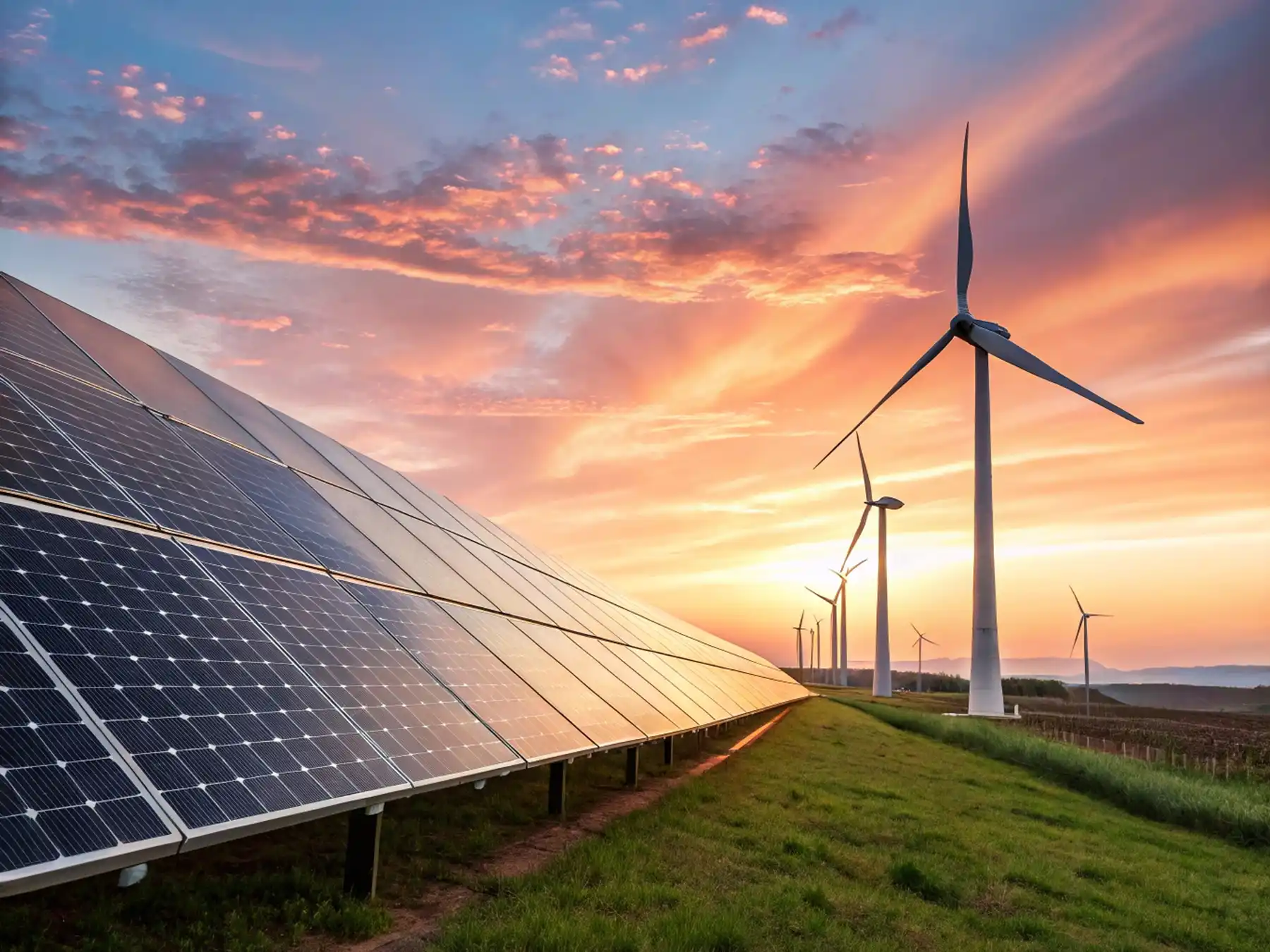
In 2025, Great Britain had its best-ever year for renewable electricity, with wind and solar power producing more energy than ever before. This is a significant development for geographers because it shows how countries are changing how they generate energy to tackle climate change and reduce pollution.
What happened in 2025?
Renewable energy sources – including wind, solar, hydro and biomass – generated over 127 terawatt hours (TWh) of electricity in Great Britain. That’s more than in any previous year and enough to power millions of homes.
- Wind power was the largest renewable energy source, accounting for nearly 30% of electricity generation.
- Solar power had a record year, generating over 18 TWh, which is more than 6% of Britain’s electricity.
- At certain times during the summer, solar panels supplied more than 40% of electricity for short periods.
Why was solar power so successful?
There were two main reasons:
- The UK had its sunniest year on record, meaning solar panels worked more efficiently for longer.
- More solar panels were installed – around 250,000 new rooftop systems were added to homes and buildings, as well as new large solar farms.
This shows how physical factors (like weather and climate) and human factors (such as technology and investment) work together to shape energy production.
Is Britain now using only clean energy?
Not yet. Although renewables are growing rapidly, fossil fuels, especially natural gas, are still used. In fact, gas accounted for about 27% of electricity generation in 2025. This is because:
- The wind doesn’t always blow, and the sun doesn’t always shine.
- Energy demand is sometimes very high, especially in winter.
- Energy storage (e.g., batteries) and the electricity grid still require improvement.
This links to an important geography idea: energy security – making sure there is always enough electricity available.
Why does this matter for the future?
The government has set a target of 95% of electricity generation from clean sources by 2030. The record year in 2025 shows progress, but also highlights challenges, such as upgrading the electricity grid and storing renewable energy for later use.
For young geographers, this story connects to key topics like:
- Climate change
- Sustainable energy
- Human–environment interactions
- Managing resources
Think like a geographer!
- Why is the UK well-suited to wind power?
- What problems might people have with large wind farms or solar farms?
- How could energy storage help Britain rely less on fossil fuels?
2025 shows that the UK is moving in the right direction, but the journey to clean energy is still ongoing.