Retrieval Practice: Multiple-choice or short answer questions?

Multiple Choice or Short Answer?

Saturday morning homework with the preteen – the part of the week when time normally standstill. A couple of weeks ago, biology homework involved her completing two quizzes. The first quiz was a multiple-choice quiz; the second was a short answer quiz. Both were based on content from the previous lesson. So, how did it go? My preteen flies through the multiple-choice quiz, getting all the questions correct on her first attempt. Next up, the short answer quiz. Despite covering similar content, she finds it a lot more challenging and finishes with a score of 63%.

After the homework was complete, we discussed the two approaches to quizzing. My preteen told me she preferred the multiple-choice questions because she found them easier to complete. Why? Because in many cases, she quickly identified the correct answer as seeing it triggered a memory response. When she did not immediately know the correct answer to a multiple-choice question, she worked through a process of elimination to find the correct answer. She also correctly guessed a couple of solutions. However, the short answer questions she found more challenging because she could not always recall the correct answer without a prompt being available. This is likely because she had not yet fully learned what had been taught in class. At this point, I will also add, that after looking at the multiple-choice questions, the distractors were not always plausible!

What surprised me was the difference in my daughter’s performance using multiple choice and short answer questions. Had my daughter not completed the short answer questions, both she and I might have come to the false conclusion that she knew her stuff about the topic being tested. Seeing my daughter using the two quiz formats for the first time led me to stop and reflect on how quizzing is used in learning.

A range of research suggests low-stakes testing/quizzing is beneficial to learners. There is no denying that frequent quizzing can reduce test anxiety; the work of Smith, Floerke, and Thomas in 2016 illustrates this. Students who receive an intervening test after the initial learning experience generally perform better on a later final test than subjects given only the final test. This phenomenon has come to be referred to as the testing effect. It has been demonstrated with diverse study stimuli, including word lists (Darley & Murdock, 1971), paired associates (Runquist, 1986), pictures (Wheeler & Roediger, 1992), general knowledge facts (McDaniel & Fisher, 1991), and prose passages (LaPorte & Voss, 1975; for a review, see Roediger & Karpicke, 2006a).

However, how often do we reflect on the format low-stakes quiz/test questions should take? Multiple choice and short answer formats are probably two of the most common. When completing short answer questions, students must think of and produce the correct answer. In contrast, multiple-choice questions provide several possible solutions and require the learner to choose the correct one. But which is best? 

Research by Kang, McDermot and Roediger (2007)1 suggests that short-answer questions improve learning more than multiple-choice questions as they require students to produce the answer. So, does this mean we need to stop using multiple-choice quizzes in favour of short answer quizzes? Certainly not. In geography, students are often faced with multiple-choice quizzes in the exam, so they need to be well versed in completing them. Additionally, a study by Smith and Karpicke (2014)2 has indicated that students who practised retrieval (either multiple choice or short answer quizzes) performed better than those in a control group. However, the differences between the performance of the students using the two forms of retrieval (short answer and multiple-choice) were small.

Considering this, it is clear that both approaches to quizzing for retrieval practice have a place in geography. However, it is worth considering when each is most appropriate. For example, in the short term, after teaching a concept or topic, multiple-choice questioning (containing effective distractors – take a look at these tips) might be well suited to support embedding learning. Following this, the scaffolding that multiple-choice questions can provide to students can be removed, transitioning to short answer questions to check for knowledge and understanding. This way, students have to work harder to by having to retrieve their answers from memory.
Tectonics Short Answer Questions

Tectonics Short Answer Questions available to Internet Geography Plus subscribers

To support Internet Geography Plus subscribers in developing the use of short-answer questions. We’re creating a bank of questions and answers that can be shared with students in Word documents along with a bank of self-marking Google Forms/Microsoft Forms that subscribers can copy over to their accounts. To get the ball rolling we’ve added a bank of short answer questions (and answers) covering hazards, tectonics and plate margins in Word, Google Form and Microsoft Form format that Internet Geography Plus subscribers can access now. Log in or take out a low-cost subscription to Internet Geography.

We’ve also developed an example of a hybrid quiz containing multiple choice and short answer quiz questions available in the 4Rs of Revision area in Internet Geography Plus.

If you’ve experience combining the use of multiple-choice and short answer questions as part of your retrieval strategy, please share in the comments below.

Anthony 


  1. Kang, McDermot, and Roeriger (2007), Test format and corrective feedback modify the effect of testing on long-term retention – https://www.scinapse.io/papers/1981846272#fullText.
  2. Smith and Karpicke (2014), Retrieval practice with short-answer, multiple-choice, and hybrid formats

Geography in the News Self-Marking Homework Pilot

Geography in the News Self-Marking Forms

From this week until the half-term holiday in October we are piloting a new approach to Geography in the News homework. Each week will we be sharing a quiz in Google Forms and Microsoft Forms based on a news article relevant to the geography curriculum. Teachers can copy the form with the click of a link then share it with students to complete for homework. Each form will be self-marking to help reduce workload. This week we explore the gas shortage facing the UK this winter covered in an article on the BBC news website.

We’ve also recently released Geography in the News Plus for subscribers to Internet Geography Plus. Each week we publish GCSE exam-style questions based on an event in the news. These can be downloaded from the member area of Internet Geography Plus, just log in to access.

Geography in the News is free for teachers to access. It is funded by the lovely people who subscribe to Internet Geography Plus. If you don’t already subscribe please consider supporting us by taking out a low-cost annual subscription starting from just £24.99. To access the free Geography in the News forms please head over to the Geography in the News area of Internet Geography.

If your are copying the Google Quiz please make sure you are logged into your Google account first.

Tweet Treats #13

It’s been a while since we shared Tweet Treats, a collection of useful tweets relating to #geography and #geographyteachers. The world of Twitter can be a busy place so we’ve pulled together some great tweets recently posted on Twitter.

The collection of tweets below are in no particular order.

Looking for ready-made displays? Take a look at the resources shared by Kelly Pippin.

Loving this great activity to challenge locational knowledge by Chris Hoare.

Teaching volcanoes at convergent plate boundaries and an editable diagram to download from Luke Taylor.

An incredible set of threads containing subject knowledge updates by Anti-racist Geography Curriculum. This is a must-read!

Check out the recent RGS-IBG podcast with Ofsted inspector and subject lead Iain Freeland!

Kate Otto shares some great scenario questions being used to encourage thinking.

Alistair Hamill shares a video on how he uses GIS to teach biomes.

BBC Weather has shared a great video exploring whether global warming will make devastating storms like Hurricane Ida more likely?

I know what geography did last summer

I know what geography did last summer

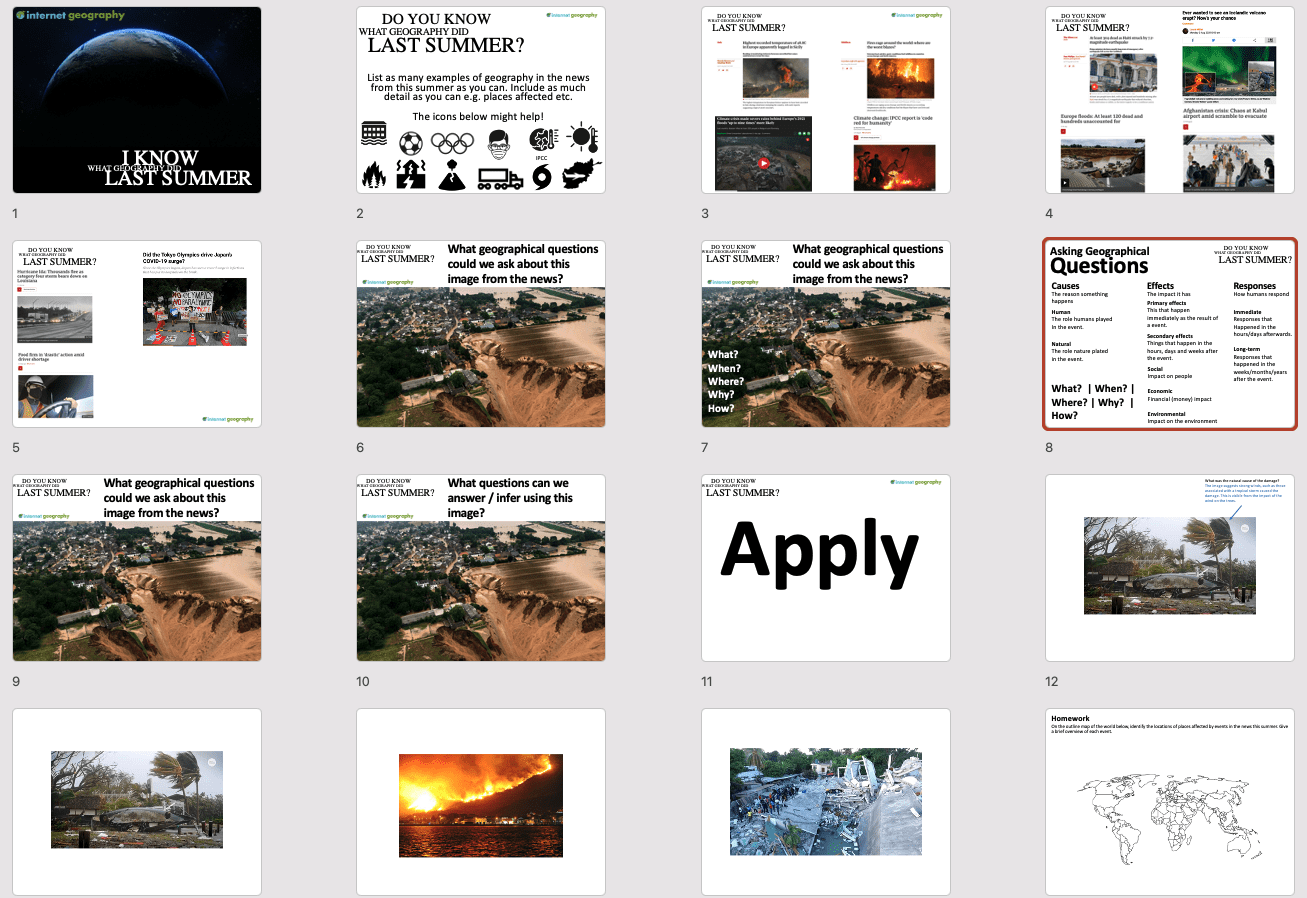
I know what geography did last summer is a free, editable lesson ideal for the first lesson back with students after the holidays, with a focus on:

  • geography in the news
  • asking geographical questions
  • causes, effects, and responses
  • interpreting information from images

Each slide comes with notes with suggested activities. The presentation is available in MS PowerPoint format so you are free to edit it to meet the needs of your students.

We’re able to bring free resources like this to Internet Geography through the funding we receive from subscriptions to Internet Geography Plus, our premium area that contains hundreds of resources covering a range of GCSE specs, A Level, and key stage 3. Find out more about a low-cost Internet Geography Plus annual subscription. Alternatively, if you would like to support the continued development of the site please consider making a donation.

Download I know what geography did last summer

Equipment for Microclimate Investigation

Global Atmospheric Circulation PPT

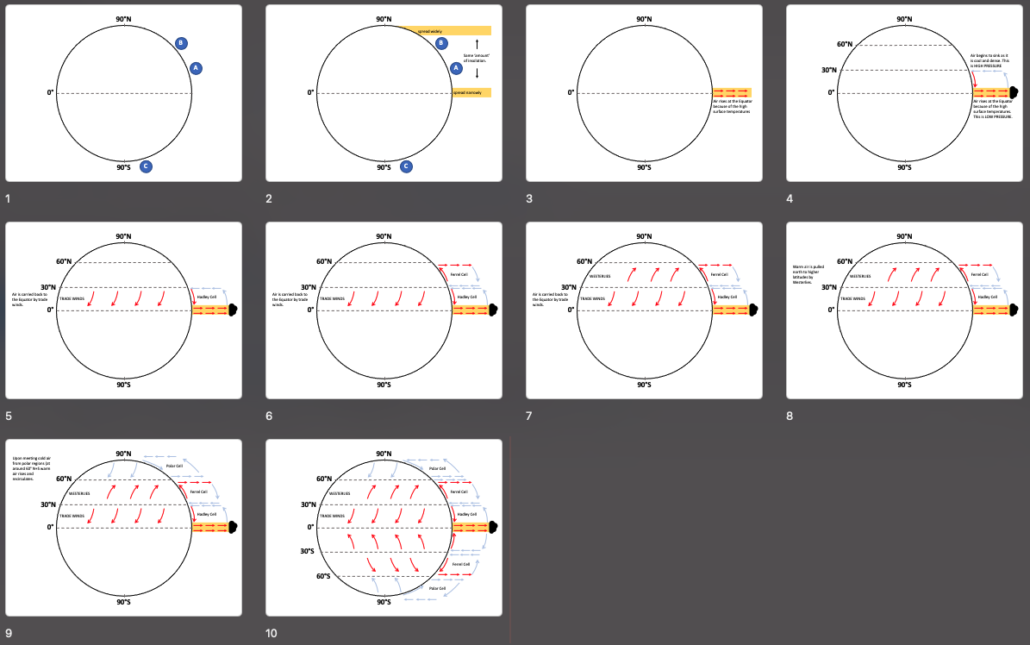
The global atmospheric model can be a challenging concept to teach, especially if you’ve not taught it before. If you’ve not read @GeographyTom9‘s How I Teach…Global Atmospheric Circulation article on his website, Team Geography,  you’re in for a treat. Inspired by Tom’s article we’ve developed a series of Powerpoint slides to support teaching the global atmospheric circulation.

Global atmospheric circulation presentation

Internet Geography Plus subscribers can download the presentation below (you will need to log in first). Not a subscriber? Take out a low-cost subscription to get access to this and hundreds of other resources.

Download the GAC presentation

Coastal erosion at Skipsea

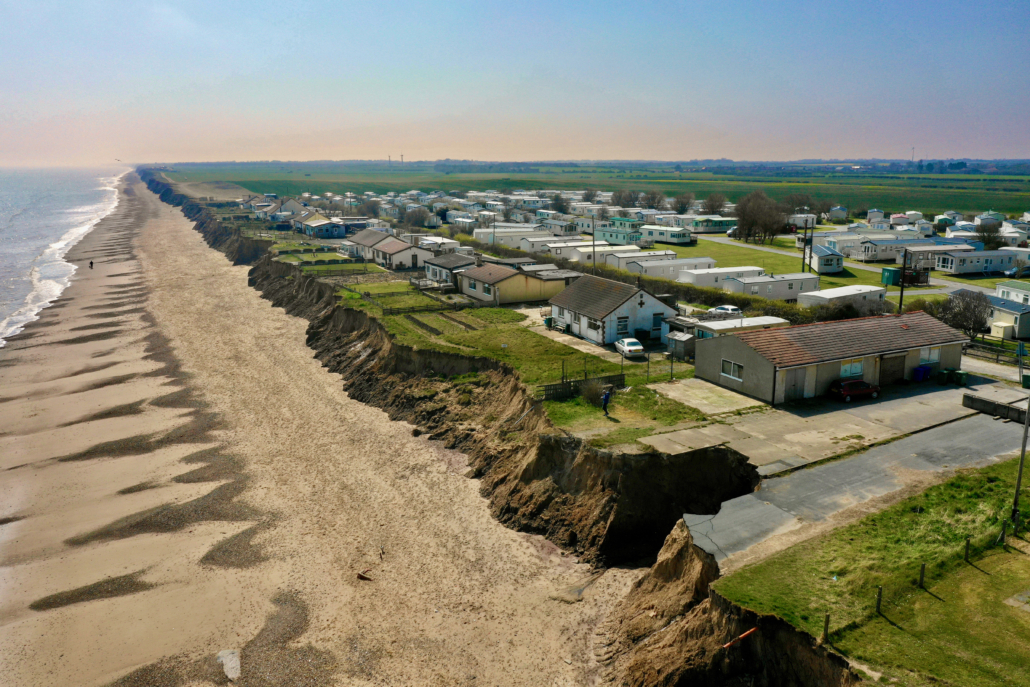
Skipsea is a village located 6 miles north of Hornsea and 10 miles south of Bridlington on the Holderness Coast, East Yorkshire. Skipsea lies on soft boulder clay and experiences the highest rate of erosion in Europe. A combination of stormy weather and rising sea levels caused more than 10 metres of the cliff to disappear from a 2-mile stretch of coast in just nine months last year, compared with the annual average of 4 metres. In just six months, three strips of coastline lost nearly double what they expected to lose in a year.

The average annual erosion rate remains about 2 metres a year for the 52-mile Holderness coastline. In Skipsea, there is anger that sea defences have protected neighbouring towns and villages such as Hornsea and Bridlington but their parish, with its population of about 700, has not. Sea defences are decided on a cost-benefit analysis, with large urban areas and important industries prioritised over farmland and individual houses. On that basis, Skipsea must brave the waves.

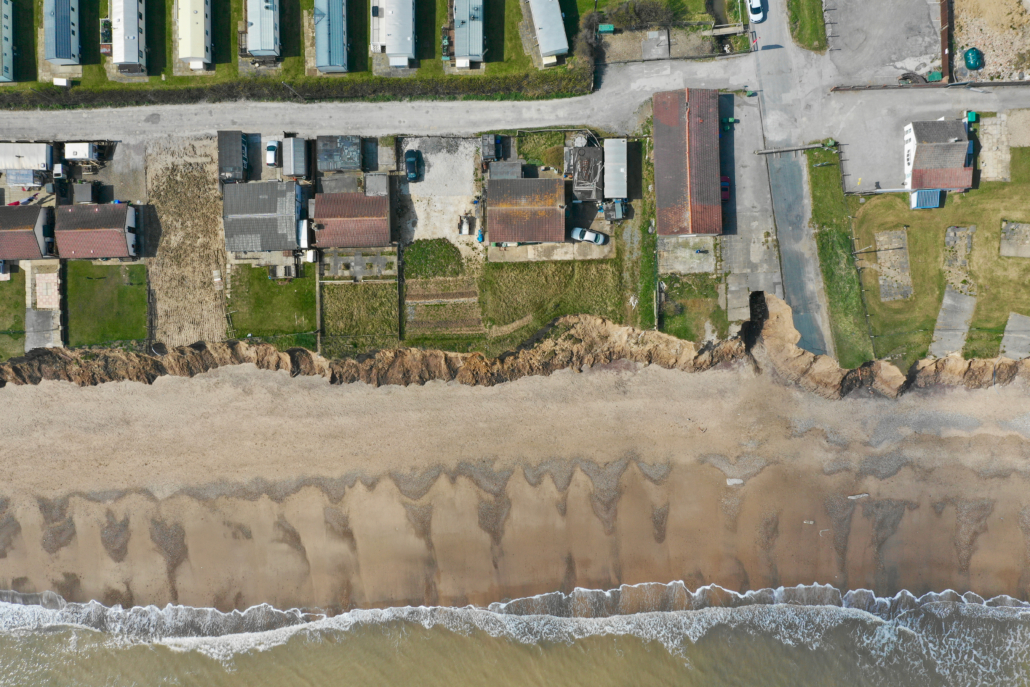
Until recently, 19 properties sat adjacent to the coast along Green Lane. Now, there are 16. It has been suggested that the remaining residents will need to vacate their properties within a couple of years. However, a single erosion event could put the properties at imminent risk within the next year.

Green Lane properties at Skipsea

Green Lane properties at Skipsea

Some residents on Green Lane feel the council has not done enough to protect them from erosion or help them to move nearby. As it stands, they have to pay around £6000 towards the cost of demolishing their homes. The East Riding of Yorkshire council provides some financial support to help residents cover the cost of demolishing their properties – which can cost between £15,000 and £40,000 – but they are continuing to ask the Government for funding.

Vacant plots on Green Lane

Vacant plots on Green Lane

La Soufrière Eruption 2021

JCQ GCSE Geography Grade Descriptors

The JCQ have published guidance for determining GCSE/A Level grades for 2021.

How much use the grade descriptors are is another question.

Below are links to published resources.

Quick links: 

Guidance statement – web page

Guidance Document – PDF file

All guidance downloads – web page with links to PDFs

GCSE Grade Descriptors (all GCSEs) – PDF

GCSE Geography grade descriptors in Word format – provided by Internet Geography

Internet Geography has developed assessment materials for AQA GCSE geography, in the style of past papers and come with a comprehensive mark scheme. There are available to Internet Geography Plus subscribers. Log in here or access for one year with a low-cost subscription.

Fagradalsfjall Eruption

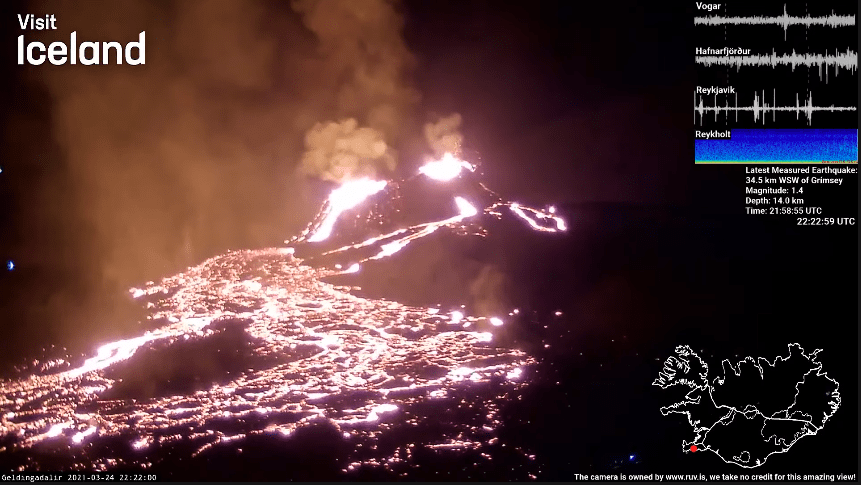
On Friday 19th March 2021, a volcanic eruption began in south-west Iceland, near the capital, Reykjavik. The eruption near Mount Fagradalsfjall, about 20 miles southwest of Reykjavik, took place at 8:45 pm local time. Molten rock breached the surface in a valley near a flat-topped mountain named Fagradalsfjall (beautiful valley mountain), in the region of Geldingadalur (Dale of the Geldings), six miles from the nearest town.

Immediately following the eruption, Iceland’s prime minister Katrín Jakobsdóttir announced on Twitter, “A volcanic eruption has begun in Fagradalsfjall on the Reykjanes peninsula. We are monitoring the situation closely, and as of now, it is not considered a threat to surrounding towns. We ask people to keep away from the immediate area and stay safe”.

In the four weeks leading to the eruption, more than 50,000 earthquakes occurred on the peninsula, a huge jump from the 1,000-3,000 registered each year since 2014. Several of these earthquakes exceeded magnitude 5.

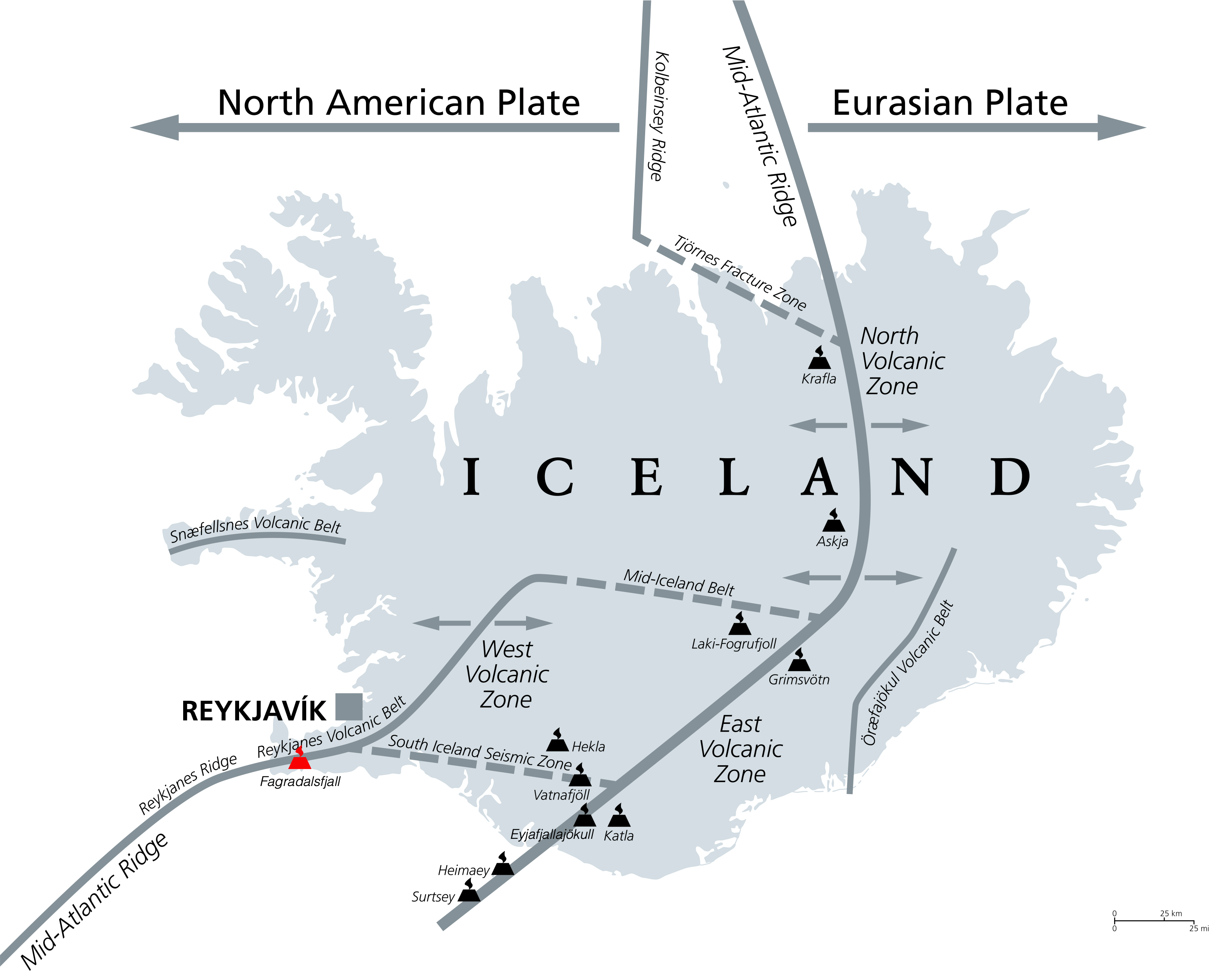
The eruption occurred on the Reykjanes Peninsula in Gledingadalur valley, close to Fagradalsfjall, a mountain 20 miles south-west from the capital, Reykjavik. Sitting on a landward portion of the continuously spreading Mid-Atlantic Ridge is no stranger to earthquakes. But since late 2019, they have become more frequent and more energetic. Icelanders on the peninsula, particularly those in the coastal town of Grindavík, have had trouble sleeping lately due to the constant shaking.

A map to show the location of Fagradalsfjalli

A fissure (crack in the Earth’s surface), approximately 200 m long, opened, releasing lava. Though considered small, the eruption spewed more than 10 million square feet of lava, sometimes in fountains reaching heights of more than 90 m.


Local people were alerted to the eruption when a series of small lava fountains turned the night sky red.

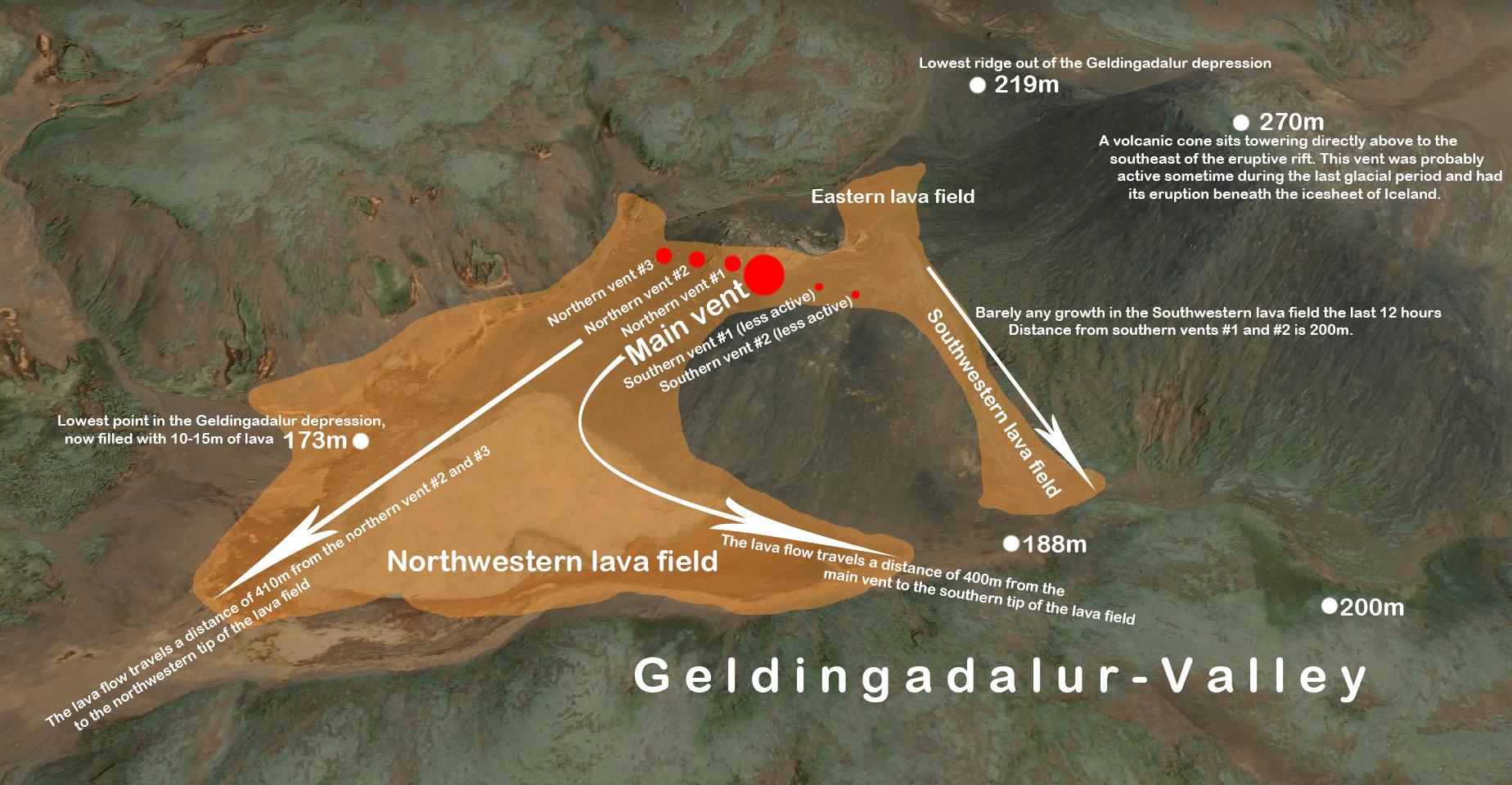
Meteorologists said the eruption was small. The area is uninhabited, so the eruption is not expected to present any danger. Lava is trapped within the Geldingadalur valley, which needs to fill with lava at least 25 to 30 metres thick before it pours out of the valley.

Annotated eruption map Source: Volcano Cafe - https://www.volcanocafe.org/reykjanes-the-second-day/

Annotated eruption map Source: Volcano Cafe – https://www.volcanocafe.org/reykjanes-the-second-day/

The main hazard from the eruption is the potential danger of sulphur dioxide gas.

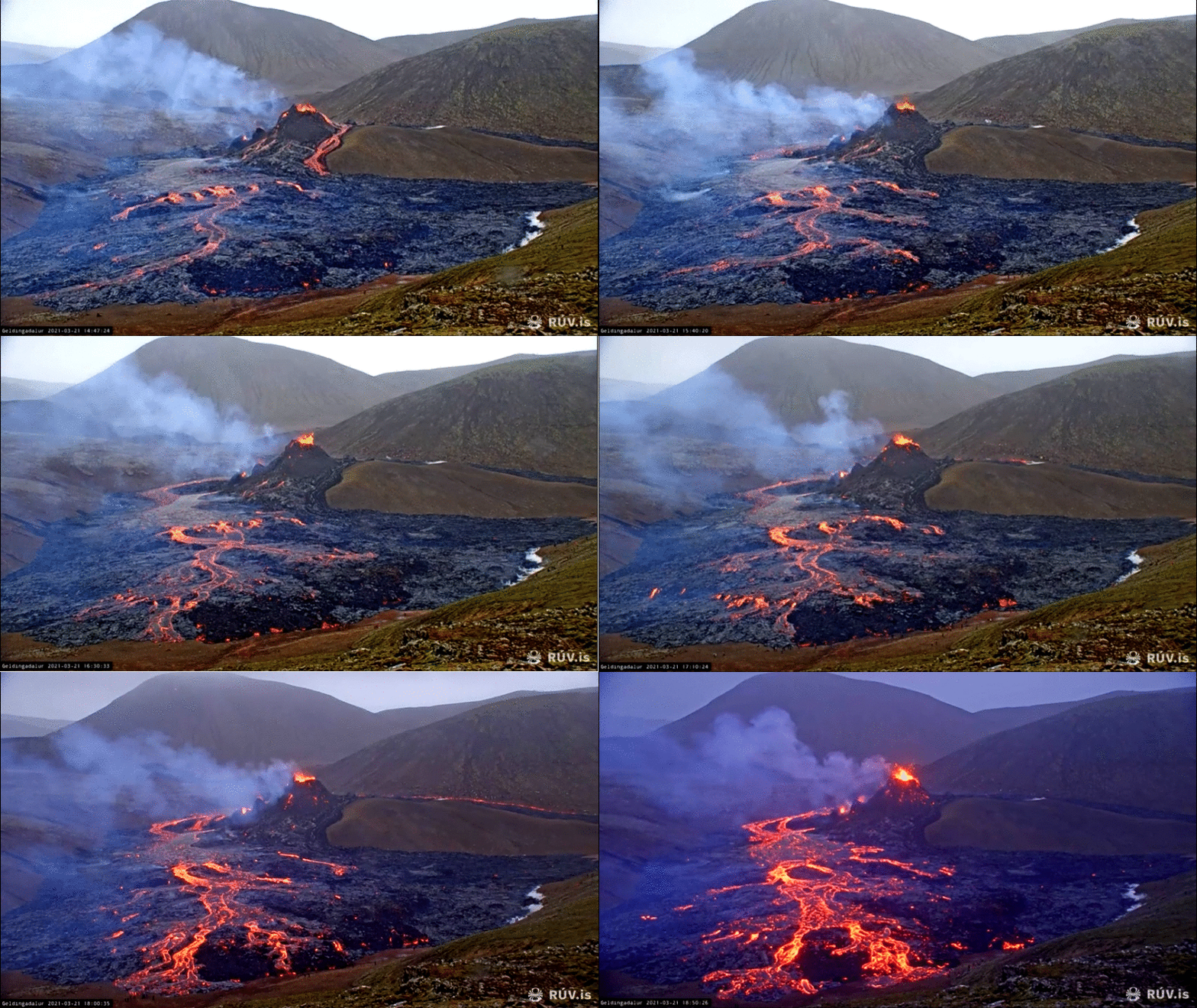
Fagradalsfjall Timelapse

One image was taken every 10 minutes over a 4 hour period on the afternoon of Sunday 21st March 2021. Source images from www.ruv.is

The eruption is the first in this part of Iceland — the Reykjanes Peninsula, home to Reykjavik, where most of the country’s residents live, in 781 years. And it was the first time this particular volcano had erupted in about 6,000 years.

Experts say around 300,000 cubic metres (10.5 million cubic feet) of lava have poured out, but the eruption is deemed to be relatively small and controlled.

Lava first poured out of a meandering fissure, however over the weekend, the eruption focused its output on a single spot, building a steep, towering cauldron of freshly cooled rock. Smooth rivers of lava crept around blockier, rubble-like lava. Lava flowing at a steady pace caused the cone to suffer a few partial collapses as it flung blobs of lava across the scorched earth.

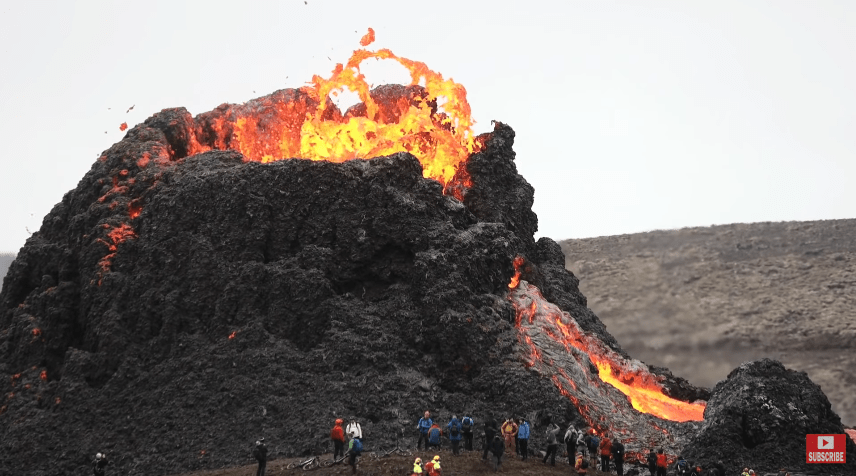
Ejected molten lava lands on the sides of the vent and solidifies, and over time builds a cone around the vent. This is typical of effusive fissure eruptions of basaltic lava. The spatter cone is relatively weak and is susceptible to collapse. When this occurs, large volumes of lava flow out of the vent rapidly as now unconfined lava. These events are unpredictable and can immediately change the direction and speed of a lava flow, as shown. The video below features the partial collapse of the spatter cone.

The tourists below put themselves at risk by getting so close to the spatter cone.

Tourists close to the spatter cone.

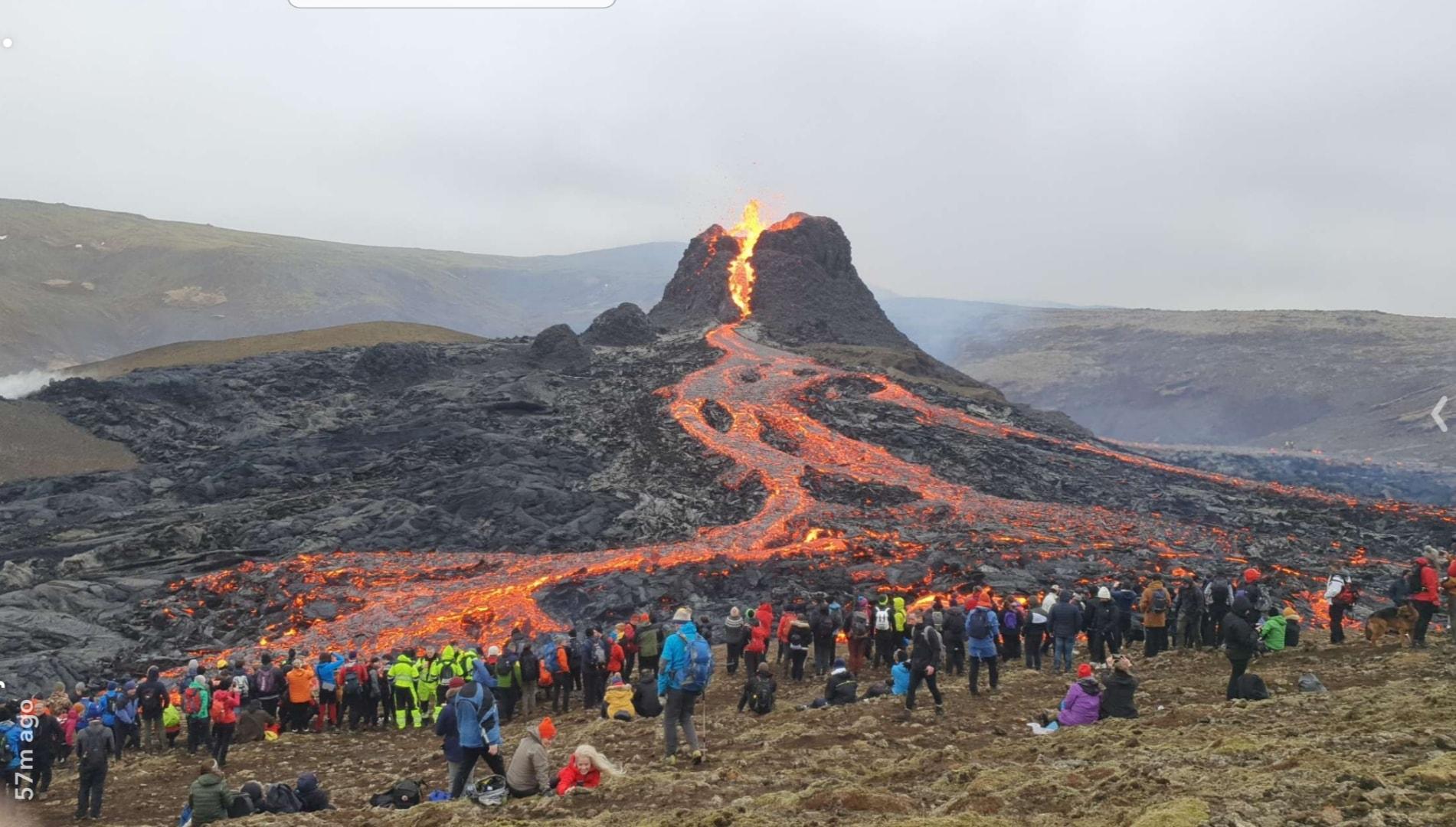
The site was initially blocked off, but from the afternoon of Saturday 20th, March 2021, people were allowed to make the trek. People hiked to the area over the weekend to witness the eruption up close, and local helicopter companies are offering tours from Reykjavik.

Crowds flock to Fagradalsfjall - image courtesy of Guðni Oddgeirsson

Crowds flock to Fagradalsfjall – image courtesy of Guðni Oddgeirsson

By Monday, the site was blocked again due to high gas pollution levels and poor weather conditions. Emergency services had to rescue several people from the area on Sunday evening.

Now that magma has reached the surface, the earthquakes have mostly subsided.

On Wednesday, 24th April, the main cone was joined by another large cone, formed when two smaller ones merged.

Two large cones on Wednesday 24th March

Two large cones on Wednesday 24th March

Iceland frequently experiences earthquakes and volcanic eruptions because it sits between two tectonic plates (the North American and Eurasian plate), moving in opposite directions, forming a constructive plate margin.

Geologists describe the eruption as “effusive”, in which lava flows out of the volcano onto the ground, as opposed to “explosive”, wherein magma is violently fragmented and rapidly expelled from a volcano.

Scientists suggest the heightened volcanic activity represents a transition from a gradual opening of the Mid-Atlantic rift to a considerably more dramatic phase when both sides of the Reykjanes Peninsula are rapidly pulled apart. When a geologic rift quickly pulls the land apart like this, it creates a space, and magma rushes up to fill it in.

Scientists on site made use of nature to cook up a meal!

Unlike the eruption in 2010 of the Eyjafjallajökull volcano, which halted approximately 900,000 flights and forced hundreds of Icelanders from their homes, this eruption is not expected to spew much ash or smoke into the atmosphere.

Below are resources covering the current eruption of Fagradalsfjall, Iceland.

Geography in the News

Download our Geography in the News resource covering the eruption of Fagradalsfjall

Pre eruption

Iceland shaken by more than 50,000 earthquakes in three weeks

A great video introduction to the eruption, featuring monitoring before the eruption – BBC News

Scientists in Iceland say ‘strong signs’ volcanic eruption is imminent

Several days of tremors near Mount Keilir indicate it is ‘more likely than not’ an eruption is about to begin – The Guardian

Eruption

Icelandic volcano erupts near Reykjavik

Nighttime aerial video – BBC News

Iceland volcano: eruption underway on mountain near Reykjavik

A video report overview – The Guardian

360 Image

Take a look at this 360° image of the volcano, which clearly puts its site in context.

Drone Footage

Close-up footage of the eruption.


View this post on Instagram


A post shared by Bjorn Steinbekk (@bsteinbekk)

Live webcam

A webcam is now broadcasting live from Fagradalsfjall, facing Geldingadalur – RUV

The webcam is broadcasting on YouTube.

The Fracture Tip

A wonderful video produced by Gudmann & Gyda

Stunning night time footage of the eruption

Iceland volcano: Lava-spewing Fagradalsfjall ‘subsiding.’

The eruption that started on Friday 19th March 2021 near Iceland’s capital Reykjavik seems to be subsiding, scientists say. – BBC News – update: they clearly got this wrong!