The census happens every 10 years and gives us a picture of all the people and households in England and Wales.
On Sunday 21st March 2021 every household was required to complete the census, a detailed questionnaire asking a host of questions about those who live there. The Census questions ask for details on people’s sex, age, ethnicity and the status of their health, education and occupation.
The huge survey has been taking place every 10 years since 1801 (except in 1941), with the last one being in 2011.
The Census is run by the Office for National Statistics (ONS) in England and Wales and by the Northern Ireland Statistics and Research Agency. Scotland’s Census was delayed until March 2022 due to the coronavirus pandemic.
The Covid outbreak also means the Census in England, Wales and Northern Ireland was the first to be primarily completed online.
Census 2021 first results
The first results were published on Tuesday 28 June 2022. These are estimates of the number of people and households in England and Wales. They show the number of people by sex and age at the local authority level, rounded to the nearest 100.
On Census Day, the size of the usual resident population in England and Wales was 59,597,300.
The population of England was 56,489,800
The population of Wales was 3,107,500.
This was the largest the population has ever been.
Key findings of the first results
The population of England and Wales grew by more than 3.5 million (6.3%) since the last census in 2011, when it was 56,075,912.
The population grew in each of the nine regions of England and also grew in Wales; the region with the highest population growth was the East of England, which increased by 8.3% from 2011 (a gain of approximately 488,000 residents).
There were 30,420,100 women (51.0% of the overall population) and 29,177,200 men (49.0%) in England and Wales.
There were more people than ever before in the older age groups; the proportion of the population who were aged 65 years and over was 18.6% (16.4% in 2011).
There were 24,782,800 households in England and Wales on Census Day; the number of households increased by more than 1.4 million since 2011 (6.1%), when there were 23,366,044 households.
Population change between 2011 and 2021, local authorities in England and Wales
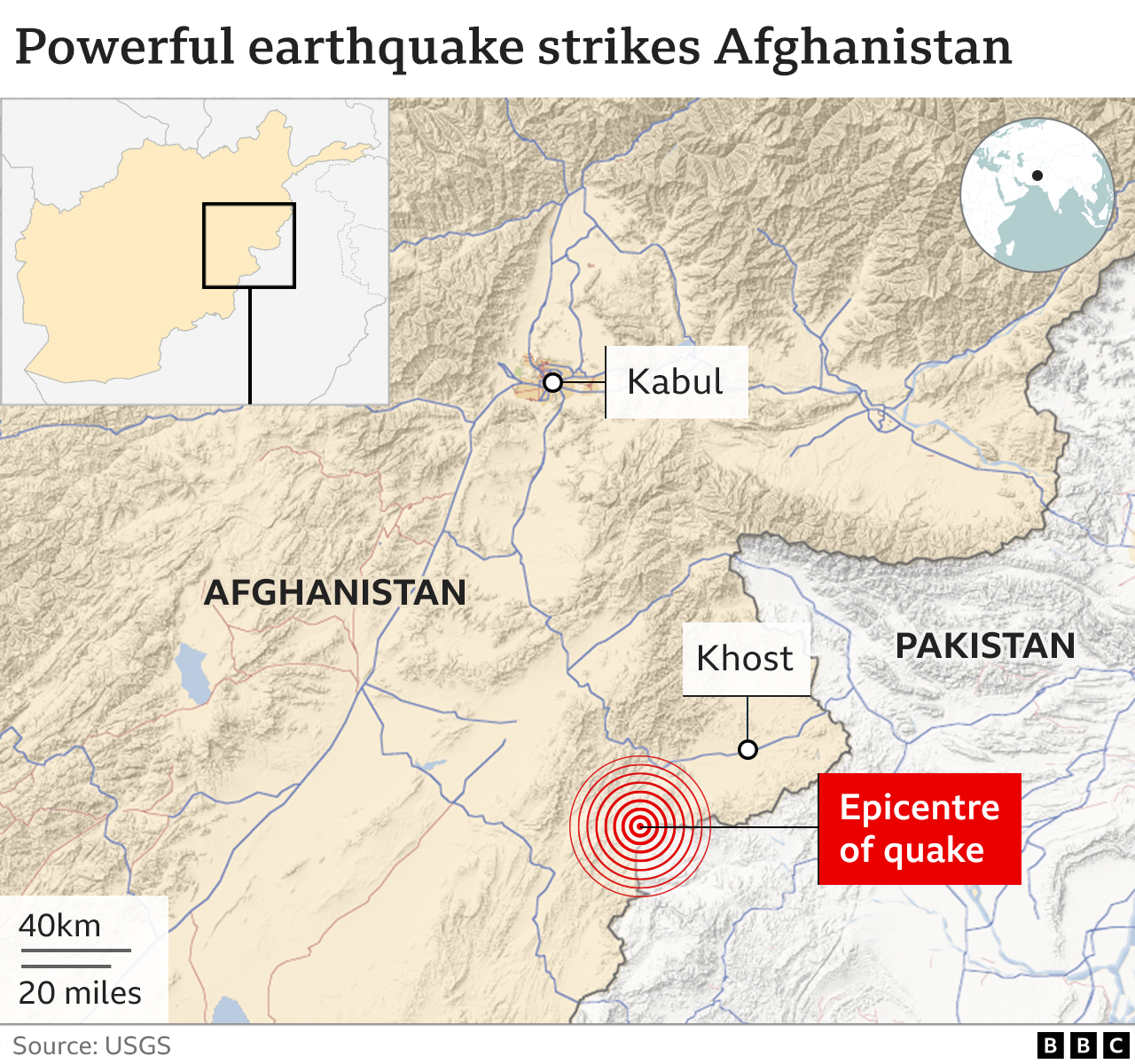
At least 1,036 people have died, and another 2,949 were injured in an earthquake that struck Afghanistan’s Paktika province on the morning of Wednesday 22nd June 2022. The earthquake struck about 44km (27 miles) from the south-eastern city of Khost shortly after 01:30 local time (21:00 Tuesday GMT), when many people were asleep at home.
Earthquakes are common in Afghanistan’s mountainous province of Khost — nearly 50 have been recorded over the past five years, according to the US Geological Survey.
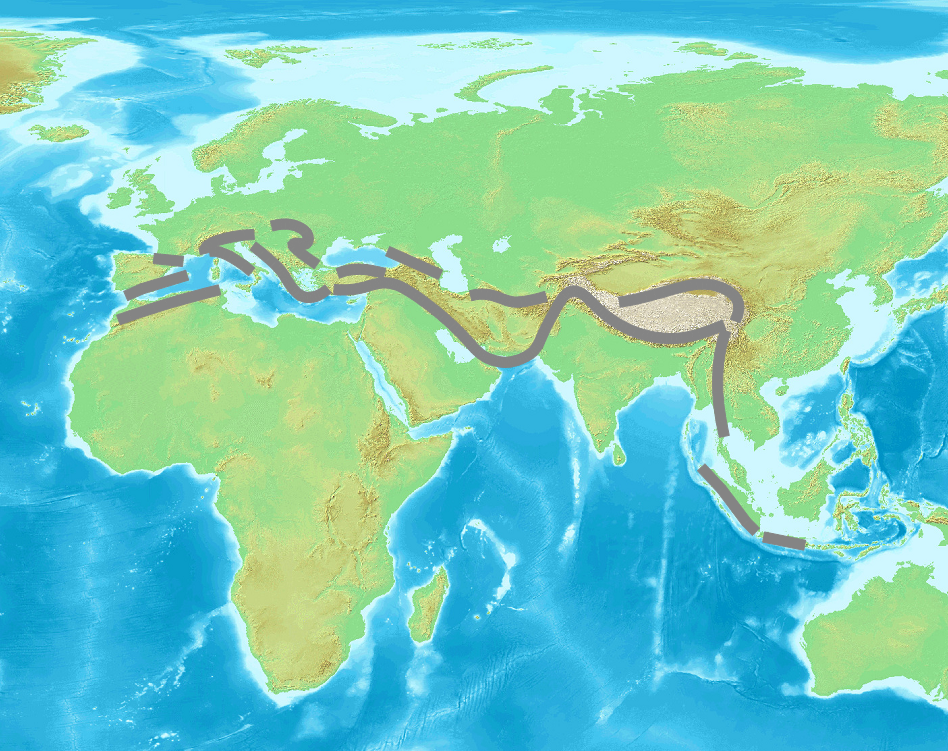
Afghanistan is earthquake-prone because it is located on the Alpide belt, the second most seismically active region in the world after the Pacific Ring of Fire.
The Alpide Belt
The Alpide belt runs about 15,000 kilometres, from the southern part of Eurasia through the Himalayas and into the Atlantic. Along with the Hindu Kush, it includes a number of fold mountain ranges, such as the Alps, Atlas Mountains and the Caucasus Mountains. It has been formed by the collision of a number of tectonic plates.
The Arabian, Indian and Eurasian tectonic plates meet In Afghanistan and create earthquakes when they shift against each other at their borders. The boundary between the Indian and Eurasian plates exists near Afghanistan’s border with Pakistan.
The earthquake in Afghanistan formed when the Indian plate crashed violently with the Eurasian plate. Collisions like this shake and squeeze the ground upwards. Along with causing earthquakes, this movement creates mountains like the Himalayas or the Hindu Kush and Pamir mountain ranges in northeast Afghanistan.
What were the effects of the Afghanistan earthquake?
The most recent figures put the death toll at 1,150 people with at least 1,600 injuries. The number of dead and injured is expected to rise as remote areas are reached and rescue workers are able to search collapsed buildings.
The earthquake destroyed critical infrastructure — including homes, health facilities, schools and water networks.
In the areas that have been accessed so far, as many as 1,900 homes have been destroyed including 1,028 in Giyan, 450 in Barmal and 416 in Spera. Many homes had large families of seven or more people, so the number of people affected is significant. This is well over half of Giyan’s housing stock.
As many as 10,000 more homes have been damaged extensively and risk imminent collapse. Many of the homes were comprised of mud bricks, making them very susceptible to damage and destruction. Ongoing assessments of the conditions of the housing are continuing.
At least 65 children have been orphaned or are unaccompanied in the aftermath of the earthquake.
Of the deaths, at least 155 were children, including 134 in the Giyan district, and 250 were injured. Seven schools in Khost and Paktika provinces were damaged by the earthquake (5,135 students) with additional damage reported in Gani Khil and Dor Baba districts.
The risk of communicable diseases, such as acute watery diarrhoea (AWD)/cholera, and malaria increased due to the fragile living conditions in the affected communities and high temperatures in summer. There was an upward trend of AWD cases following the earthquake (Between 3 to 10 July, a total of 464 AWD cases were reported).
What were the responses to the Afghanistan earthquake?
Since the take over of government by the Taliban in 2021, Afghanistan has experienced a humanitarian crisis, especially since many countries cut diplomatic ties with the country. The new regime has struggled to get to grips with food shortages and a flailing economy. More than a third of people cannot meet their basic needs, women’s rights have been restricted and foreign aid has evaporated.
Dr Orzala Nemat, an Afghan researcher and human rights activist based in the UK, fears that the response could quickly become chaotic without “systematic governance” structures in place since the Taliban takeover.
In a rare move, the Taliban’s supreme leader, Haibatullah Akhundzadah, who almost never appears in public, pleaded with the international community and humanitarian organisations “to help the Afghan people affected by this great tragedy and to spare no effort”.
Afghanistan’s Taliban rulers pledged not to interfere with international efforts to distribute aid to tens of thousands of people affected by the earthquake.
Humanitarian aid has continued, with international agencies, such as the United Nations, operating.
The UN Office for the Coordination of Humanitarian Affairs (UNOCHA) said Afghanistan had asked humanitarian agencies to help with rescue efforts, and teams were being sent to the quake-hit area.
Afghanistan military provided support in search and rescue operations.
International Aid
Japan, South Korea, Taiwan and the United Arab Emirates all offered to send aid. Supplies from neighbouring Pakistan crossed the border.
On July 12, the Government of Japan decided to extend Emergency Grant Aid of 3 million US dollars to Afghanistan in response to the damages caused by the earthquake that had occurred in eastern Afghanistan on June 22. The Government of Japan offered to provide assistance in areas such as health and medical care, shelter, and water and sanitation through the International Federation of Red Cross and Red Crescent Societies (IFRC) to the Afghan people affected by the devastating earthquake.
Non-Government Organisations (NGOs)
The World Health Organisation’s polio team was on the ground joining forces with UN agencies and NGOs to ensure an effective and coordinated relief effort. The team’s invaluable experience and local knowledge gained from more than 2 decades working among local communities in both Paktika and Khost provided the foundations of an assessment tool to map communities (the Open Street Map Humanitarian team issued a request from arm-chair mappers to use satellite images to create and update maps in the area) and assess the number and extent of casualties as well as the destruction to homes and buildings. This ensured accurate data guided a focused response in the immediate aftermath, including the rapid construction of tents for shelter, as well as housing ad hoc health camps.
Polio teams turned a helping hand wherever needed including digging for survivors, building tents, unpacking trucks and distributing shipments of WHO emergency and surgical kits, medical supplies and equipment, and the heartbreaking task of preparing and assisting in transporting the dead for burial.
A new EU Humanitarian Air Bridge flight delivered 36 tonnes of life-saving cargo consisting of medical equipment, medication, and relief items to support WHO, UNICEF and Médecins Sans Frontières delivering earthquake response and other humanitarian needs in Afghanistan.
Below is the start of a collection of resources to support educating students about the earthquake in Afghanistan. Please let us know about other resources in the comments below.
Afghanistan Earthquake Relief
While many relief agencies are currently not providing support to Afghanistan there are a number of organisations providing support. These include:
If you are aware of other aid agencies providing support or are able to provide a link for donations to aid agencies please send us an email.
Support
Teachers
Below we have included links to websites that provide support in teaching events such as this in a considered way, after all, there are a number of children from Afghanistan being educated in schools outside of the country and may be in one of your classes.
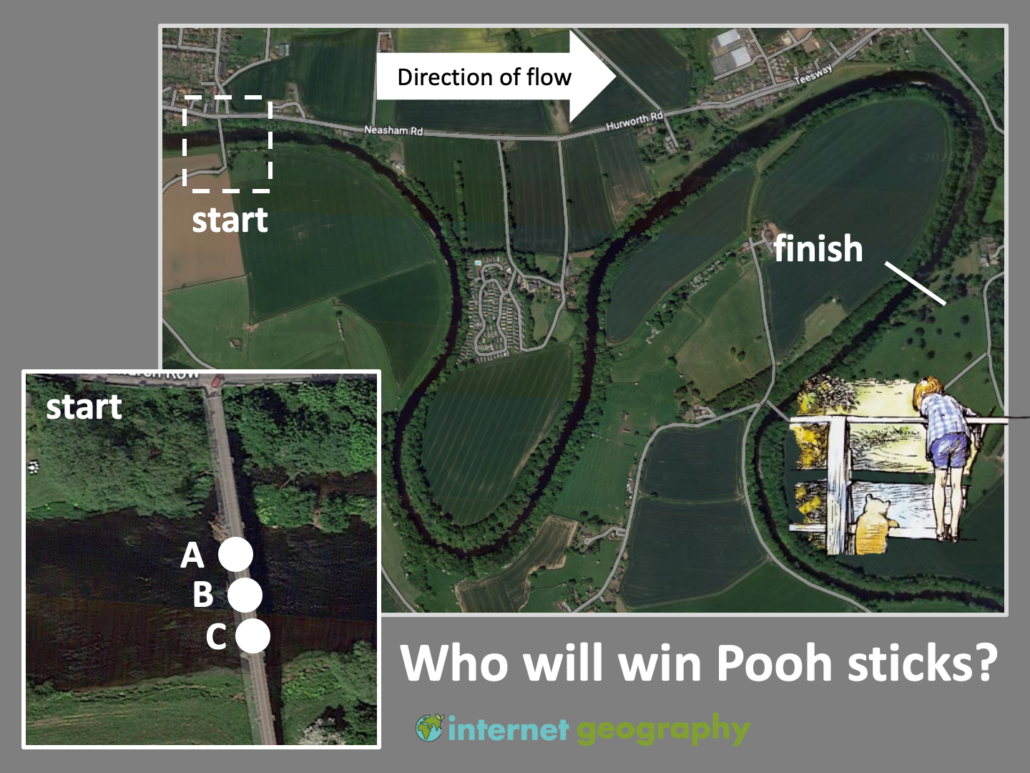
Check learner understanding of the velocity of a river where there are meanders with this simple activity. Great for discussions and application of geographical understanding of river processes.
Click the image below to download the PowerPoint slide.
With the cost of living crisis, OS Maps offers endless days out to explore and have fun outdoors. And, right now you can subscribe for just £1 for 1 month using voucher code OSMONTH – perfect for the Jubilee bank holiday weekend!
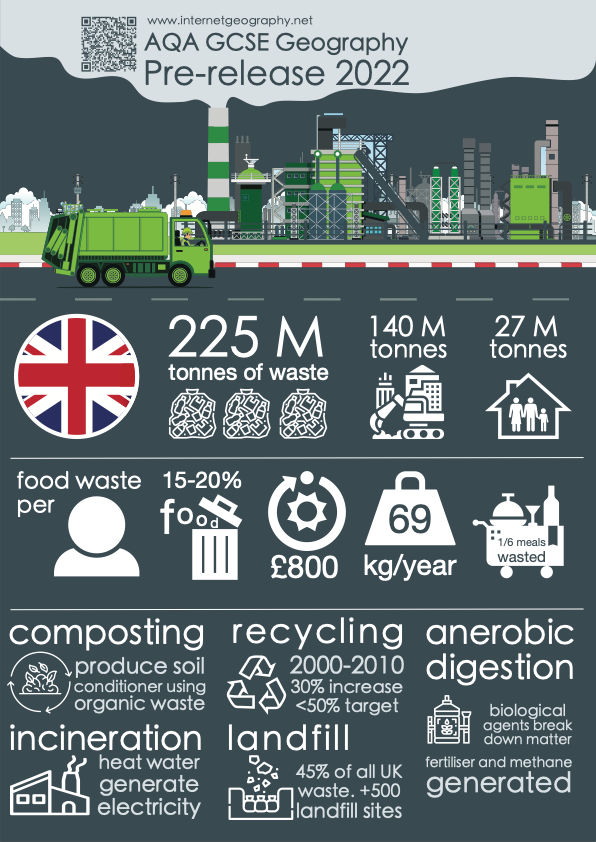
We’ve developed the first in a planned series of infographics covering the AQA GCSE geography paper 3 2022 pre-release. Ideal for display in the classroom (and bedrooms!). The QR code takes students to interactive resources we are developing.
Other infographics will be made available to Internet Geography Plus subscribers who already have access to three work booklets to support students in familiarising themselves with and understanding the pre-release. Take out a low-cost annual subscription starting at just £24.99.
Welcome! We are developing a range of resources to support students and teachers in preparing for the AQA GCSE Geography pre-release. This page will be regularly updated over the next few days.
Three people died in one of the worst storms to hit the UK in decades. Storm Eunice, sandwiched between Storms Dudley and Frankline brought record-breaking winds to the UK.
Over the course of one week, the big three, Storms Dudley, Eunice and Franklin battered the UK during February 2022.
About 400,000 homes were without power on the evening of Friday 18th February 2022.
What caused Storm Eunice?
The UK’s recent cluster of winter wind storms is related to a particularly strong polar vortex creating low pressure in the Arctic, and a faster jet stream – a core of very strong wind high in the atmosphere that can extend across the Atlantic – bringing stormier and very wet weather to the UK.
A stronger jet stream makes storms more powerful and its orientation roughly determines the track of the storm and where it affects.
The storms were predicted to contain a “sting jet”: a small, narrow airstream that can form inside a storm and produce intense winds over an area smaller than 100 km.
Sting jets, which were first discovered in 2003, and likely occurred during the Great Storm and Storm Arwen, can last anywhere between one and 12 hours. They are difficult to forecast and relatively rare, but make storms more dangerous.
Sting jets occur in a certain type of extratropical cyclone – a rotating wind system that forms outside of the tropics. These airstreams form around 5km above the Earth’s surface then descend on the southwest side of a cyclone, close to its centre, accelerating as they do and bringing fast-moving air from high in the atmosphere with them. When they form, they can produce much higher wind speeds on the ground than might otherwise be forecast by studying pressure gradients in the storm’s core alone.
Meteorologists are still working to understand sting jets, but they are likely to have a significant influence on the UK’s weather in a warming climate.
What were the impacts of Storm Eunice?
Three people died in the UK in Storm Eunice on Friday as fierce winds toppled trees and sent debris flying.
With many railway lines blocked by trees and other debris, major train operators – including Chiltern Railways, Avanti West Coast and Great Western Railway – were forced to suspend services, while in Wales all trains were cancelled.
West Coast mainline services have also been affected after the temporary closure of Preston railway station, where roofing became loose.
Network Rail recorded about 200 storm-related incidents between London Paddington and Penzance in Cornwall in recent days, adding that the number of incidents was unprecedented and some of the worst the UK has experienced in three decades
The top of the spire at St Thomas’s Church in Wells, Somerset, toppled to the ground.
#STORMEUNICE It’s a miracle that this sizeable & very heavy spire tip, with windvane & lightning conductor, didn’t hit anyone as it came crashing-down at St Thomas Church in #Wells, #Somerset around noon. Video captured by Matthew Hodson (many thanks for sending to @BBCBristol) pic.twitter.com/fq2KfvpWBR
In Shropshire, people were rescued and properties evacuated due to flooding and at Ironbridge two severe flood warnings were issued – meaning lives are in danger and the Severn barriers are expected to be breached.
The Wharfage Road in Ironbridge – which runs alongside the river – was closed to pedestrians, as it is no longer safe behind the barriers erected there, the Environment Agency said.
The River Severn peaked at 16.9ft (5.15m) in the Shrewsbury area, 3.9 inches (10cm) short of the record levels set in 2000, and parts of the town centre have been underwater.
The River Wharfe overtopped its banks in Tadcaster, North Yorkshire, leading to flooding.
A second red warning, meaning there is a threat to life has been issued by, covering South East England and London. Severe weather will affect most of the UK today from #StormEunice. Alex Deakin has the details pic.twitter.com/zIYjK2zyAl
What were the long-term responses to Storm Eunice?
Insurance payouts for damage caused by Storm Eunice could total between £200m and £350m, according to early estimates from the consultancy firm PwC.
Mohammad Khan, General Insurance Leader at PwC UK, said insurance losses would mainly relate to “damage to homes, commercial properties and vehicles from falling trees and flying debris”.
https://www.internetgeography.net/wp-content/uploads/2022/02/O2-Arena-Damaged-by-Storms.jpeg40006000Anthony Bennetthttps://www.internetgeography.net/wp-content/uploads/2024/01/Internet-Geography-Logo.pngAnthony Bennett2022-02-25 12:46:042022-02-25 12:46:04Storm Eunice Case Study
Seismic tomography scans have huge potential in the geography classroom. But what are they? In simple terms, they are like a CAT scan of the interior of the Earth. They are created by measuring the speed of seismic waves. Areas, where there is a low velocity, correspond with hotter, less dense zones in the mantle (e.g. a mantle plume). To find out more about seismic tomography scans take a look at this excellent guide by Earth Scope.
There are a number of tools available to generate seismic tomography scans. Our favourite is the Hades Underworld Explorer. The interface is made to facilitate the discovery and visualisation of mantle anomalies. A tomographic model can be generated by either selecting a section preset or by dragging markers to generate a cross-section of the mantle.
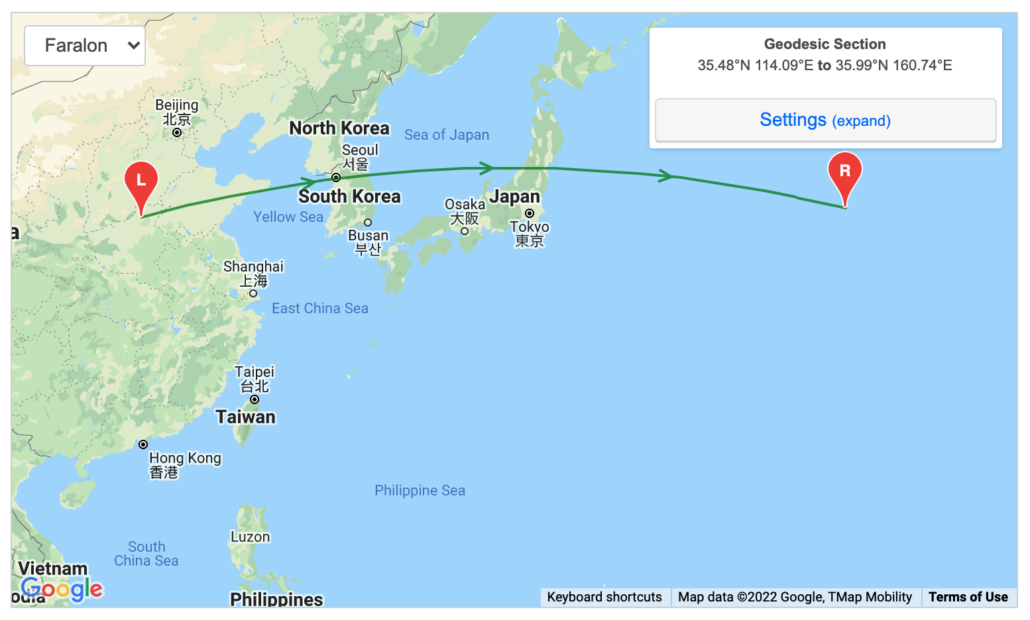
In the example below, a selection has been made in the northwest Pacific, in Asia.
A selection in the north-west Pacific
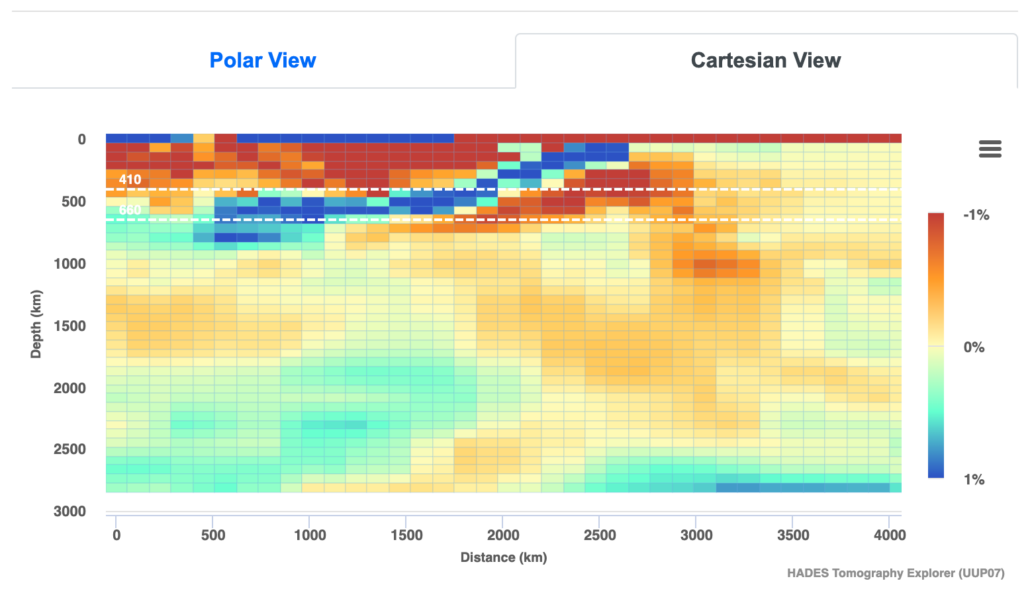
The website then generates a tomography scan showing the cross-section of the mantle.
The subduction of the Eurasian plate by the Pacific Plate
The depth of the mantle is shown in kilometres on the x-axis. The key shows velocity anomalies. In the case of the tomography scan above the colder, more dense material is shown in blue, while the hotter, less dense material is shown in red. Based on this we can see the destructive margin formed by the Eurasian plate being subducted by the Pacific plate. The Pacific Plate sinking into the mantle as illustrated by the cooler crust (shaded blue), reaches a depth of around 800 km.
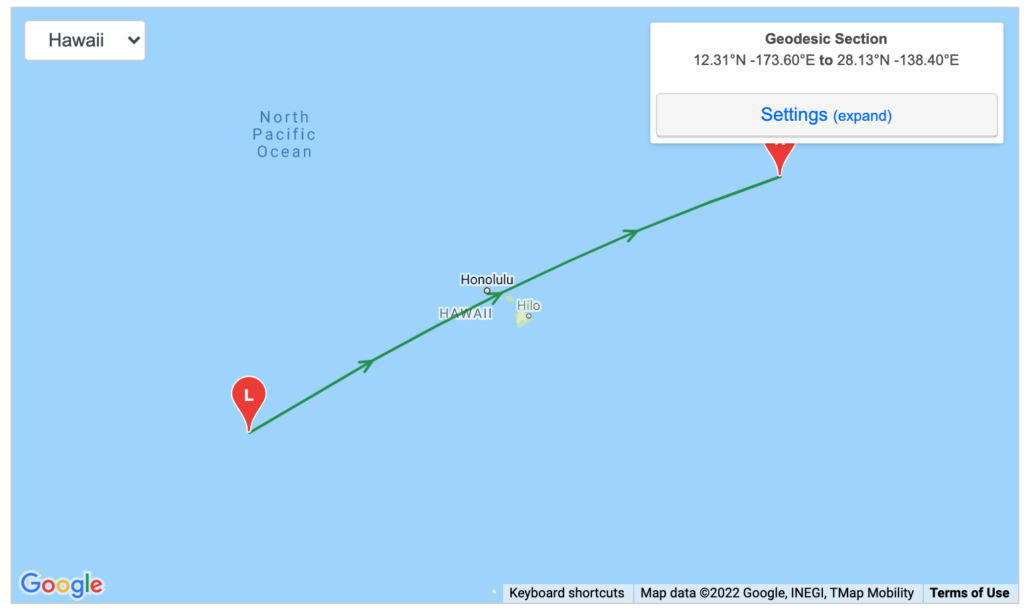
In the example below the mantle plume at Hawaii is clearly visible (accessed via the drop-down menu).
Hawaii
Hawaii mantle plume
Tomography scans lack the resolution required to image plumes deep within the mantle.
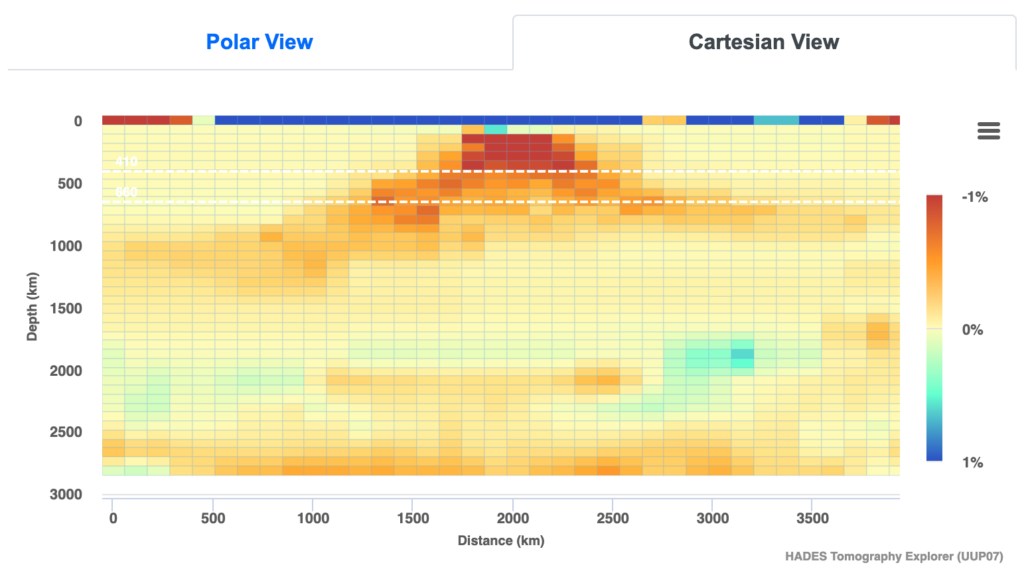
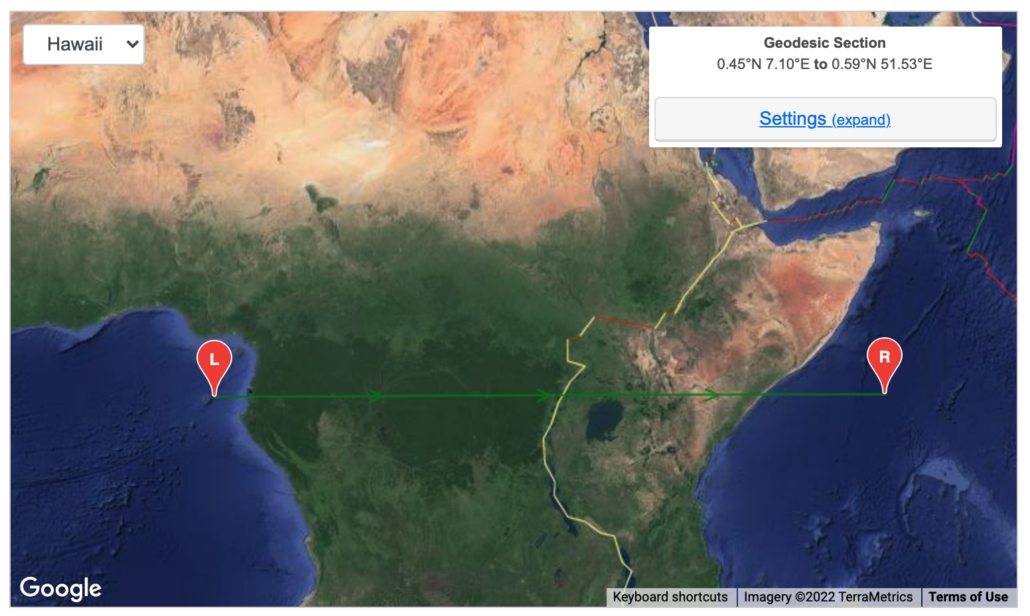
The tomography scan below illustrates the Rift Valley in eastern Africa.
Rift valley transect
Rift valley tomography scan
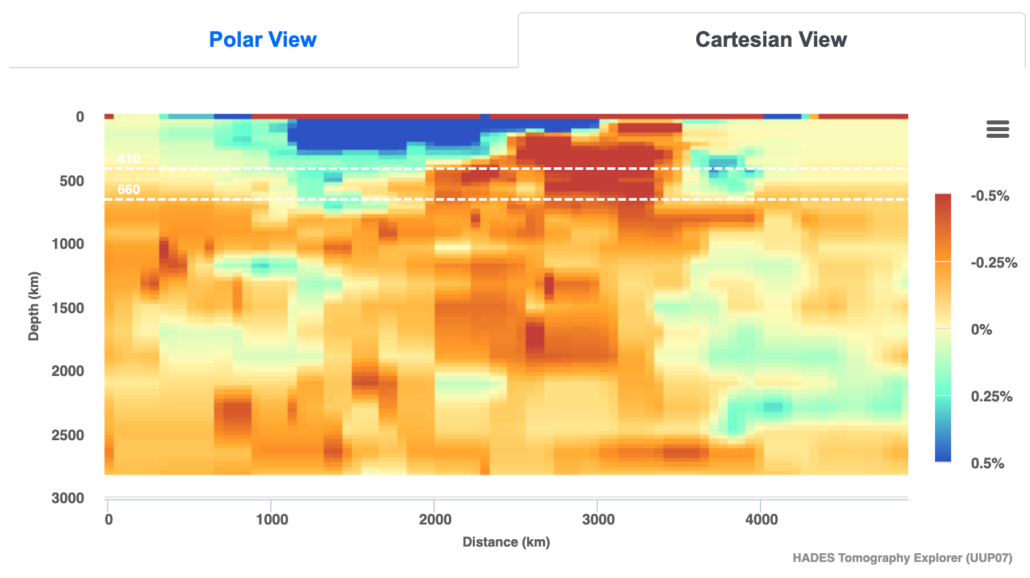
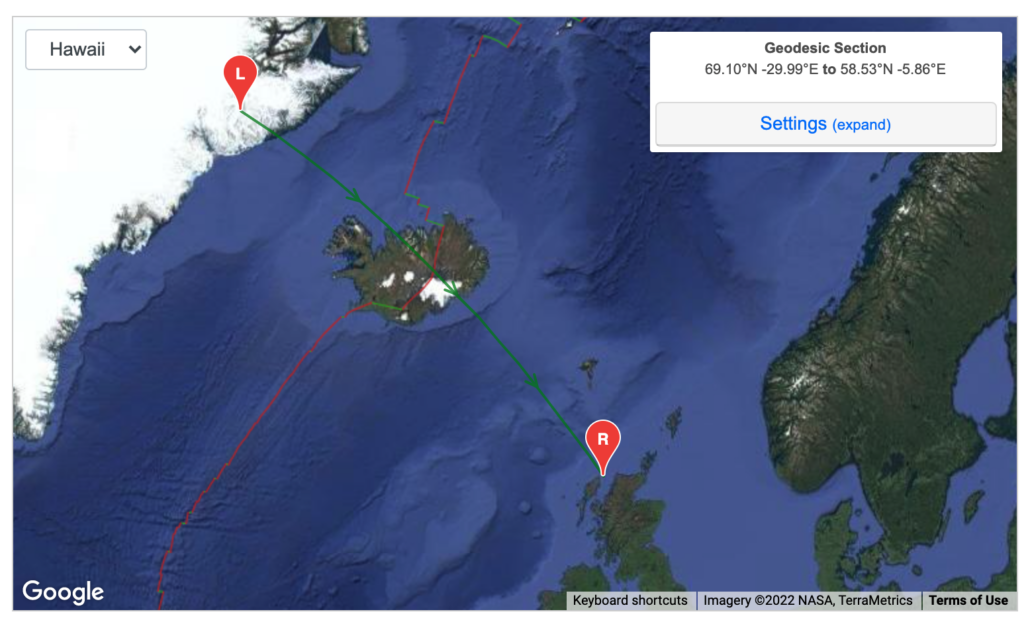
The tomography scan below shows the Northern Atlantic.
North Atlantic Transect
North Atlantic Tomography scan
In the tomography scan above we can see that the conduit spreads laterally across the North Atlantic, to a depth of around 900 km. There is a conduit feeding this between 900-1200 km along the transect at a depth of around 1000 – 1500 km.
Alistair Hamill has shared a number of resources on the use of seismic tomography on Twitter and inspired our interest in this area. Below are a selection of tweets by Alistair that are well worth exploring.
I think that tomography scans of the mantle are a great way to teach our A Level geographers our latest understanding of the processes down there. If tomography is new to you, check out this annotated scan of the Iceland mantle plume for a sense of what it can reveal. pic.twitter.com/RYzzEkox0M
1/ My Y13s had their first explore of seismic tomography today, using Atlas of the Underworld to draw a series of cross sections through the mantle to find evidence of subducting plates. I've been so looking forward to doing this with them – and they nailed it!!
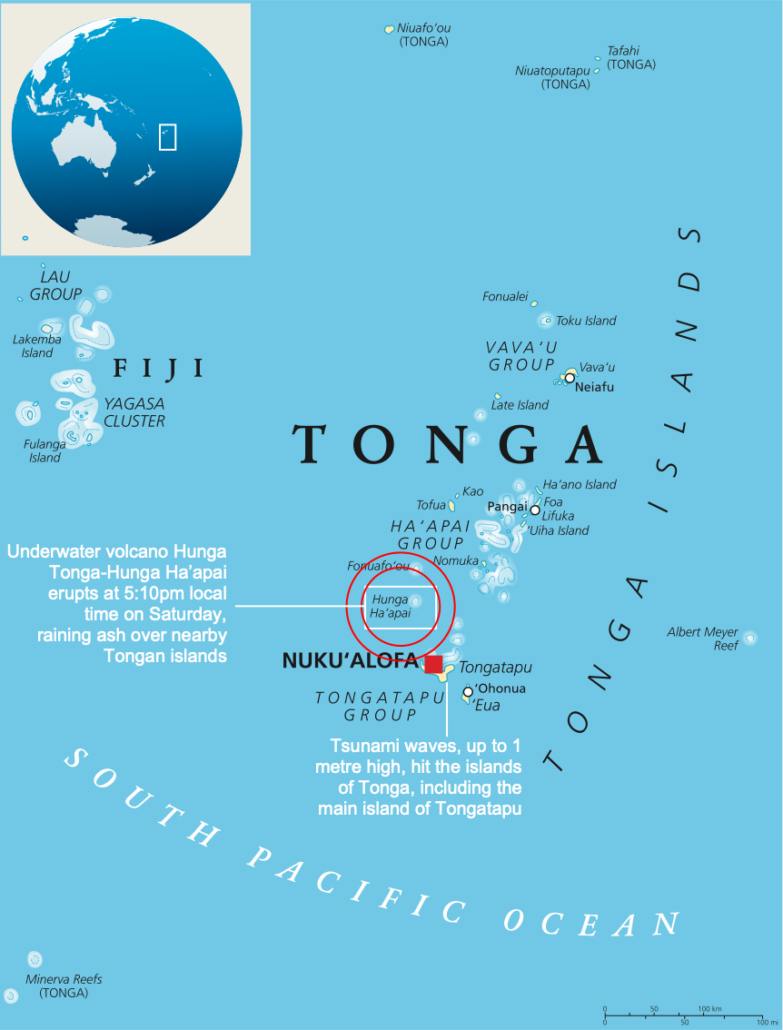
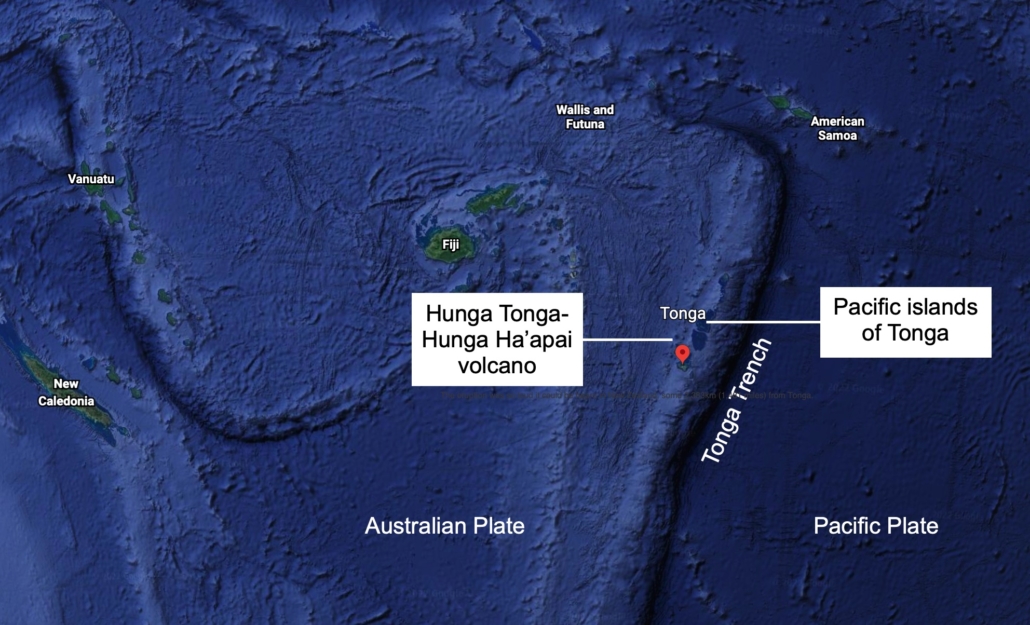
The Hunga Tonga-Hunga Ha’apai volcano is located in the South Pacific, around 65km (40 miles) north of Tonga’s capital, Nuku’alofa. The volcano is part of an arc of volcanic islands known as the Tonga-Kermadec Islands volcanic arc and forms part of the Pacific Ring of Fire.
The location of the Hunga Tonga-Hunga Ha’apai volcano
What was the volcano like before it erupted?
Before its eruption, the Hunga Tonga-Hunga Ha’apai volcano was 1.8km high and 20km wide. However, the volcano was only 114 metres above sea level at its highest point. The video below illustrates the majority of the volcano is undersea (shared by A Hamill).
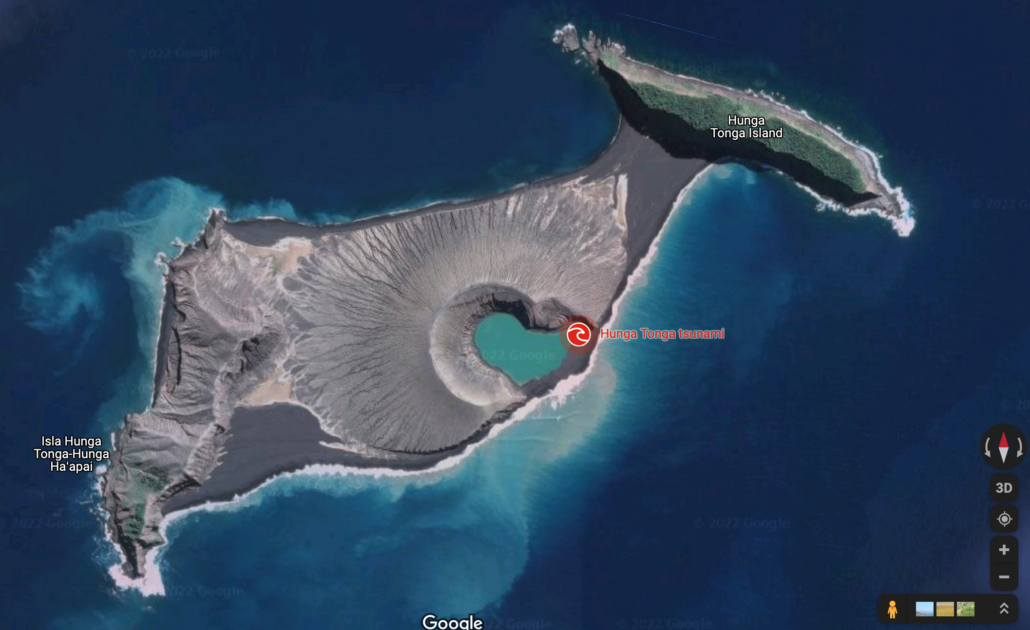
Volcanic activity in 2009 joined the islands of Hunga Tonga and Hunga Ha’apai, which were themselves produced by older volcanic eruptions.
The satellite image above was taken before the eruption of the Hunga Tonga-Hunga Ha’apai volcano.
Recent activity of the Hunga Tonga-Hunga Ha’apai volcano
The volcano became active on 20th December 2021. However, it was declared dormant by the Tonga Geological Service on 11th January 2022.
At around 4.20 am local time on 14th January 2022 (3.10 pm GMT on 13th January 2022), the Hunga Tonga-Hunga Ha’apai volcano erupted, sending plumes of ash, steam and gas up to 20km into the atmosphere.
The video below shows the eruption of the Hunga Tonga-Hunga Ha’apai volcano on 14th January 2022.
The images below show the volcano on 7th January 2022 then again after the eruption on the 13th January 2022. The satellite images after the eruption show that the connecting volcanic cone has been largely destroyed.
What was the main eruption like?
The eruption on 13th January was followed by a more significant, more explosive event at 5.15 pm local time on 15th January. The explosion generated enormous energy and created an umbrella cloud of ash, spreading the plume concentrically outwards instead of being dispersed in one direction by the wind. It was the most powerful eruption of the volcano since 1100 AD. The eruption was so loud it could be heard in New Zealand, some 2,383km (1,481 miles) from Tonga.
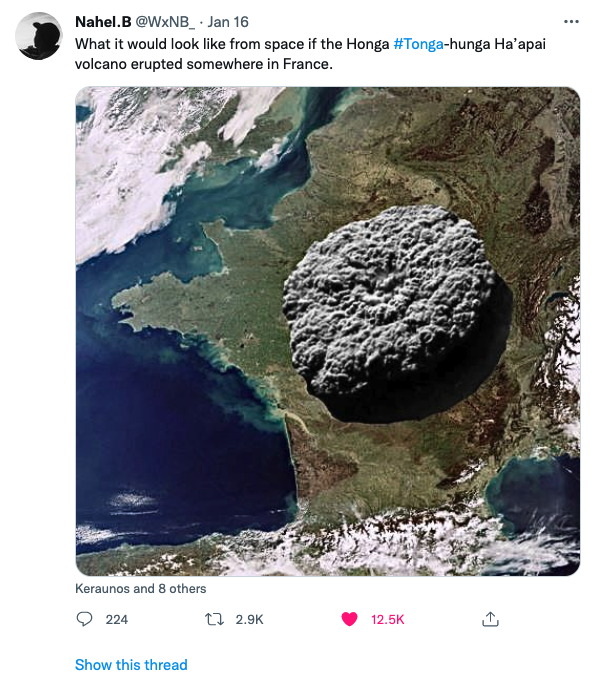
The initial height of the ash plume is an estimated 15.2km in altitude, later rising up to 30km high. The plume then spread to 260km in diameter before being distorted by wind. The graphic below provides a sense of the scale of the eruption.
The scale of the eruption of Hunga Tonga-Hunga Ha’apai volcano
Why did the eruption occur?
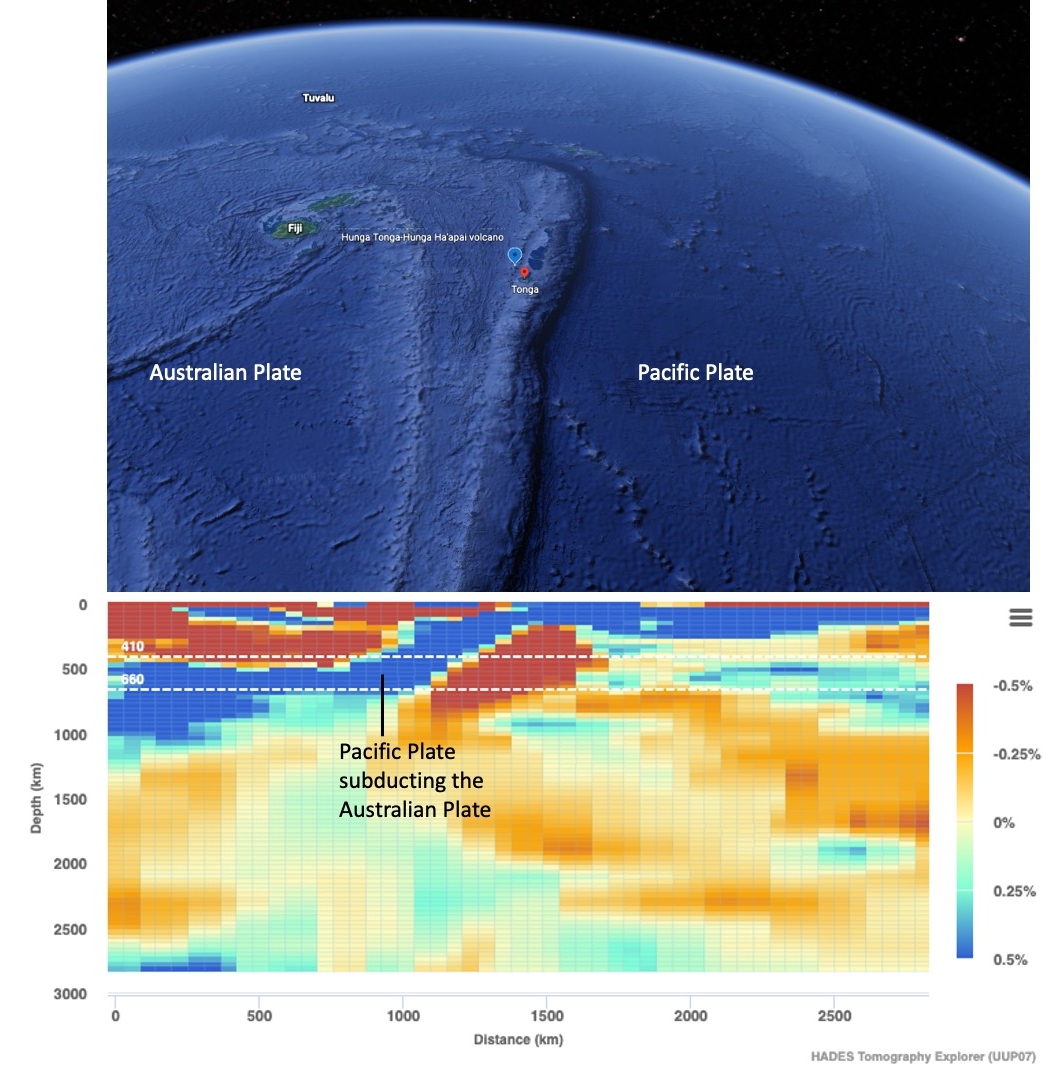
Tonga’s volcanic islands are located on a destructive plate margin where the Pacific Plate meets the Australian Plate.
Tonga’s Tectonic Setting
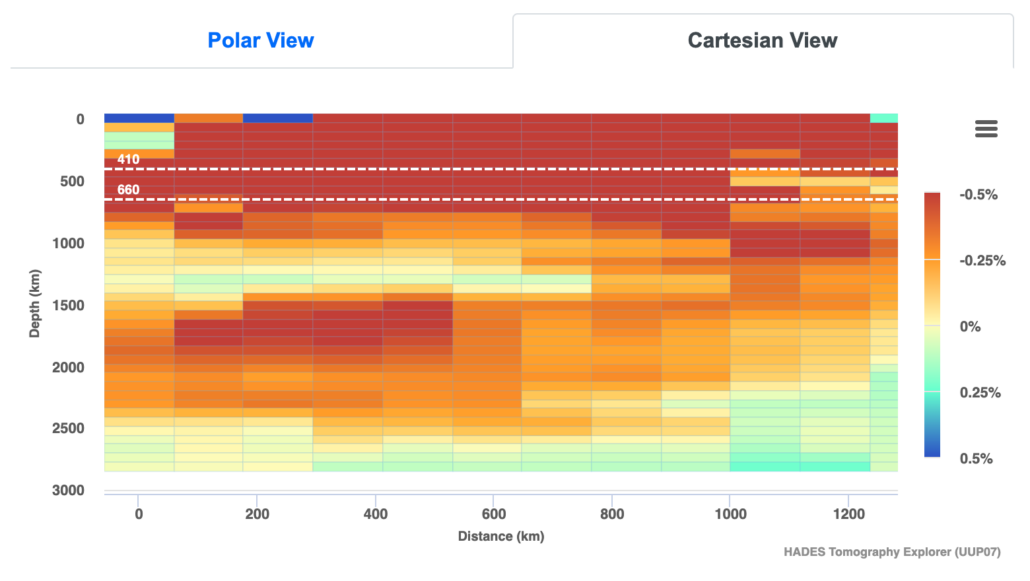
The seismic tomography scan of the mantle below shows the Pacific Plate subducting below the Australian Plate. The water brought down by the slab is forced into the mantle above, producing the magma which forms the volcanic islands.
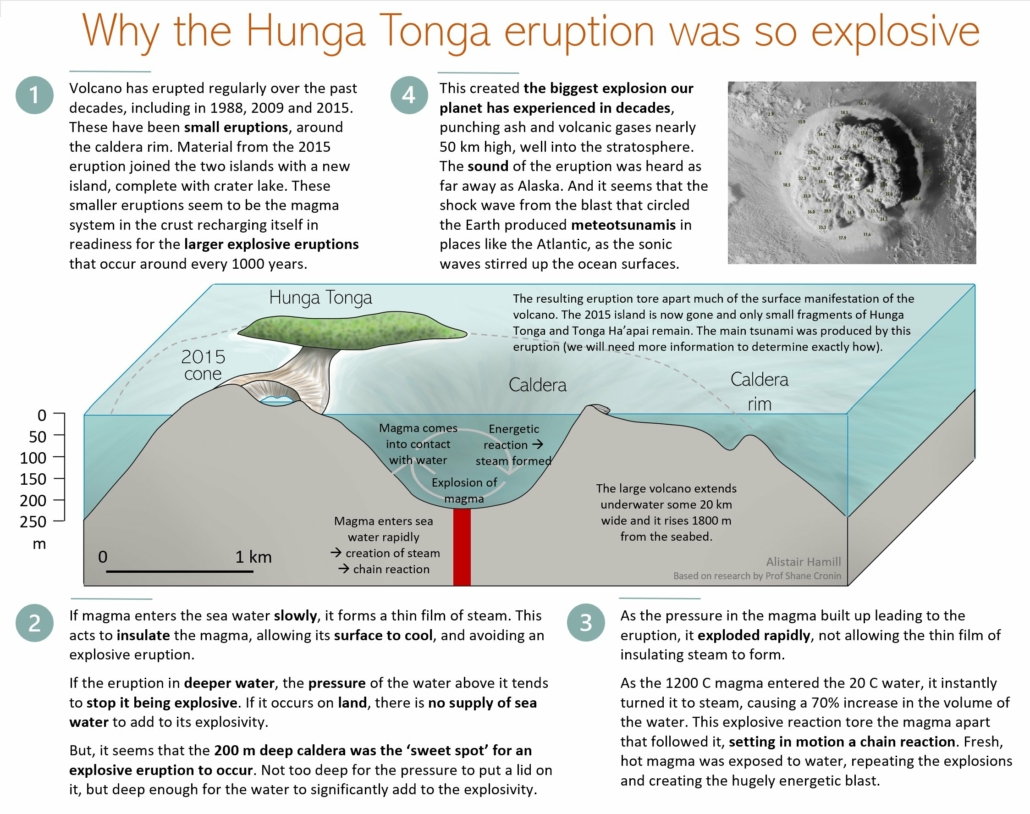
The graphic below provides an overview of why the eruption could have been so powerful.
Why was the eruption of The Hunga Tonga-Hunga Ha’apai volcano so powerful? Source: Alistair Hamill, reproduced under a CC 3.0 licence with kind permission.
What were the effects of the eruption?
Following the eruption, people fled their homes and streets, and buildings flooded as tsunami waves crashed into Tonga’s main island of Tongatapu.
Twenty minutes after the eruption, a 1.2-metre tsunami wave is observed at Nuku’alofa, Tonga’s capital, according to the Australian Bureau of Meteorology. Waves reaching up to 15 metres (49 feet) hit the outer Ha’apia island group, destroying all the houses on the island of Mango, as well as the west coast of Tonga’s main island, Tongatapu, where 56 houses were destroyed or seriously damaged, the prime minister’s office said. People were evacuated from these islands.
Tsunami videos out of Tonga 🇹🇴 this afternoon following the Volcano Eruption. pic.twitter.com/JTIcEdbpGe
Photos and videos emerged on social media of large waves flooding coastal areas, with reports of people making their way inland and to higher ground. Footage shows waves causing damage to buildings and infrastructure such as seawalls.
Experts believe the tsunami activity could have been triggered either by shock waves propagating through water or by a landslide on the undersea part of the volcano. The cause is currently unknown and may rely on sea bed monitoring to identify the cause.
A convoy of police and military troops evacuated King Tupou VI from his palace near the shore, and local news site Kaniva Tonga reported long lines of traffic as thousands of people attempted to reach higher ground across the main island.
By evening in the Pacific, the volcano is raining ash and tiny pebbles on neighbouring Tongan islands, with reports of darkness blanketing the sky.
Nuku’alofa was covered in a thick film of volcanic dust. As a result, there were concerns about contamination of food and water supplies and acid rain.
In addition to preventing aircraft from flying, ash hampers recovery efforts because it “buries gardens and impacts plants with consequences for food supply, and is likely to contaminate water supplies,” volcanologist Dr Chris Firth says.
The Pacific nation’s main undersea communication cable linking Tonga to Fiji was damaged. Unfortunately, it may be weeks before the cable can be repaired due to difficulty getting the repair ship from Papua New Guinea to Tonga and safety concerns for the ship’s crew, who would be operating in waters not far from the volcano. As a result, Tongans around the world may be forced to wait weeks for regular contact to resume.
An air pressure surge from the volcano’s eruption was recorded at seismic stations internationally, including in New Zealand, Australia, the US, and the UK, where two shockwaves are observed.
Aerial photographs were taken onboard a monitoring flight by the New Zealand defence force on Monday 17th January show some areas blanketed with ash, with damaged buildings, while others show parts of the country that appear unscathed.
In the hours following the eruption, tsunami warnings were issued across the Pacific, including in New Zealand, Australia, the west coast of the US, and Japan, where around 230,000 people across eight prefectures were ordered to evacuate.
The United Nations said that about 84,000 people, more than 80% of the population, had been badly affected by the disaster. “They have been affected through loss of houses, loss of communication, what we understand is the issue with the water,” UN spokesperson Stephane Dujarric told reporters. “Water is really the biggest life-saving issue. Water sources have been polluted, water systems are down.”
What were the immediate responses to the eruption?
The Fijian government issued a tsunami warning, telling people in coastal parts to move to higher ground due to “larger than usual waves”. There were reports that some Fijian villages were inundated with water and families evacuated.
In Australia, Japan, Hawaii, Alaska and along the US Pacific coast, residents were asked to move away from the coastline to higher ground and pay attention to specific instructions from their local emergency management officials, said Dave Snider, tsunami warning coordinator for the National Tsunami Warning Center in Palmer, Alaska.
Australia’s Bureau of Meteorology issued an evacuation order for Lord Howe Island and warnings for a huge stretch of the mainland’s east coast. Sydney’s Bondi Beach was evacuated overnight, and a marine threat warning remained in place on Sunday morning Australian time.
The Australian defence force sent a surveillance plane on Monday 17th January 2022 to assess damage to critical infrastructure such as roads, ports and power lines.
There was little damage to the Fua’amotu International Airport’s south-eastern runway, but it was unserviceable following the eruption due to ash covering the runway. An operation to clear ash from the runway was underway, with vehicles and people visible from monitoring aircraft flown by New Zealand’s defence force. After the ash descended on Tonga, young men from villages surrounding the capital travelled to the airport to manually clear runways in order to make way for foreign aid planes
Australia and New Zealand pledged $1m in initial aid to Tonga. In addition, New Zealand dispatched two naval ships carrying water and other aid supplies.
The HMNZS Wellington arrived on Thursday 20th January to survey the harbour to ensure its safety ahead of the arrival of the larger HMNZS Aotearoa on Friday, which is carrying supplies including 250,000 litres of water and a desalination plant.
Australia sent an air force plane that also arrived on Thursday 20th January loaded with essential supplies, including protective equipment and shelter materials. The government said it expected to send a naval vessel loaded with equipment, including helicopters, later on, Thursday or Friday.
On 20th January January 2022, a state of emergency was declared in the country until 13th February, the Tongan government announced.
Telephone links between Tonga and the rest of the world were also partially restored on Thursday 20th January, though restoring full internet connectivity is likely to take a month or more, according to the owner of the archipelago’s sole subsea communications cable. The country re-established some connections with the help of 2G internet and satellite telephone links.
Isolated communities on Tonga’s islands had to fend for themselves in the immediate aftermath of the eruption and tsunami.
What were the long-term responses to the eruption?
I’ve been thinking quite a lot recently about reducing scaffolding when using retrieval practice strategies. Multiple-choice questions are one of the most commonly used retrieval practice techniques; however, as discussed in the recent blog post, they have limitations – namely, they always include a correct answer. This is not to say they don’t have a use in retrieval practice. However, we should be aiming for students to complete short-answer questions for retrieval practice as they are required to produce the answer.
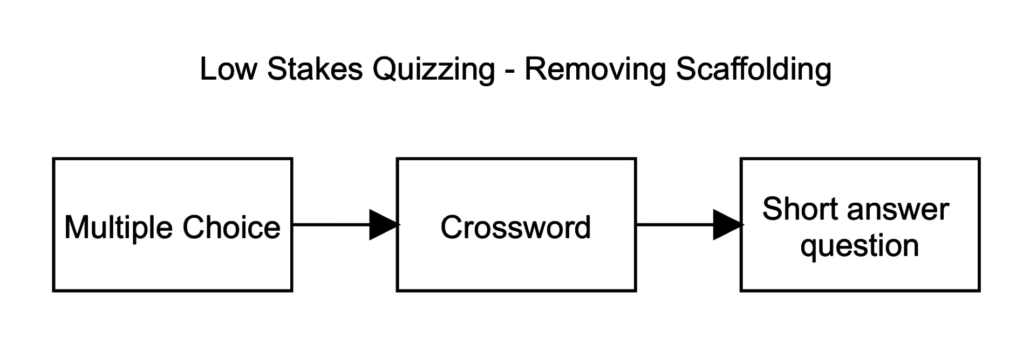
So, how can we achieve this? One possible approach might be to use multiple-choice questions in the first stage of retrieval practice. These could be used as starter activities or for homework. Once students demonstrate success using multiple-choice questions, the scaffolding could be reduced by providing students with short answer questions in the form of a crossword. Using a crossword, students can complete the questions in any order they like and, for those they find more challenging, the addition of letters from other words can prompt and support them in answering.
Removing Scaffolding
The final step is the introduction of short answer questions. If students continue to need support, the first letter of each answer could be provided. This can then be removed later.
To support geography teachers in reducing scaffolding for retrieval practice, a range of new resources are being developed for subscribers to Internet Geography Plus. We are creating a bank of resources in the form of multiple-choice questions, crosswords and short answer quizzes, each of which is available as an electronic document and interactive resource.
Internet Geography Plus subscribers already have access to a significant bank of multiple-choice questions in MS Word format and fully-customisable MS Forms and Google Forms Quizzes. In addition, we are currently working on crosswords and short answer quizzes.